Published
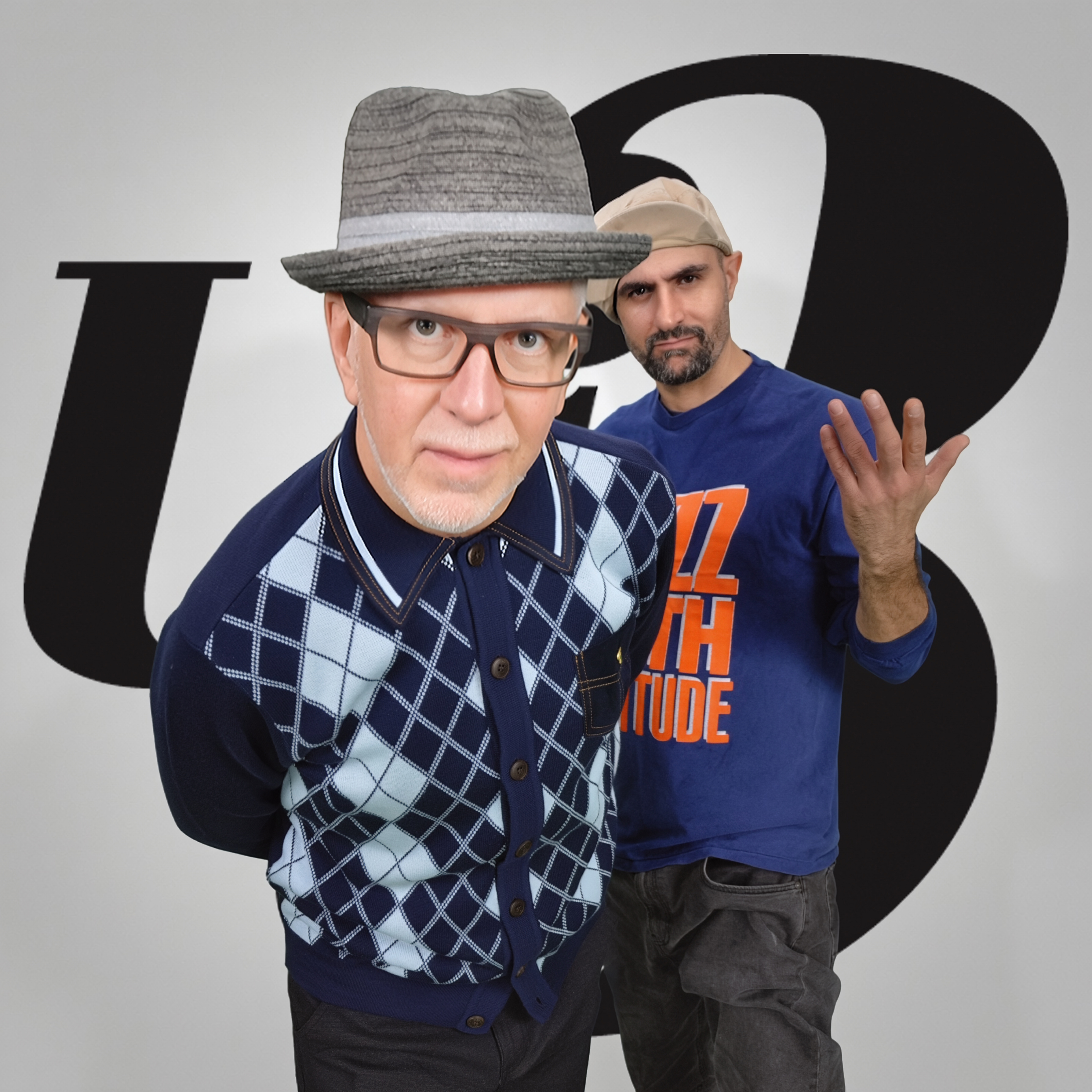
Name: Geoff Wilkinson aka Us3
Nationality: British
Occupation: Producer
Current release: Us3's new album Snap, Crackle & Bop! is out now.
If you enjoyed this Us3 interview and would like to know more about his music, visit his official homepage. He is also on Instagram, and bandcamp.
What were some of the musical experiences which planted a seed for your interest in jazz?
I was learning to play the bass guitar as a teenage kid in my bedroom, and I went to see Chic in the late 70s, and was blown away by Bernard Edwards bass playing. Not jazz, but that was my first encounter with a higher level of musicianship.
I come from more of a DJ background than as a gigging musician, so my interest in jazz came about from that. It’s a short trip from playing James Brown records into jazz funk, and the same into the kind of hard bop/soul jazz that I then discovered and still love.
What does the term jazz mean today, would you say?
I’m sure it means different things to different people. To me it means anything goes, and always has done.
That’s why I like both jazz and hip hop, because both genres of music liberally borrow from other genres in order to develop and grow. It’s always been like that and always will be.
As of today, what kind of materials, ideas, and technologies are particularly stimulating for you?
Inspiration can come from anywhere.
I like reading, not novels, but things that expand my brain. I was reading a book called “Fluke” by Brian Klaas, where he asks the question; is life pre-ordained or is everything just a massive fluke? In it he referenced a book by an Argentinian author called Jorge Luis Borges called The Garden Of Forking Paths.
I thought the idea of life being a series of endless forking paths, each one creating another and another, was fascinating. Life is linear so you never get to find out where a different path would have taken you. It’s a similar idea to the movie Everything, Everywhere All At Once, only the lead actor in that gets to see where an alternative path would have taken her.
This book directly influenced a track on the new Us3 album “Snap, Crackle & Bop!”. A jazzy Amapiano track called … “The Garden Of Forking Paths” of course!
Where do most of your inspirations to create come from – rather from internal impulses or external ones? Which current social / political / ecological or other developments make you feel like you need to respond as an artist?
I get inspired by anything. I love modern art, and I’m lucky to live in London, where there are several great modern art museums, which I regularly visit.
I also love a lot of different types of music, and try to incorporate things that I’m listening to into my own music. On Snap, Crackle & Bop! there are elements of Afrobeats, Amapiano, Reggaeton, Trap & latin music, as well as jazz and hip hop obviously. My challenge is to try and mix it all up in a way that makes sense to the listener.
I think I’ve always done this throughout my career. I’ve always said that an album is only a snapshot in time of where you are at that particular time.
What role do electronic tools and instruments play for your creative process?
I’m completely “in the box” now, which means I have a really minimalist studio environment. Everything is in my mac mini, mixing desk, instruments, etc.
I love the fact that working with computers gives you total recall when you come back to something you have been working on. With analog gear that’s not always possible. The role of the computer in modern music production has been to make everything much more streamlined.
Thanks to technological advances, collaboration has become a lot easier. What have been some of the most fruitful collaborations for you recently and what approaches to and modes of collaboration currently seem best to you?
On the new album, some of the keyboard parts played by Mike Gorman were done remotely. We both work with the same music software (Logic), so it’s easy for me to send him parts with some ideas, which he can then play on, and send back to me for me to edit and adapt.
I didn’t do that with the horn players though, Ed Jones (sax) & Bryan Corbett (trumpet) came in to my studio at the same time. I think that was quicker, and allowed me to shape the ideas.
Same with Akil’s vocals. It was easier to bring him to London from NY rather than trying to do that remotely. It gave me more control over the process.
Jazz has always had an interesting relationship between honouring its roots and exploring the unknown. What does the balance between these two poles look like in your music?
I think it’s the same thing.
With Snap, Crackle & Bop! I tried to include newer influences as well as staying true to the hip hop/jazz hybrid that Us3 is known for. I hope I got the balance right!
How much potential for something “new” is there still in jazz? What could this “new” look like?
Of course there is still potential for something new, although that often takes the shape of adapting something that already exists into the fold. I think new combinations of things that already exist is the way forward.
There is a good example of this happening in South Africa right now. The jazz scene there is exploding, and there is a huge Amapiano scene too, which has led to some interesting collaborations, and jazzy Amapiano tracks.
For many artists, life-changing musical experiences take place live. How do you see that yourself?
I’m more of a studio animal myself, but I have to say that the 2005 tour we did throughout Europe changed things for me. The band was absolutely rocking and the gigs were fantastic.
When the tour finished I got all of the band members in the studio quite quickly as I wanted to capture the energy of that tour for the next album. I think you can hear that on the 2006 album Schizophonic, it’s still one of my favourite Us3 albums. I think that changed the way I made albums a bit after that.
How, would you say are your live performances and your recording projects connected at the moment? How do they mutually influence and feed off each other?
At the moment they’re not connected at all as we haven’t played live for a long time! I was ill for a period of time in 2014 and we had to stop travelling, which is why we were away for such a long period.
There may be some gigs in 2027, there are discussions about this going on now, wait and see …
Improvisation is obviously an essential element of jazz, but I would assume that just like composition, it is transforming. How do you feel has the role of improvisation changed in jazz?
Again that is one thing both hip hop and jazz have in common, the improvisational element of playing live and freestyle rapping.
This is something I’ve tried to capture in the studio albeit within a song structure, so there is a framework inside of which improvisation can take place. There has to be some kind of structure or it could be a big mess!
I’m not sure the role of improvisation has changed in either jazz or hip hop, it is still vital to both genres, and always will be.
What, would you say, are the key ideas behind your approach to improvisation?
Let’s see what happens and then fine tune it to fit to the framework we’re working within.
I think I gravitate towards working with people that have an open mindset, which naturally encourages a bit of experimentation. I like pushing both the musicians and vocalists I’m working with to sometimes do things that they might not ordinarily do.
That’s my role as a producer, and I think that’s often where the magic happens.
Are there approaches, artists, festivals, labels, spaces or anyone/-thing else out there who you feel deserve a shout out for taking jazz into the future?
There are so many people doing interesting things at the moment and long may it continue!
The Montreux Festival intends to preserve its archive of recordings for future generations. Do you personally feels it's important that everything should remain available forever - or is there something to be said for letting beautiful moments pass and linger in the memories of those that experienced them?
With the younger generation now, it’s totally normal to document almost all of their lives and share it online, so I don’t have a problem with gigs being documented. In fact I think it’s vital for that younger generation to be able to learn from those recordings.
I don’t think anything is definitive, and it’s good to have your own forking path documented from time to time. After all, life is a journey, not a destination!