Published
Part 1
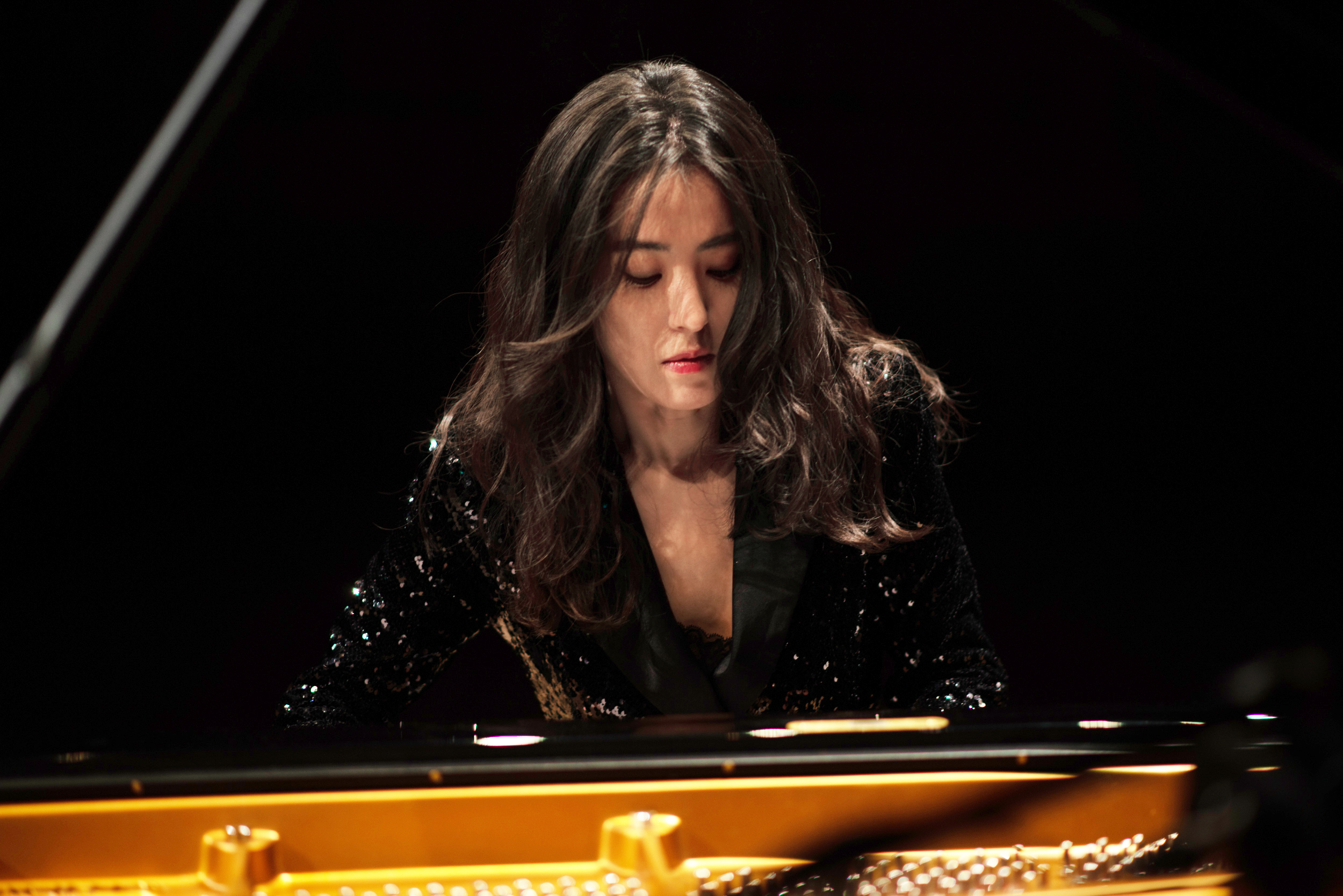
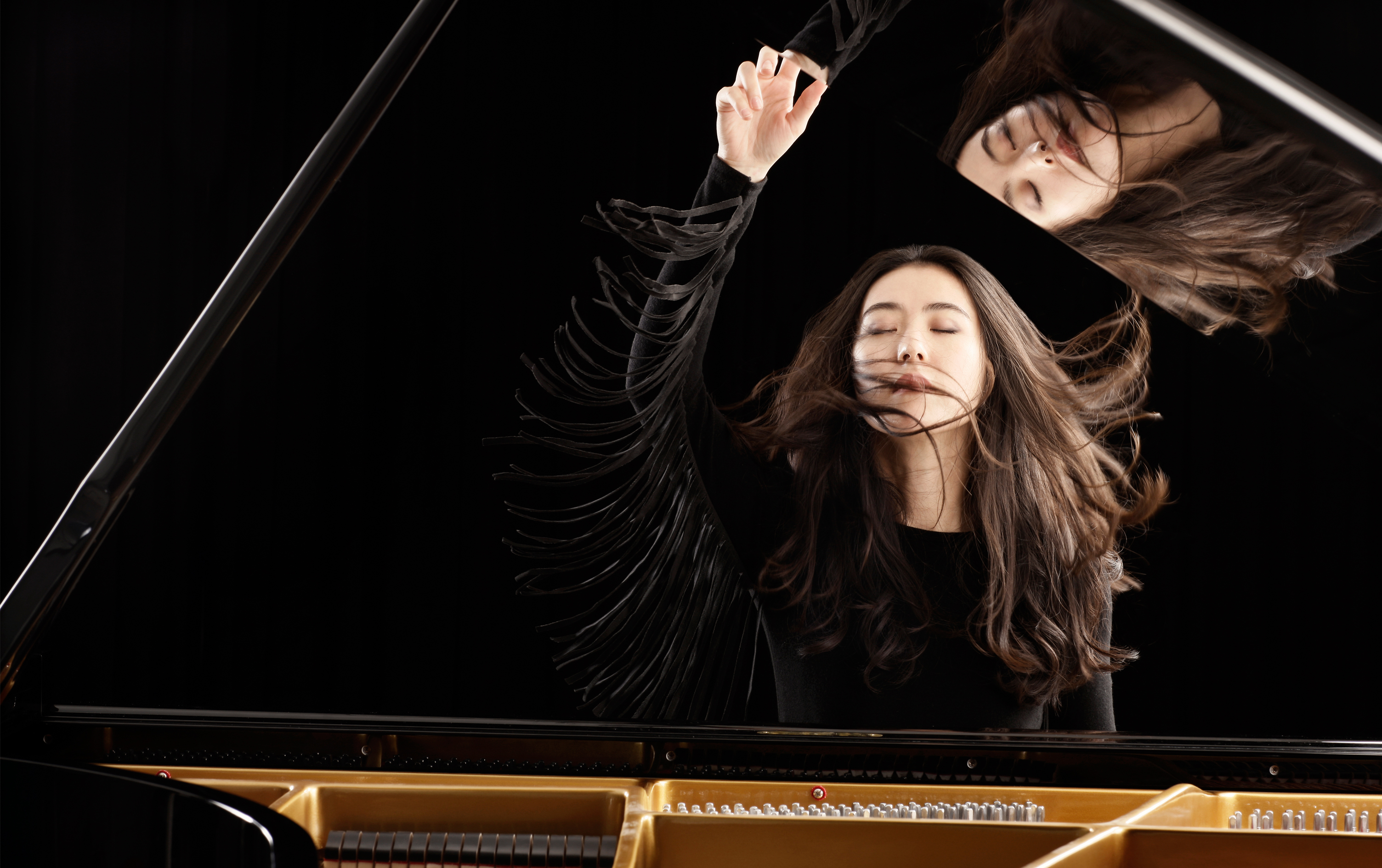
Name: Younee
Nationality: South Korean
Occupation: Composer, improviser, pianist, vocalist
Recent release: Younee's new album Improvisations Live in Germany is out via Fulminantmusic.
Recommendations:
Books: Musical Elaboration by Edward Said, Metamorphosis by Kafka, Analects by Confucius
Art: Henri Matisse’s Piano Lesson, Vincent Van Gogh’s Starry Night
Music: "Dragon Attack" by Queen, "Back to Where We Never Left" by George Duke, Ravel's "Piano Concerto in G Major, M. 83, Second Movement: Adagio Assai.
If you enjoyed this Younee interview and would like to stay up to date with her music, releases, and live dates, visit her official homepage. She is also on Instagram, and Facebook.
Do you think that some of your earliest musical experiences planted a seed for your interest in improvisation?
Improvisation is just composition. The only difference is that improvisation captures the voice of the heart in real-time.
The first time I thought, "I want to create beautiful melodies like that," was when I heard a pop melody on the car radio at the age of four. From that moment, I was curious why some melodies stick in people's memories while others do not. I dreamed of creating music that could move people's hearts.
As a child, I experimented with melodies on a melodica, and I believe that if someone observes that process and shares it with others, that’s what improvisation is. It’s where the concepts of creation and performance happen simultaneously. Similarly, I used to play a game where I would randomly pick piano sheets and play them as if I already knew the music, imagining that someone was watching me.
This idea of composing, as if it were a piece I had already created, evolved from that playful imagination.
When did you first consciously start getting interested in musical improvisation? Which artists, teachers, albums or performances involving prominent use of improvisation captured your imagination in the beginning?
Most of the time, when we think of improvisation, it’s based on existing melodies and harmonies. However, I often compose in performance as if I’m creating a new painting on a blank canvas.
I once had an experience during a school concert when I was playing Chopin's Ballade No. 2. I suddenly forgot the next section and got stuck repeating the same part. Since I couldn't stop, I improvised to finish it and smoothly transitioned to the next section. No one, including my teacher and friends, noticed. That was my first experience with improvisation.
My teachers often told me to focus on the sheet music, but when I looked at scores by Bach or Mozart, I was filled with curiosity. I would wonder how they created their music and how they might have composed differently if they lived in today’s world.
Although classical musicians like Friedrich Gulda, Murray Perahia, or Keith Jarrett may have influenced me, the most significant impact on my improvisation comes from my audience. In a beautiful quarry in Trebgast, Germany, I played an encore where I freely improvised, and many people encouraged me to open up more, which led me to publicly share my solo improvisational rituals.
Tell me about your instrument and/or tools, please. What made you seek it out, what makes it “your” instrument, and what are some of the most important aspects of playing it?
For me, music is not the piano. The piano is merely a tool for expressing the ideas in my mind and the sounds I hear in my heart.
Instruments like the flute or violin, which primarily play melodies, always require accompaniment, making the piano my natural choice. When I play solo, I can perform melodies, harmonies, and bass lines all at once, like a one-man band.
There was a piano in my kindergarten, and I wanted to recreate the sounds I heard at home, but I only had a melodica. Playing what I heard on the piano was exhilarating, but using the melodica was frustrating. I even drew keys on long paper and colored them to practice.
Eventually, I begged my parents for a piano, and it became my closest friend. I learned the flute as well, but I lost it when I accidentally left it on the school bus, solidifying the piano as my instrument.
How would you describe your own relationship with your instrument – is it an extension of your self/body, a partner and companion, a creative catalyst, a challenge to be overcome, something else entirely?
It is a medium that allows me to visualize the sounds of my soul or heart.
When my fingers touch the keys, I feel at ease, as if the piano understands me best. It allows me to express my feelings moment by moment, much like writing a diary.
Derek Bailey defined improvising as the search for material which is endlessly transformable. What kind of materials have turned to be particularly transformable and stimulating for you?
In classical music, small themes are often developed into symphonies or sonatas, so the way Beethoven’s works begin with just four notes and evolve into grand pieces resonates deeply with me. When I improvise based on other pieces, I love transforming those beautiful classical melodies or motifs.
However, I believe that true improvisation, like in this album, is about capturing the sound of my heart and sharing that moment with the audience. The experiences of the day, the touch and timbre of the piano, the inspiration from the audience, my feelings, the sound of the performance space—all these elements serve as themes and inspiration for my compositions.
Thus, I seek inspiration more outside of music. I strive to empathize deeply with the stories and emotions of others, and I question everything happening in the world or in the news, aiming to develop my own perspective. Transforming that into sound and emotion is my improvisation.
Do you feel as though there are at least elements of composition and improvisation which are entirely unique to each? Based on your own work or maybe performances or recordings by other artists, do you feel that there are results which could only have happened through one of them?
I believe that coincidence does not exist. Therefore, I take all elements that seem coincidental as my inspiration, deliberately encouraging them to become part of my creation.
For example, many of the tracks on my album would not have come to life without an audience. I often ask my audience for suggestions when I’m trying to compose something new, wanting to share the process with them rather than relying on already famous pieces. In Hamburg, an audience member shouted "Spring!" right as March approached, just before the COVID outbreak, a time when everyone felt the arrival of spring. Naturally, it felt inevitable to compose a piece about spring.
In Nuremberg, another audience member called out "Cuba!" When I asked why, they explained that it was because the venue featured many classic cars, which reminded them of Cuba. Although I have never been there, I thought it was a brilliant idea. In that moment, we could embark on an imaginative journey to Cuba through music. If that audience member hadn’t attended my concert, that moment wouldn’t have happened.
I often view all connections and coincidences as inevitable, which is why I frequently seek input from my audience. I strive to maintain an open mind so I am not solely immersed in the inspirations that arise within my own head. The tracks on this album were all born from both chance and necessity. The people who inspire me the most in my music are my audience, more than any artist.
When you're improvising, does it actually feel like you're inventing something on the spot – or are you inventively re-arranging patterns from preparations, practise or previous performances? What balance is there between forgetting and remembering in your work?
In daily life, I find it difficult to choose between pizza or pasta, often telling friends, "You order pizza; I’ll get pasta," because making decisions can be tough.
However, in the moment of improvisation, something miraculous happens: even with many people watching, I enter a state of pure instinct where there is no buffering or delay in my decision-making. If others analyze the musical results of my improvisation, they might say that the musical elements and harmonies already stored within me have combined. But in that moment, I feel as if my soul is open, and sounds flow through me without my conscious effort.
It’s not so much that I’m actively creating music; rather, it feels like the sounds are emerging through me. Since this is a moment where my thoughts and deeply felt emotions naturally arise, I transition into a state of unconsciousness, regardless of how much I think about or listen to music in my everyday life.