Published
Part 2
Are you acting out parts of your personality in your improvisations which you couldn't or wouldn't through other musical approaches? If so, which are these? What, would you say, are the key ideas behind your approach to improvisation?
While improvisation often takes avant-garde forms, I believe that improvisation is also composition.
Even when I compose spontaneously, I aim to effectively express narratives and themes that resonate with many people in my own unique style. I don’t just play whatever comes to mind; rather, like storytelling, when we want to convey something effectively, we consider themes, variations, developments, and climaxes, which makes improvisation a story-like concept that captures moments instead of being abstract and hard to grasp.
In terms of your personal expression and the experience of performance, how does playing solo compare to group improvisations?
In a group, it’s essential to listen well to others and not dominate the conversation, knowing when to step back.
However, when I am solo, I need to complete the narrative myself, which feels like standing naked. All dynamics, nuances, and details become more pronounced, allowing me to delve deeper and concentrate, free from any rules
In your best improvisations, do you feel a strong sense of personal presence or do you (or your ego) “disappear”?
It feels like I disappear. The moment thoughts or consciousness intrude, the surprise within me fades, and if I’m not amazed, the excitement dissipates.
So, while musically it might seem straightforward, the most thrilling improvisation occurs when unexpected ideas emerge from within me, leading to a feeling of having vanished.
In a live situation, decisions between creatives often work without words. From your experience and current projects, what does this process feel like and how does it work?
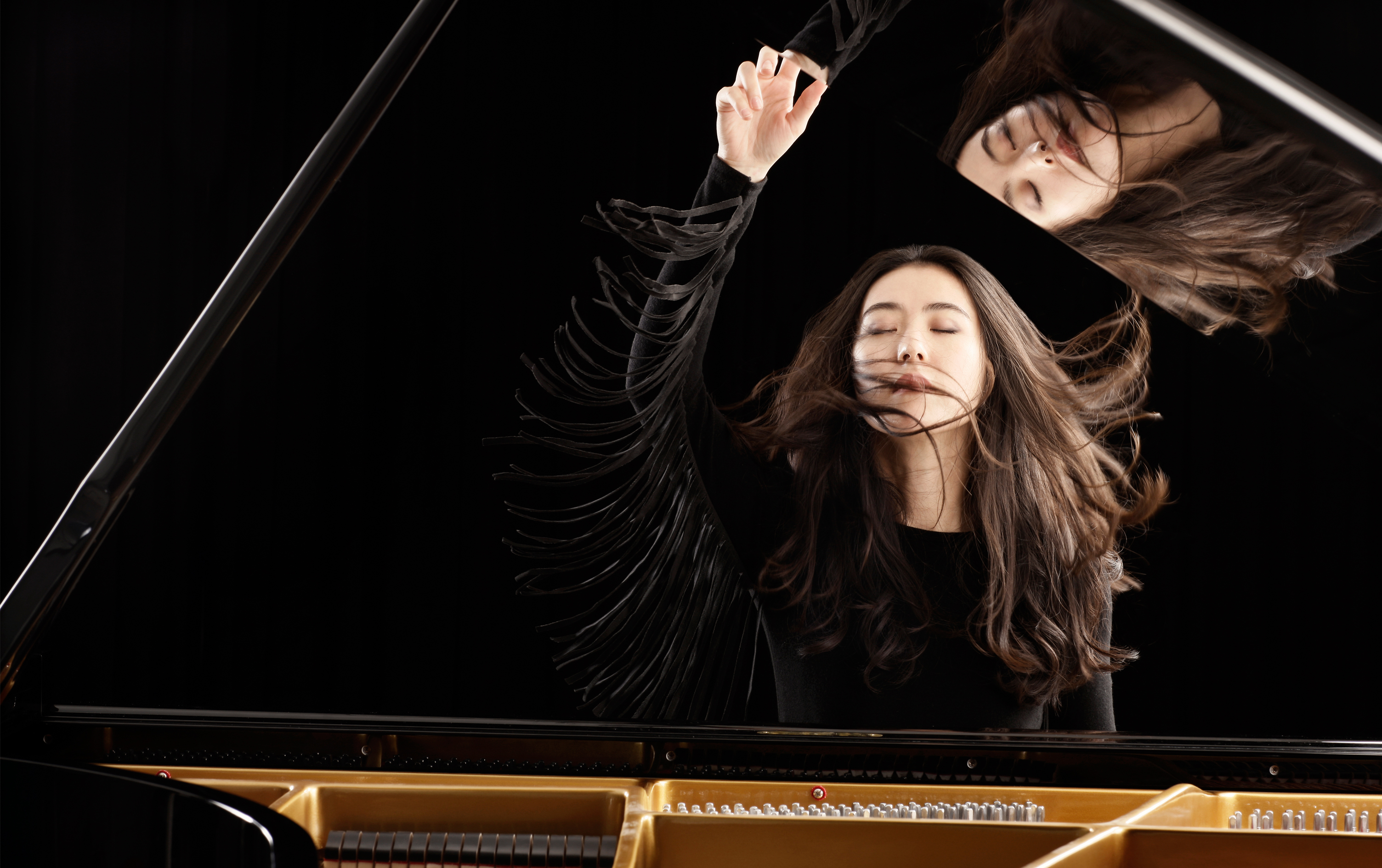
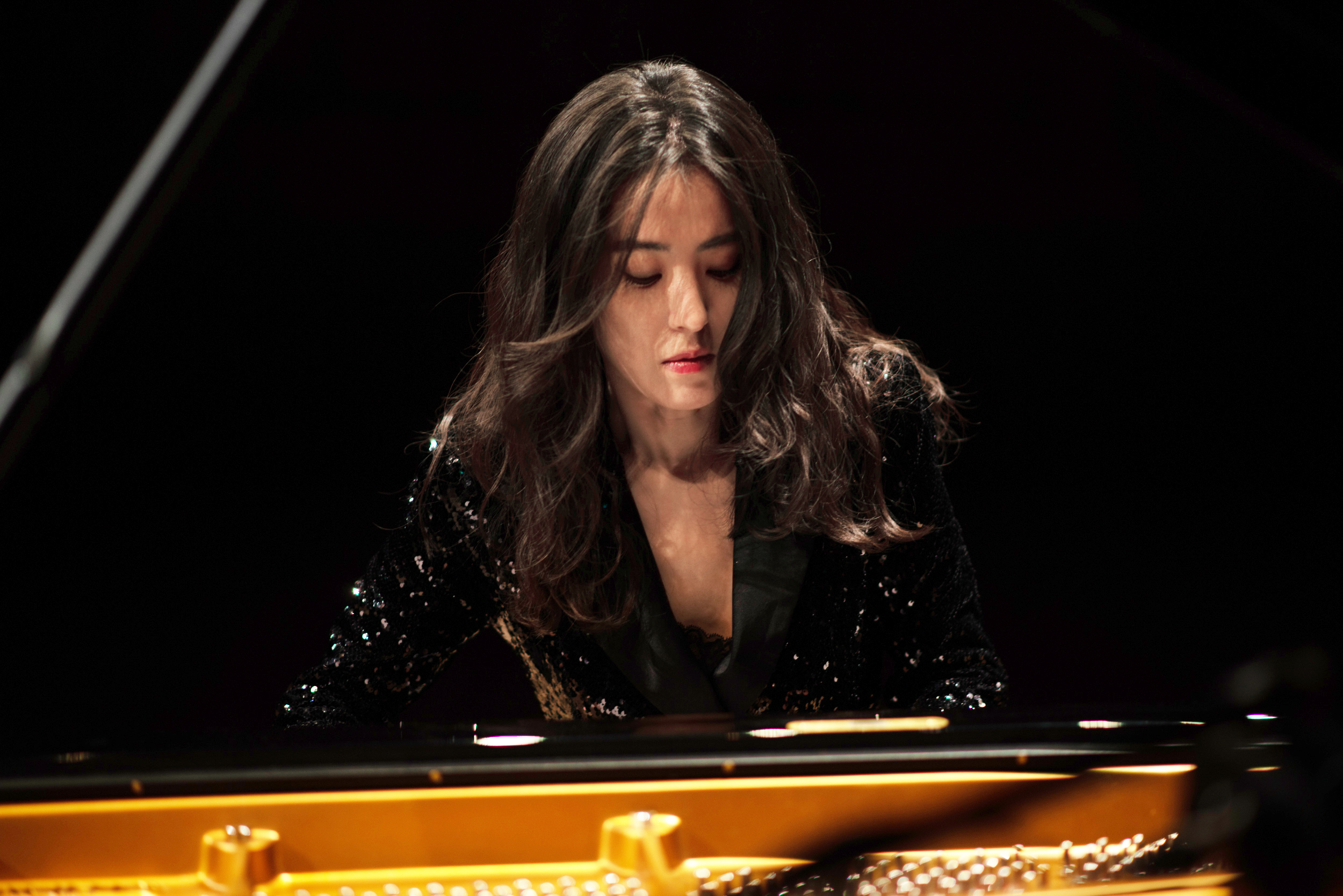
This project is an album where I perform solo improvisations on stage, so the only entities involved are me, the piano, and the audience. The audience is incorporated into the creative elements of the music at my discretion, because without an audience, a live performance is impossible. Typically, performances showcase pre-composed works, but I wanted to create an experience where the performance itself becomes the process and result of my creation.
Although it wasn’t intentional, each performance had its own remarkable moments, and I collected these wonderful instances to create this album.
Stewart Copeland said: “Listening is where the cool stuff comes from. And that listening thing, magically, turns all of your chops into gold.” What do you listen for?
I have no biases against any music in the world and listen to everything. Classical, pop, jazz, old jazz, funk, rock, lounge music, house music, schlager—there is something interesting in every genre, and they all have the power to move people. When many influences are absorbed, new things naturally emerge from me.
The jazz pianists I listen to the most include great female artists like Marian McPartland and Nina Simone, as well as the incredible humor and technique of Michel Petrucciani. I enjoy works by Bach, Chopin, Dvořák Symphony, Daft Punk, Lenny Kravitz, Aerosmith, Black Sabbath, Deep Purple, Marcus Miller, The Rolling Stones, Ramsey Lewis, Bad Company, Miles Davis, Jeff Beck, Julie London, Keith Jarrett, The Beatles, Lyle Mays, George Duke, Rammstein, The Who, and Zero 7.
There can be surprising moments during improvisations – from one of the performers not playing a single note to another shaking up a quiet section with an outburst of noise. Have you been part of similar situations and how did they impact the performance from your point of view?
Just as we can be surprised in conversations when the other person communicates in a way that deviates from the level of thought or emotion we expected, similar moments happen when playing with other musicians.
Naturally, when such moments arise, there's a sense of surprise from the unexpected reaction. I enjoy those moments, and in the heat of the moment, I also adapt my response to match the other person's tension. If they get excited, I might get excited with them, but sometimes, if they are too excited, I might calm them down.
Everything is relative, and that's what makes communicating in a group setting different and more enjoyable compared to playing alone.
I have always been fascinated by the many facets of improvisation but sometimes found it hard to follow them as a listener. Do you have some recommendations for “how to listen” in this regard?
Just as with painting, music can feel difficult, but sometimes the answer lies in simply listening or seeing as it is. Artists may have their intentions, but music resonates differently with listeners, just as paintings touch viewers in unique ways, which is the charm of art.
Therefore, I always save art and music that resonates with me in my playlist, aiming to share the emotional points and connections I feel with others.
In a way, improvisations remind us of the transitory nature of life. When an improvisation ends, is it really gone, just like a cup of coffee? Or does it live on in some form?
It’s a pity that we cannot hear the improvisations of masters like Beethoven, Mozart, or Liszt. If recording technology had existed in Beethoven's time, we might have experienced remarkable bootleg albums even more astonishing than their hit songs.
I feel that improvisation is not ephemeral but is instead the most genuine and meaningful form of expression. Music is the art of sound and the art of time. The essence of sound is that it fades away simultaneously with time. While paintings can endure over time since they exist on canvas, the essence of sound fades with time, which is a challenge. Therefore, I believe that the closest form to this essence of music is improvisation—an art of experience that is created and disappears at the same moment and it can be true in the moment.
However, we have recording technology, which allows us to capture these moments like a painting, enabling us to share those wonderful experiences with many people who could not attend the performance. How wonderful is that!