Published
Part 2
Today, electronic music has an interesting relationship between honouring its roots and exploring the unknown. What does the balance between these two poles look like in your music?
I believe you can't move forward if you don't understand where the music comes from.
Electronic music has an incredible history, and I have enormous respect for the pioneers who created House, Techno, New Beat, Chicago House, Detroit Techno, and all the genres that followed. Without them, none of us would be here today.
At the same time, I don't think honouring those roots means reproducing the past. For me, it's about understanding the spirit behind those movements—the freedom to experiment, to innovate, and to create something personal. One of my tracks, “90's Chicago,” is a direct tribute to the birthplace of House music. It's my way of saying "thank you" to the artists who laid the foundations of everything we hear today. But even when I make a tribute, I still want it to sound like me.
That's the balance I try to find in all my productions. I respect the past, but I don't want to live in it. Every new track is an opportunity to take influences from different genres, cultures, and emotions, and transform them into something that reflects my own identity.
To me, the greatest way to honour the pioneers isn't to imitate them—it's to keep their spirit of creativity and exploration alive.
What were some of the recent tools you bought, used, or saw/read about which changed your perspective about production, performing, and making music?
One of the biggest changes in recent years wasn't actually a new piece of gear—it was a forced transition.
My old computer crashed, and I lost almost all of the projects I had been working on. At the same time, I moved from Ableton Live 8 to Ableton Live 11. Looking back, as frustrating as that experience was, it pushed me to rethink the way I work and take advantage of everything modern software has to offer.
Over the years, I've owned several pieces of hardware, including an Akai MPC60, an Akai MPK49, a Roland TR-8S, and a Roland System-1. I loved working with them, and they each taught me something different about rhythm, sequencing, and sound design. Eventually, though, I decided to sell them. Partly because of space, but also because today's VST instruments inside Ableton have become incredibly powerful. They allow me to work faster, stay focused on creativity, and have my entire studio available wherever I am.
That experience changed my perspective. I used to think great music depended on having the right equipment. Today, I believe the most important tool is imagination. Technology keeps evolving, but a good idea will always matter more than the gear used to create it.
How do you see the role of sampling in electronic music today?
For me, sampling has always been one of the foundations of electronic music. It's part of its DNA.
When it's done with creativity and respect, sampling isn't about copying—it's about transforming. A single vocal phrase, a percussion loop, or an old recording can become something completely different in a new musical context.
At the same time, I think it's important to find the right balance. A great track shouldn't rely solely on a famous sample. It should have its own identity and tell its own story. Sampling should add personality, not replace creativity. Personally, I use samples as ingredients rather than the main dish. Sometimes they're the spark that starts a new idea, sometimes they're simply there to enhance the atmosphere or add a human touch to a production.
To me, the most exciting aspect of sampling isn't looking backwards—it's taking something familiar and giving it a completely new life.
What are some of the most recent innovations in sound design for you - and what are currently personal limits to realising the sounds you have in your mind?
The pace of innovation in electronic music is incredible. Almost every week, I discover new hardware or software on social media that promises fresh ways of creating music. Some of the latest hardware instruments, in particular, look incredibly intuitive and inspiring. They make you want to sit down and start experimenting immediately.
That said, those machines often come with two realities: they're expensive, and they require a real investment of time. Learning a new instrument isn't just about understanding the buttons—it's about reaching the point where you can translate the ideas in your head into sound without thinking about the technology anymore.
For now, I prefer focusing on mastering the tools I already have rather than constantly chasing the latest gear. I believe creativity comes from knowing your instruments well enough that they disappear and simply become an extension of your imagination.
As for my personal limits, they're rarely technical anymore. The biggest challenge is finding enough time to fully explore every idea that comes into my head. Sometimes I have more musical ideas than I have hours in the day, and that's a good problem to have.
I don't think there's a perfect piece of gear. The perfect instrument is the one you know so well that it never gets in the way of your creativity.
In as far as it is applicable to your work, how would you describe the interaction between your music and DJing/DJ culture and clubs?
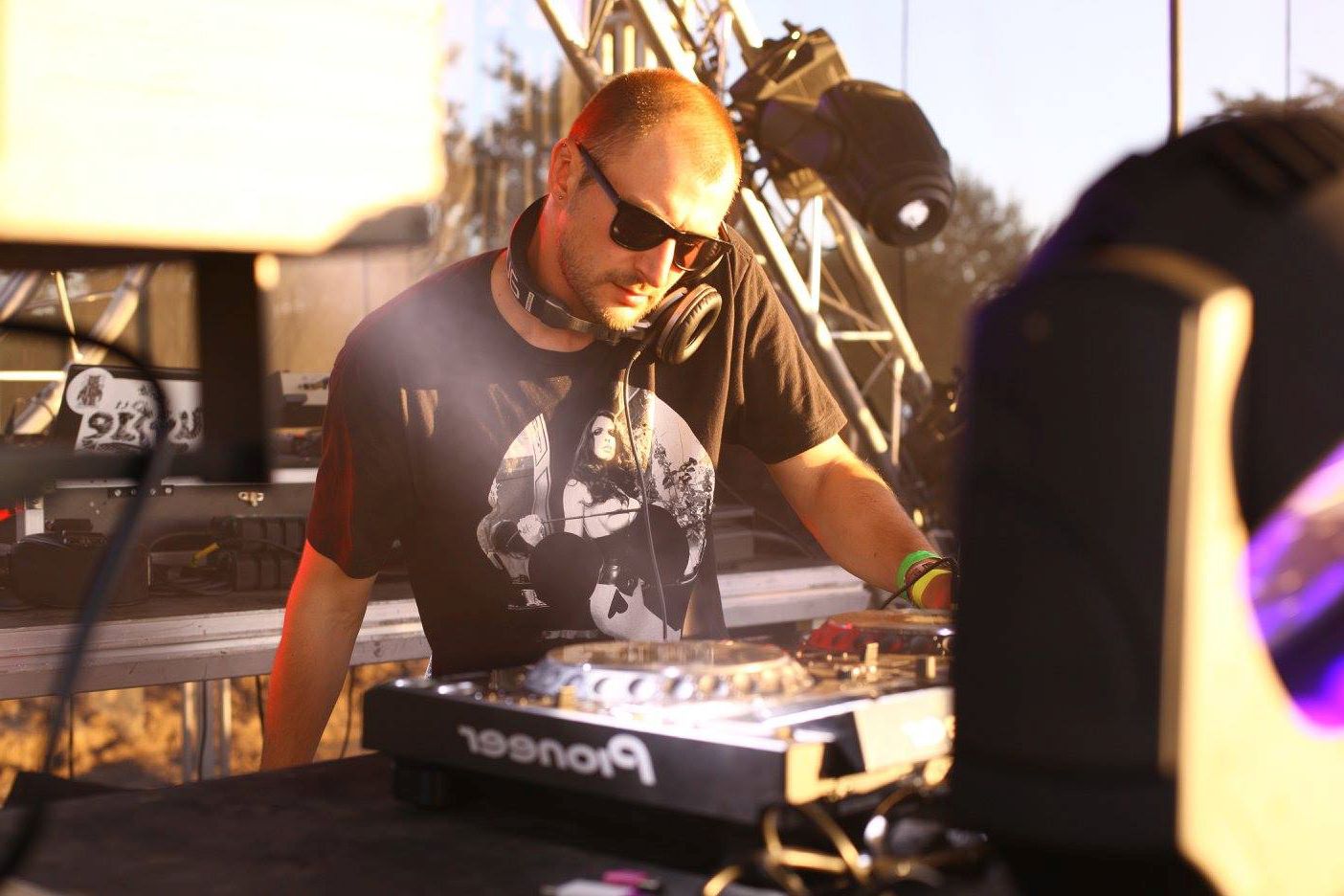
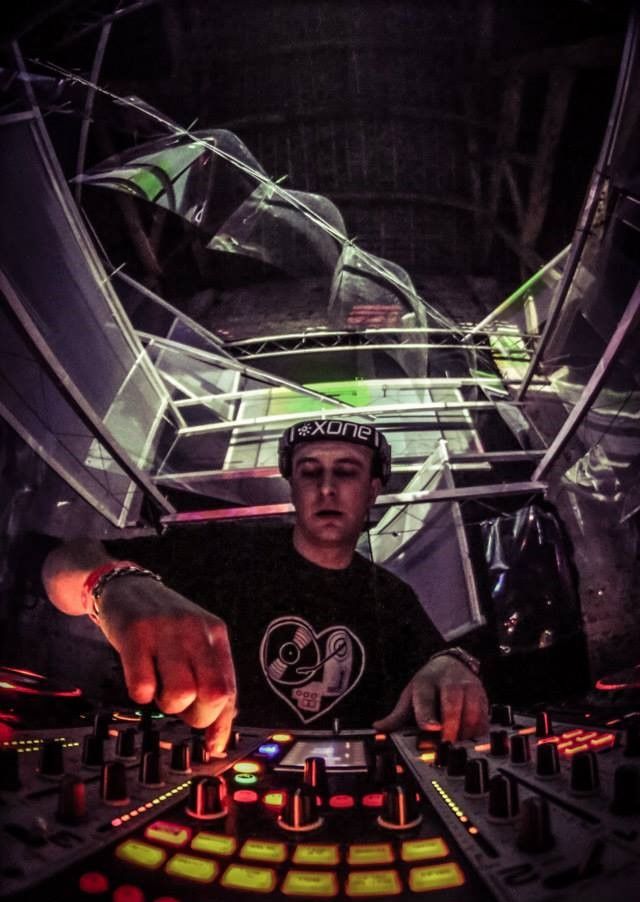
For me, DJing and producing have always gone hand in hand. I've been DJing since 2001 and producing since 2011, so I've spent countless hours behind the decks as well as in the studio. Each experience feeds the other.
When I'm producing, I often imagine where a track could live within a DJ set. Is it meant to open the night? Build the atmosphere? Create tension before a peak-time moment? Or bring people together during an emotional closing? Those questions naturally influence my arrangements, my energy, and even the length of certain sections.
I never produce music just to fit a trend or satisfy an algorithm. I produce tracks that I would genuinely enjoy playing in my own DJ sets. If I wouldn't play them myself, they're simply not finished.
At the same time, DJing constantly teaches me what really works on a dancefloor. It's not always about making the loudest or most complex track. Sometimes it's the simplest groove, the smallest detail, or the right moment of silence that creates the biggest reaction.
Having also organized electronic music events for many years gave me another perspective. I learned that clubs and festivals are about much more than music—they're places where people come to share emotions, disconnect from everyday life, and create memories together.
That's ultimately what I hope my music can contribute to. Whether one of my tracks is played in a small underground club, at a festival, or simply through someone's headphones, I want it to become part of a moment they'll remember.
How, would you say are your live performances and your recording projects connected at the moment? How do they mutually influence and feed off each other?
At the moment, my performances are primarily DJ sets rather than live performances, but they are deeply connected to my work in the studio.
DJing gives me the opportunity to observe how people react to different grooves, transitions, and atmospheres. It's not just about seeing whether a track works on the dancefloor—it's about understanding how energy evolves throughout an entire night.
That experience naturally influences the way I produce. I often write music with a specific moment in a DJ set in mind: a warm-up, a peak-time transition, or an emotional closing.
Tracks like “Sunset” or “Point of No Return,” for example, were imagined for very specific moments in a journey rather than simply as standalone tracks.
The relationship also works the other way around. Every new production becomes a potential part of my own DJ sets. Playing my unreleased music alongside records from artists I admire allows me to understand whether it truly belongs in that environment. If a track creates the emotion or atmosphere I imagined, I know it's moving in the right direction.
For me, DJing and producing are two different ways of telling the same story. One happens in the studio, the other happens in front of people. Together, they constantly inspire and refine one another.
Even if AI will not entirely replace human composition, it looks set to have a significant impact on it. What do the terms composing and producing mean in the era of AI, do you feel?
Artificial intelligence is undoubtedly going to become an increasingly important part of music production. Like many technological innovations before it, it offers new possibilities and can be a useful tool for certain tasks.
Personally, however, I don't use AI to create my music.
For me, composing isn't just about arranging sounds or finding the "perfect" melody. It's about translating emotions, memories, imagination, and personal experiences into music. That's something I genuinely enjoy doing myself, and it's the reason I started producing in the first place.
I have nothing against artists who choose to use AI as part of their creative process. Every artist should be free to work in the way that suits them best. But for my own music, I prefer every idea, every melody, and every decision to come from me—even if that means the process takes longer. To me, the value of a track isn't measured by how quickly it was created or how advanced the technology behind it is. It's measured by whether it makes someone feel something.
At the end of the day, technology will continue to evolve. But emotion, imagination, and authenticity are timeless, and I believe those qualities will always be at the heart of meaningful music.