Published
Name: Biomania
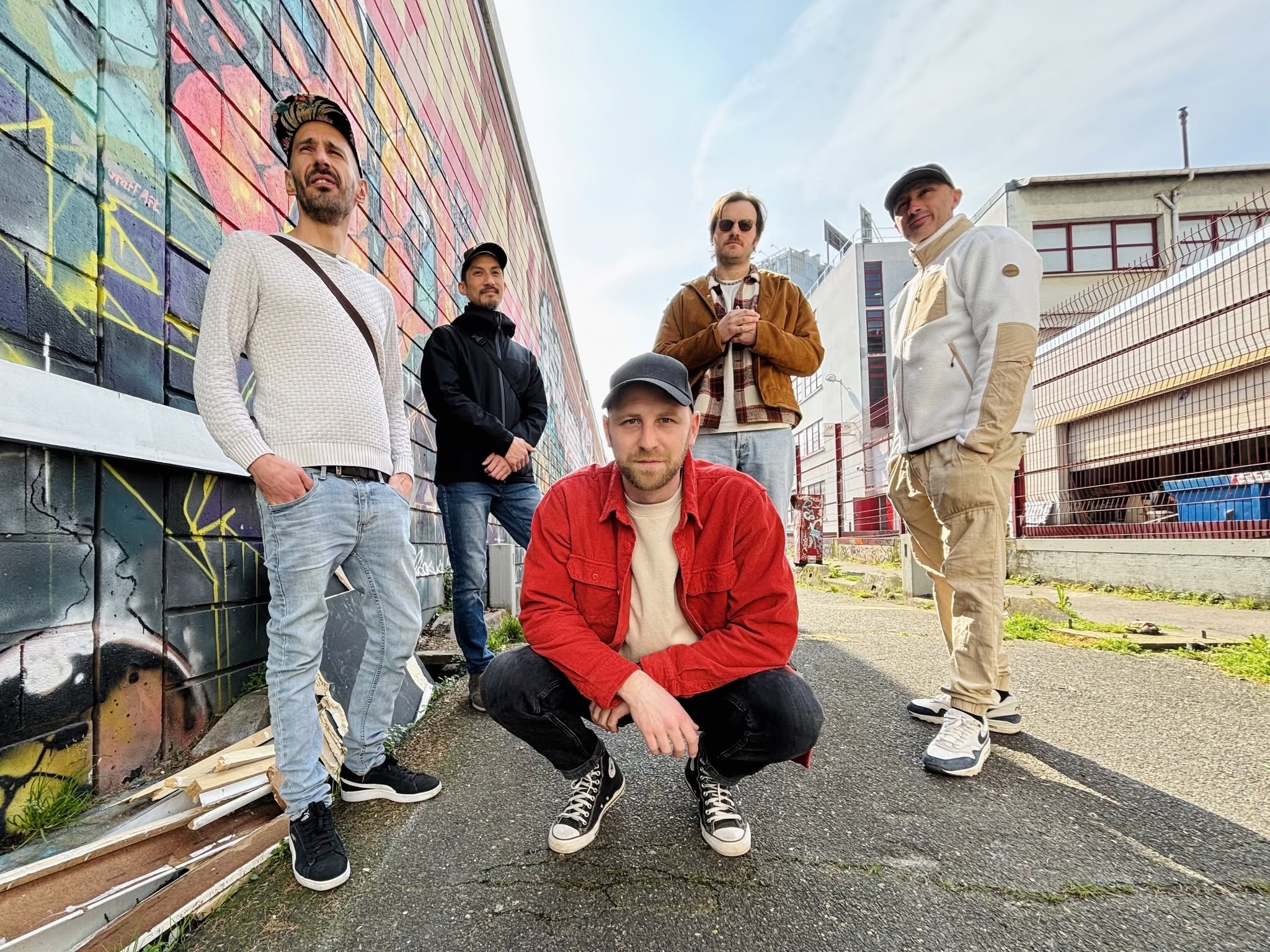
Members: Thierry Lemaitre (saxophone), Công Minh Pham (keyboards), Arthur Links (guitar), Nicolas Bauer (bass), Benjamin Pellet (drums)
Interviewee: Arthur Links
Nationality: French
Current release: Biomania's new Birds and Drones EP is out via Most Least.
Recommendation for Paris, France: I would recommend to visit the Père Lachaise cemetery for its unique atmosphere. But I would also recommend to simply enjoy walking freely in Paris, which has so many unknown spots to discover, outside touristic big spots
If you enjoyed this Biomania interview and would like to know more about the band and their music, visit them on Instagram, Facebook, and bandcamp.
For a deeper dive, read our earlier Biomania interview, and our interview review of their debut album System D.
When did you first consciously start getting interested in musical improvisation? What was your first improvisation on stage or in the studio and what was the experience like?
I think it was part of my musical learning process.
I always wanted to play over songs or melodies I knew, but as I sometimes couldn’t play them accurately, improvisation was a way to play around them.
Tell me about your instrument and/or tools, please. What made you seek it out, what makes it “your” instrument, and what are some of the most important aspects of playing it?
My guitars are carriers to me, as they play what is in my head and or my ears. The most important thing to me is to feel their sound, how they resonate.
This is why I have several of them. Each provides a special sound, a special atmosphere which makes them unique to me.
How would you describe your own relationship with your instrument – is it an extension of your self/body, a partner and companion, a creative catalyst, a challenge to be overcome, something else entirely?
As I said, my guitar is a carrier - of my musical language.
Sometimes I can struggle with it, but sometimes it also blows my mind when I manage to get the sound or the music I want from it.
Do you feel as though there are at least elements of composition and improvisation which are entirely unique to each? Based on your own work or maybe performances or recordings by other artists, do you feel that there are results which could only have happened through one of them?
Each artist has their own voice.
We may initially transcribe and learn ideas from someone else, but then you always digest it to make it sound like you.
When you're improvising, does it actually feel like you're inventing something on the spot – or are you inventively re-arranging patterns from preparations, practise or previous performances? What balance is there between forgetting and remembering in your work?
From where I am now, I mostly use things I played or practiced before, combining numerous ideas into music.
Improvising unexpected harmonies in a band, and being able to draw (or follow) live a path through a on.the-spot-built harmony is a huge and tough capacity, that honestly only a few musicians can do very well. I call them masters :)
Artists from all corner of the musical spectrum, not just “free jazz” have emphasised the importance of freedom in their creativity. What defines freedom for your improvisations?
I think it’s all about your voice, and being able to have your own unique voice heard!
It's such a pleasure to have this opportunity to get a space for your own voice, and even more to hear the others musicians express themselves.
Taking your recent projects, releases, and performances as examples, what, would you say, are the key ideas behind your approach to improvisation? In your best improvisations, do you feel a strong sense of personal presence or do you (or your ego) “disappear”?
I think a good improvisation blends a great solo performance as an expression of yourself with making the whole band sound great at the same time.
What are some of your favourite collaborators and how do they enrich your improvisations?
The ones who help you to make the music sound great and leave some space for everyone to have their own voice in it.
Stewart Copeland said: “Listening is where the cool stuff comes from. And that listening thing, magically, turns all of your chops into gold.” What do you listen for?
I listen for the others.
I listen how they sound, what do they mean by their sound, where are we going together at this moment? What do we mean all together at this moment we are playing?
As a listener, do you also have a preference for improvised music? If so, what is it about this music that you appreciate as part of the audience?
I love to feel musicians being on a edge, finding their path through narrow escapes.
This creates tension and release, which is basically the journey of music and arts!