Part 1
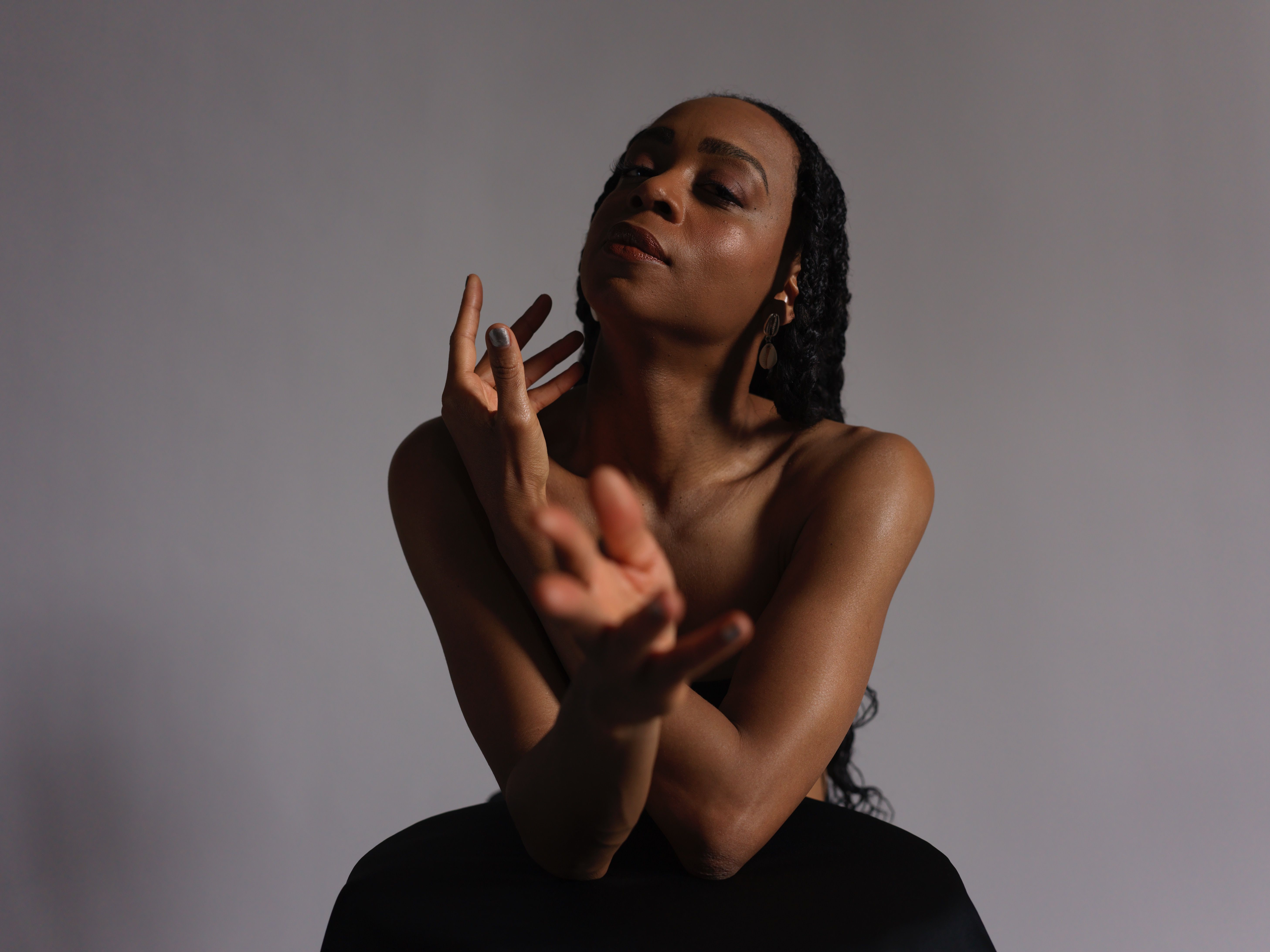
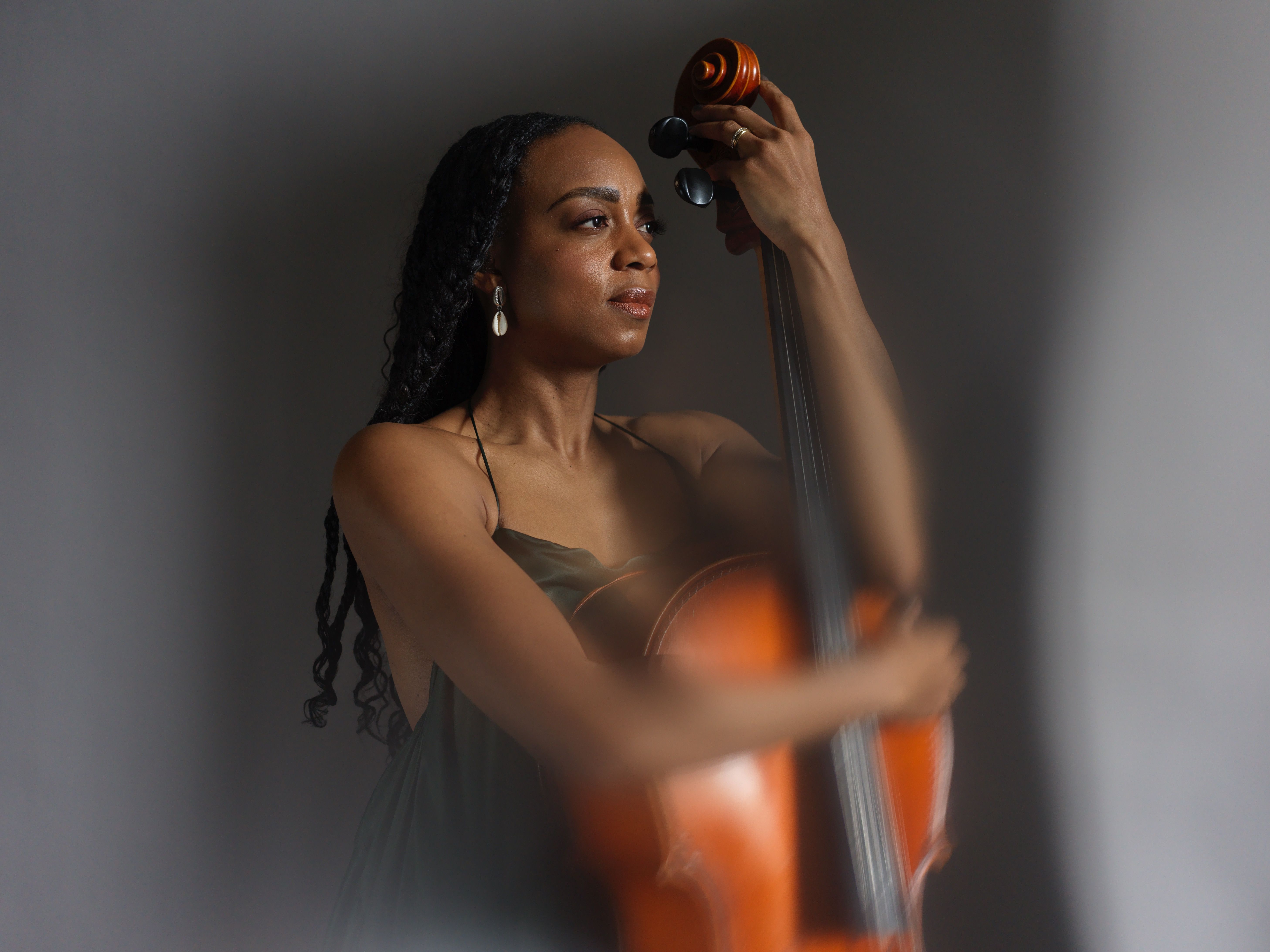
Name: Ayanna Witter-Johnson
Nationality: British-Caribbean
Occupation: Composer, improviser, singer, songwriter, cellist
Current Release: Ayanna Witter-Johnson's new album New Roots is out September 18th 2026 via Bridge The Gap.
Hometown Recommendations: I'd recommend visiting Alexandra Palace in North London. It’s near where I grew up so I spent a lot of time there as a child. It’s a beautiful place to see London from above, but I love it because it has a sense of history and community as well as the spectacular view. It's somewhere you can go for a walk, see a concert, sit and think, or simply look out across the city. London can feel incredibly fast and overwhelming, so I like places where you can get a little perspective — literally and metaphorically.
Things that I am passionate about but rarely get to talk about: Yes! Speaking French. J’adore la langue et c’est mon rêve de chanter en français un jour!
I studied French to A Level at school and was offered a place to study at Cambridge but unfortunately (and fortunately in hindsight) I didn’t get the A level grades required to accept the place and in a twist of fate I found myself on the path to studying music, leading me to get place to study Classical Composition at Trinity Laban (Trinity College of Music at the time).
I'm also fascinated by the hidden stories behind things. I love finding out how something was made, why a particular tradition exists, where an idea came from, or what happened behind the scenes. I'm particularly interested in the meeting point between history, culture and music — how the things we inherit shape what we create.
And I can become quite obsessed with etymology and language. I love discovering where words come from and how their meanings have shifted over time. A word can carry centuries of history without us necessarily thinking about it.
I also love talking about the cello! The physical relationship between an instrumentalist and their instrument is something I find endlessly fascinating. You spend so many hours with this object that it almost becomes an extension of your body and voice.
If you enjoyed this Ayanna Witter-Johnson interview and would like to find out more about her music, visit her official homepage. She is also on Instagram, Facebook, and bandcamp.
Do you think that some of your earliest musical experiences planted a seed for your interest in writing lyrics or poetry? How and when did you start writing?
Oh absolutely! I loved reading as a child, especially Dr. Seuss, Roald Dahl books and the poetry of Benjamin Zephaniah. People who played with words and created such fun yet profound universes. My Granddad also used to make up silly songs often and I spent a lot of time with him growing up so that most certainly impacted me too.
I would say that I was a late bloomer in terms of lyric writing. I wrote stories during my secondary school years and loosely kept a diary but writing songs definitely emerged in my late teens and early twenties. More as a way of processing emotions and alchemising them musically.
Entering new worlds and escapism through music and literature have always exerted a very strong pull on me. What do you think you are drawn to most when it comes to writing?
I'm drawn to possibility. Writing allows me to step outside the immediate moment and imagine another perspective, another world, another version of myself.
I'm also fascinated by the things that are difficult to articulate directly like memory, longing, grief, desire, spirituality, identity. Sometimes I don't know what I think or feel about something until I start writing about it. The writing becomes a way of discovering what is underneath the surface.
I think I'm also drawn to the idea of leaving something behind. A song can capture a particular emotional truth at a particular moment in your life, and then it can travel beyond you. Someone else can encounter it years later and find themselves inside it.
It’s an audio time capsule in many ways, but one that can breathe and stretch and be re-created or reimagined by others for generations to come. A sonic legacy.
What were some of the artists and albums which inspired you early on purely on the strength of their lyrics? What moves you in the lyrics of other artists?
Without knowing it at the time but upon reflection, I would say that Tracy Chapman, Steely Dan, Bob Marley (Exodus), Lauryn Hill (The Miseducation of Lauryn Hill), Joni Mitchell, Erykah Badu (Baduizm), Roberta Flack, Stevie Wonder (Innervisions), Nick Drake (Five Leaves Left) and Kate Bush have all had profound effects on me as lyricists.
They have all made me feel deeply - everything from belly laughter to tears of deep sadness. I’ve happily lost myself in their universes and discovered parts of me that may have remained hidden. There’s a generosity, a fearlessness and an openness which they share.
In many ways they have shown me how to reveal something about myself without betraying myself. How to tell a story in such a way that I feel I understand the emotion even though I may never ever live a similar experience.
Have there been song lyrics which actually made you change (aspects of) your life? If so, what do you think lent them that power?
Absolutely.
Often a lyric will remind me to be thankful for what I have and to stop complaining or stop ruminating on particular events and to move on! I think music has primarily been a form of spiritual guidance for me throughout my life and the older I get the more I lean on it as a reminder of what is beautiful and real about the human experience.
There have been songs that have given me courage when I wanted to give up, songs that have made me feel less alone, and absolutely songs that have helped me understand something I was going through.
It’s extraordinary how someone can write a lyric from their own very specific experience, and somehow it becomes a mirror for yours. It just shows how connected we all are.
It is sometimes said that “music begins where words end.” What do you make of that?
I love that idea, although I don't think words and music are necessarily separate territories. For me, they are constantly speaking to each other.
There are things that words can articulate with incredible precision, and there are things that music can communicate without needing to name them at all. A melody can make you feel nostalgia for something you've never experienced. A harmony can create tension or release before you've consciously understood why.
Sometimes I write a lyric and realise that I've said too much. The music can take over and create the space around the words. Equally, sometimes the lyric needs to be very specific because the music alone can't tell the whole story.
So perhaps music begins where words end but sometimes words begin where music has already taken you.
I have always considered many forms of music to be a form of poetry as well. Where do you personally see similarities? What can music express which may be out of reach for poetry?
I think both are fundamentally concerned with compression. Poetry and songwriting can take a huge emotional landscape and distil it into a few words, images or sounds.
The major difference for me is that music has this extraordinary ability to bypass intellectual understanding. You can hear something and feel it physically before you understand what it means. Rhythm, harmony, timbre, dynamics and silence all become part of the meaning.
And as a cellist, I'm particularly interested in the physicality of that. The sound of an instrument has a body to it. The bow, the breath, the resonance, all of those things communicate and there is poetry in that as well.
Where poetry can leave you contemplating a phrase, music can make that phrase move through your entire body before it can be processed mentally.
The relationship between words and music has always intrigued me. How do you see it? In how far can music take you to places with your writing you would possibly not have visited without it?
For me, the relationship is incredibly instinctive.
Quite often a lyric and a melody will land at the same time and from there I’ll improvise and explore both independently and then together again. But they most certainly have different roles.
I rely more on the music to create the emotional landscape and often, it will give me permission to go somewhere emotionally that I might not consciously choose to go inspired by the lyric and what wants to be expressed.
There are also places where the music wants to be free, independent of a lyric and I love that. It gives me space to improvise on a live show or dance and express myself outside of concrete meaning. It’s able to hold space in that way which is quite magical.
What are areas/themes/topics that you keep returning to in your lyrics?
Identity is a big one. Particularly the complexity of being British and Caribbean, and the different histories, voices and inheritances that sit inside that.
I'm also constantly returning to love, solitude, belonging, memory, resilience, grief and transformation. I'm interested in what we inherit from the people who came before us, and what we choose to carry forward or leave behind.
Spirituality comes up quite a lot too. Not necessarily in a religious sense, but in the sense of searching for meaning and trying to understand our place within something bigger than ourselves.
And I'm very interested in freedom. Emotional freedom, creative freedom, and the process of becoming more fully yourself.
On the basis of a piece off New Roots, tell me about how the lyrics grew into their final form and what points of consideration were.
With New Roots, most of the album was written during a various moments during the pandemic - a period of enormous solitude and reflection for me. So the lyrics often came from a very internal place.
I had lost a Great Uncle to COVID and I was asking myself quite fundamental questions about who I was, where I belonged and what I wanted my life and music to represent. I was keeping a diary during this time and several songs feel quite confessional in nature.
‘Now You’re Flying’ is very much so dedicated to my Great Uncle, lyrics like ‘Close the door, leave me to remember you’ feel quite conversational in tone and emerged fairly quickly and complete.
Other songs like ‘Pioneers’ took a little longer to find their feet. I hadn’t written a lyric like it before and it challenged me. I wanted to address the topic of the plagiarisation of Black Culture across the centuries. Quite a hefty topic to put into a song!
I landed upon a simpler approach of asking short questions from my first person perspective. I was conscious of not over-explaining the idea. I wanted the lyric to leave room for the listener to inhabit it themselves. The final form came through a process of writing, singing, editing and listening back — hearing where a word felt emotionally true and, just as importantly, where it didn't.
For me, the final lyric has to work both on the page and in the mouth. A beautiful sentence isn't necessarily a good lyric if it doesn't sing.