Published
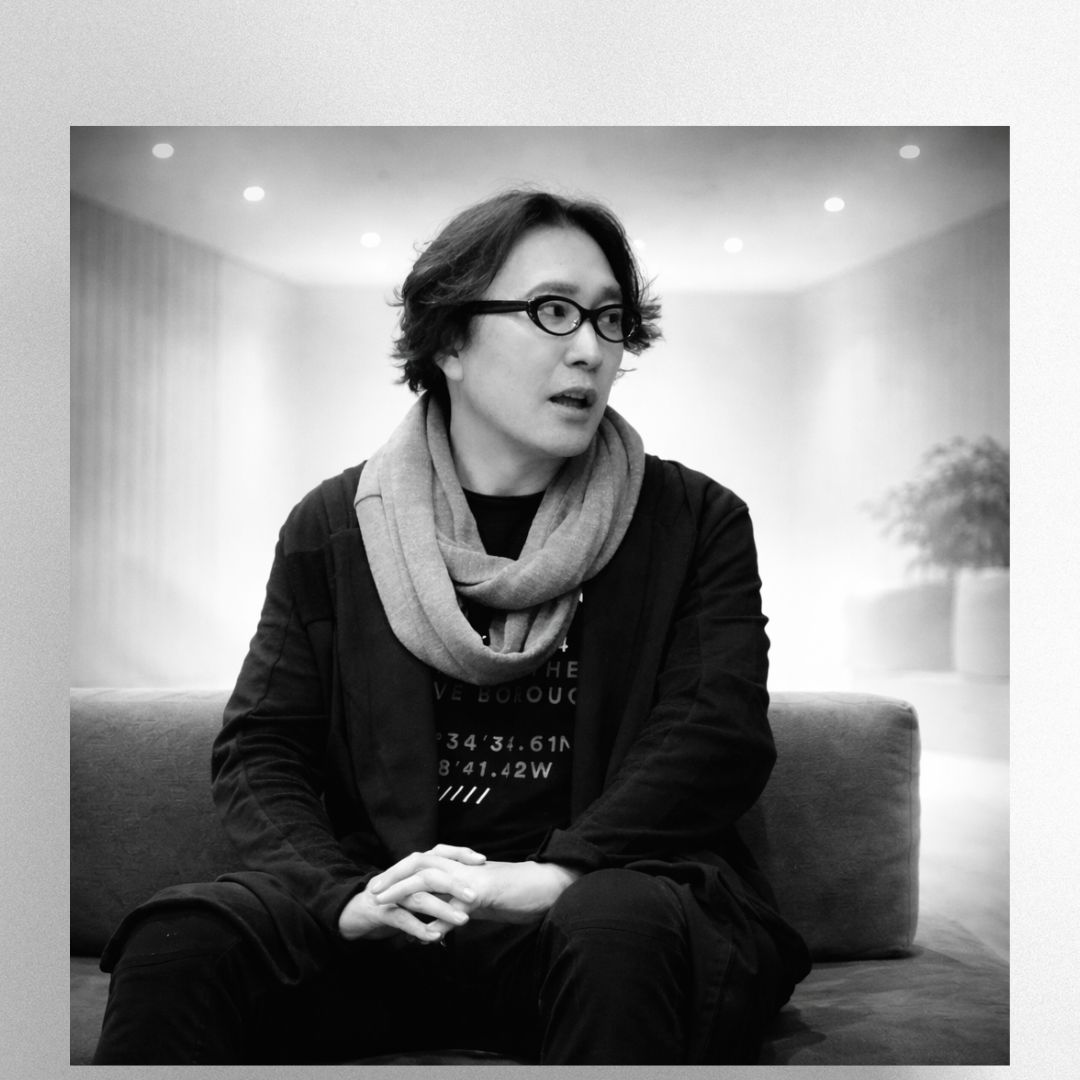
Name: Bajune Tobeta
Nationality: Japanese
Occupation: Composer, producer, pianist, sound artist, researcher
Current release: Bajune Tobeta's new Anechoic EP, mastered by Denis Blackham, featuring Christian Fennesz and including a remix by AOKI takamasa, is out via CROIX Co., Ltd. / electric sheep. Also available is a full-length album tribute to Sergio Mendes, recorded with Gracinha Leporace, Saigenji and Febian Reza Pane.
[Read our Denis Blackham interview]
[Read our Denis Blackham interview about mastering Kraftwerk, Mike Oldfield and Vangelis]
[Read our Denis Blackham interview about his Life in Mastering]
If you enjoyed this Bajune Tobeta interview and would like to know more about his music and projects, visit his official homepage. He is also on bandcamp.
For a deeper dive, read our earlier Bajune Tobeta interview.
The title of the album contains another interesting reference. What is the experience of visiting anechoic chambers like for you? What do you draw from it?
I have entered anechoic chambers many times through my acoustic work.
The first minutes make anyone slightly uneasy. When reflections vanish, the cues of space vanish; your own voice does not come back to you. The chamber in the United States that holds the Guinness record as the quietest place on earth is said to have defeated everyone who tried to stay for forty-five minutes.
But if you sit a while, unease turns into curiosity. The fascinating thing is that when you push silence to its extreme, the room becomes full of sound. The instant the world's sounds are gone, the beat of your heart rises up, the flow of your blood, the high frequency of the nervous system, even the creak of your joints. What disappeared were the sounds of the world; what appeared were your own. As long as we are alive, we can never experience true silence. It is a room that teaches you that through the body.
The story of Cage hearing two sounds in the Harvard chamber and walking from there toward his silent piece has become common property for all of us by now, and what I received is exactly the same conviction: silence is not emptiness, it is the richest acoustic space there is.
Musicians usually make work by adding sound. After the chamber, I began to think about what remains when you keep subtracting it. In the quietest room in the world, you hear your own sound. Stillness is not absence. It is sensitivity.
My own experience matches this. Most people who visited an anechoic chamber I've spoken to leave it with the realisation that absolute silence does not actually exist. What does silence mean to you, as a concept or something concrete, for your art and the creative process?
Exactly so: absolute silence does not exist. What the anechoic chamber proves is not the existence of silence but its impossibility. Strip away every sound and the listener's body goes on sounding.
So for me silence is not the absence of sound but a change in the direction of listening: the moment the ear that was turned outward turns inward.
In composition I use silence not as a rest but as an instrument. A silence placed between two sounds is not sounding nothing; it is sounding the listener's own interior. That is what I truly wanted to make audible on Anechoic.
The press release mentions “a decades-long acoustic research practice exploring the relationship between sound and human consciousness.” I would love to know more about what this research practice entailed.
I am a composer, and at the same time I have spent decades studying, in measurable terms, what sound does to the human body and consciousness.
Using EEG (QEEG) and heart rate variability, together with physicians and researchers, I examine how particular acoustic structures, the placement of frequencies, tempo, the density of overtones, the length of reverberation, alter the autonomic nervous system and the state of the brain. I have designed sound environments for airline cabins, for hotels, for wearable devices, and I am currently developing sound systems that use AI to adapt to the state of the listener.
It began with a simple question. Some music puts people to sleep; some music makes them cry. Everyone knows this, and no one can explain it precisely. I wanted to close in on that why from both sides at once, through sensation and through science.
What were some of your insights into the connection between sound and consciousness?
The largest discovery is this: the body is more honest than the ear.
Before a person reports feeling relaxed, the heart rate has already changed. Again and again in the data, consciousness turned out to be merely ratifying, after the fact, what sound had already done. Sound becomes a state of the body before it becomes a content of the mind.
The other is the problem of prediction and betrayal. The brain is always predicting the next sound. Music that fulfills every prediction passes through consciousness untouched; music that betrays every prediction triggers defense.
Consciousness opens most deeply in between, in the place where prediction keeps being gently missed. As a composer I received this knowledge less as something to use than as a confirmation: a belated proof of what great musicians have always done by instinct.
A painting by someone like Rothko can create a place, but it can also, as I've gathered quite often, make people cry. Likewise, I would assume that, for many listeners, music which creates a specific mood and music which evokes a specific place might not be that different. What do you think does this say about the notion and purity of concepts like space and consciousness? Where do the boundaries between inner and outer experience lie from your perspective as a composer?
When people cry in the Rothko room, I do not think it is because the paintings are sad. It is because the painting has become a place, and in that place there is nothing to do but face your own interior.
Music is the same. If music that creates a mood and music that evokes a place feel similar, it is because both are doing one and the same thing: building a room inside the listener.
So if you ask me where the boundary between inner and outer experience lies, my answer is this. The boundary is not a fixed wall but a membrane. Sound is the substance that passes through that membrane most freely: it begins as vibration outside and ends as emotion inside.
Composition, as I think of it, is the work of designing how that passage happens. And what the anechoic chamber teaches is that even when the outside is erased completely, the inside remains. The final sound source is always yourself.
It is my impression that there is currently a lot of research being done into precisely the consciousness-altering qualities of sound. This blurs the line between health interventions and art. Where do you see the difference and dividing line between the two?
This is a question I have lived in my own body for more than twenty years. My work has been the study of functional sound: sound designed, measured, and verified for sleep or recovery. And at the same time I have made work as an artist. Not mixing the two is my professional ethic.
The dividing line, for me, is clear. Functional sound is an answer. The purpose comes first, the result is evaluated by its effect, and it promises repeatability. It is an excellent tool, and I am proud of that work.
Art is a question. It has no purpose, promises no effect, and hopes for exactly this: that something different will rise in each listener. Anechoic is not music to put you to sleep. It is music that asks what you hear when the world goes quiet.
Research gives art knowledge; art gives research back its first astonishment, the question of why sound at all. The two nourish each other and never become the same thing. Precisely because the border is blurring in our time, I believe those of us who make things carry the responsibility of drawing the line.
I sometimes think of sound (the overall sound of a piece, not just “noises”) from a different angle: Sometimes, I just put on music because of its sound – it's almost as if the music doesn't even need to be there, the sound itself would be enough. I don't know if this is taking things too far, but do you think it possible that this sound could “emerge” from music like consciousness in the mind?
Far from taking things too far, your question touches the very center of what I have kept asking, in the laboratory and in the studio alike. What is happening when you put on music for its sound alone? My answer is yes: I believe sound emerges from music.
In the science of consciousness, emergence means that something appears in the whole which cannot be found in any of the parts. No single neuron is conscious, yet consciousness inhabits their totality. Music has the same structure. Dissect any note, chord, or timbre and you will not find "the sound." But when they ring together in a particular relation, a quality of the whole arises that is reducible to none of its parts: the sound you describe.
This, I believe, is why certain music makes us feel we are not listening to it but living inside it. And this emergent whole, this quality that vanishes the moment you take the parts apart, is, I think, what people have always called the soul. When you put on music for its sound alone, you are listening past the structure, toward that soul.
Your intuition holds one deeper truth. That feeling that the music does not even need to be there: it means that once the sound has emerged, the structure that produced it can be removed like scaffolding. Satie's furniture music was precisely this discovery.
And the anechoic chamber teaches the opposite limit. When you remove all music, all sound, what remains at the end is the sound made by the listener's own body. Just as sound emerges from music, the listener emerges from silence.
Does touching that soul heal us, purify us? I have felt the temptation to ask. But the researcher in me speaks only of what can be measured, and the artist in me chooses not to answer. The moment sound promises an effect, it stops being a soul and becomes a tool. If you can stay with sound alone, needing no music, it is, I believe, because nothing there has been promised to you.