Published
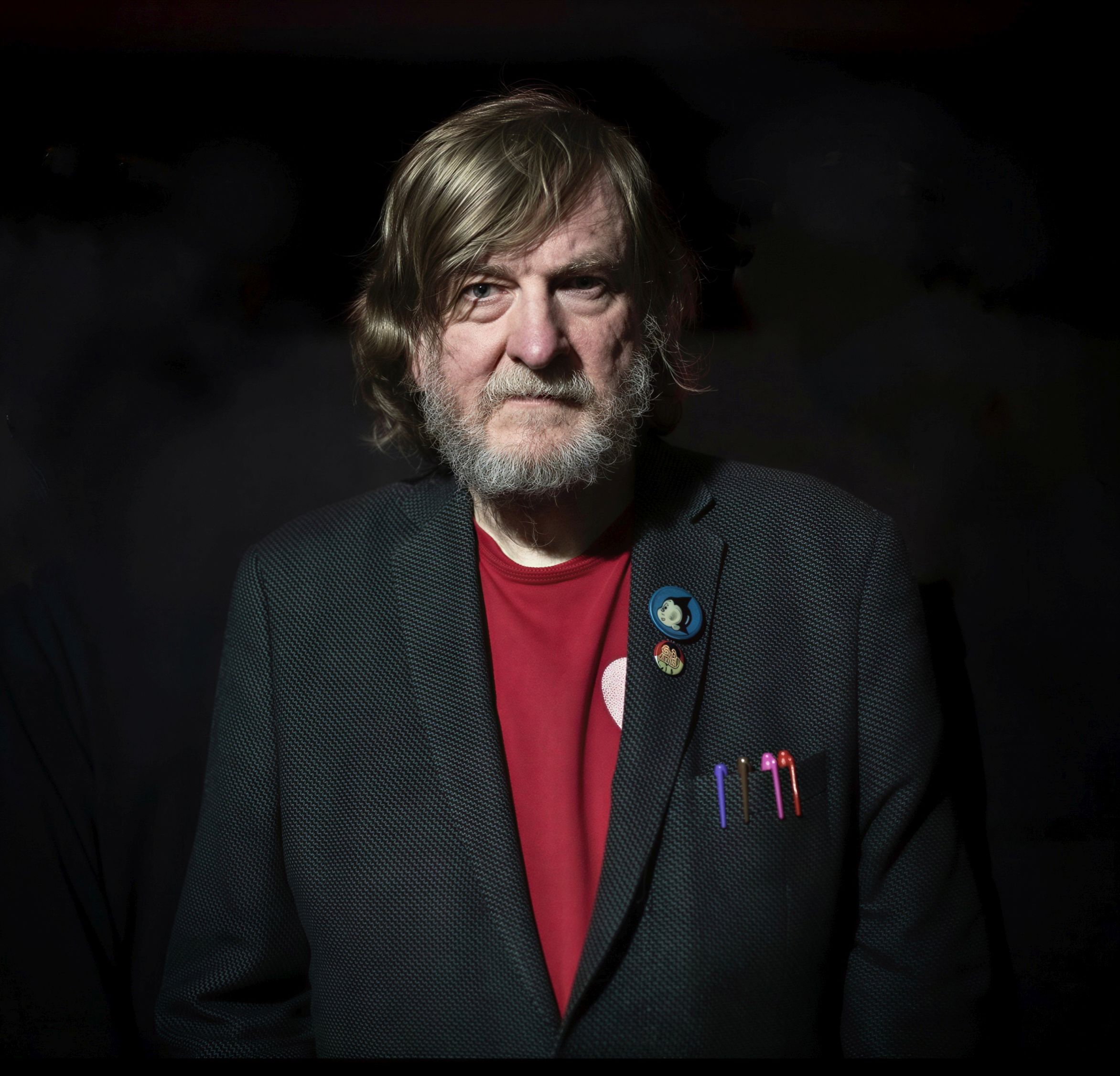
Name: Duglas T Stewart
Occupation: Leader of the pop group BMX Bandits
Nationality: Scottish
Recent release: Duglas T Stewart's latest releases are Dreamers on the Run, and a reissue of Duglas Stewart’s Frankenstein.
If you enjoyed this Duglas T Stewart interview and would like to find out more about his music, visit him on Instagram, Facebook, and bandcamp.
When I listen to music, I see shapes, objects, and colours. What happens to you physically when you're listening? Do you listen with your eyes open or closed?
If I am listening to a piece of music that I love, happy, sad or whatever its mood, I feel like it transports me to a better, more beautiful world.
Ideally, I would choose to be lying down with my eyes closed while listening but I have a 3 year old daughter at home and these days the lying down with eyes closed option is difficult to make happen.
I listen while I am out walking or on train journeys. I enjoy music that I have chosen soundtracking ordinary stuff like travelling, walking, household chores, etc.
Do you experience strong emotional responses towards certain sounds? If so, what kind of sounds are these and do you have an explanation about the reasons for these responses?
There are certain types of sounds that reoccur a lot in lots of the music that I respond to most. I feel I can trace my connection to these sorts of sounds to the soundtrack for the English language dub of the 1960s international television series of The Adventures of Robinson Crusoe, by Robert Mellin and Gian-Piero Reverberi.
The soundtrack of the version the BBC screened is unique to the versions shown in mainland Europe. I first heard this when I was 4 and it had a big affect on me even then. My Mum remembered me saying the music made me feel sad but I liked the feeling. The show was then repeated many years during School Summer Holidays. I would watch it every year just to hear the score again and the music really stayed with me.
I hear in it elements of other key musical influences and favourites of mine that I discovered later, including Serge Gainsbourg, Ennio Morricone and The Beach Boys’ Pet Sounds album.
However the sounds on their own aren’t enough, they have to be there in service of the melody and the other key musical content.
When did you start writing and producing music - and what or who were your early passions and influences?
I started writing little nonsense songs when I was around 8 or 9 and would get sent around the other classes at my primary school to perform them, with some jokes and impersonations. It made me a bit like a celebrity at the school.
That early on, I think songs from Walt Disney films by people like the Sherman Brothers and Frank Churchill would have been an influence and some early seventies pop that I would hear on the radio.
When I was 12 I heard Jonathan Richman for the first time and that made me know what I wanted to with my life. His music felt very inclusive, it wasn’t macho, angry or aggressive and I responded to that.
What are the most important tools and instruments you're currently using?
I have never written any song sitting with an instrument. I often write the melody first with basic arrangement ideas, counter melodies, etc.
While writing the song I am trying to inhabit the world of the song and its emotional content. Sometimes I will have ideas for some words or what I want it ultimately to be about but not always. So for me the main tools, for songs that I am the lead writer on, are inside my head, my imagination and then next is finding something that I can record a very rough version of my ideas into.
That’s often going to be the voice recorder on my phone. Usually at this stage I can hear in my head some of types of sounds and styles of playing that I want to feature on the song that I am imagining.
Many songwriters have claimed that as soon as they enter into the process, certain aspects of the narrative are out of their hands. Do you like to keep strict control or is there a sense of following things where they lead you?
I think there is some truth in I’m not totally in control of where the song goes musically or lyrically.
I start thinking of a scene in my head or an emotional situation and as it starts to unfold, it’s like there’s a soundtrack being conjured up to accompany it or perhaps like a song that could feature in a musical that a lead character might sing.
Sometimes I will just start singing and see where things lead me.
Which albums or artists do you love specifically for their sound?
There are some artists that I hear and I get excited hearing their sound initially but then the melody or the song doesn’t live up to the sound. Then it becomes all style and no substance. There are some artists that their sound is such a key part of what they do and the music matches the sound in brilliance.
Ennio Morricone, particularly for me his sixties and seventies work, is so brilliant on every level. I’ve loved Kraftwerk since I was a boy and I saw them on the 1970s BBC TV science programme Tomorrow’s World with their track “Autobahn.” None of it sounds dated to me.
Another “sound” (as in an overall sound) that I really love is on the records artists like Chris Montez, Harpers Bizarre, Roger Nichols and others made for A&M records between in the late 1960s and into the early ‘70s. I love the the feel and the world that those records create for me in my head when I listen to them.
They used a cast of great arrangers and studio session players on these records. One of my favourite pop arrangers Nick De Caro worked on a lot of these records. If I was out second hand record shopping and I saw Nick’s name on a record I would have to buy it.
The sound that I connect most with is the human voice, particularly when it has a very pure tone. I love the androgynous quality of Chris Montez’s voice, Chet Baker’s young singing voice also has that quality. They have a very pure tone in their singing and it’s never overplayed. Baker sadly lost that beautiful quality through excessive use of drugs.
That’s also something very much there with some of my favourite female singers like Saya from the Japanese duo Tenniscoats. Then there is Edda Dell’Orso’s incredible voice on Italian soundtracks by Morricone and others, the sound of her voice always pulls me in.
If I had to single out just one album that the sound pleases and touches me most, it would possibly be an album by the late English musician and singer Peter Skellern from 1979, called Astaire. It is Skellern’s versions of songs made famous by Fred Astaire.
That album is sonic perfection for me. I love how he brings the sound of a colliery band into the arrangements, it’s an extremely evocative sound. He also used some studio trickery vary-speeding choral voices on there, plus Skellern’s own voice is so full of warmth, tenderness and restrained passion.
I think it’s the album that I have listened to more than any other. The sonic qualities are a big part of that but he is also singing some of the greatest songs from the Great American Songbook on there.
There are lots of girl group records that I love the sound of, including stuff by The Shangr-Las, those tracks are like mini-melodramas. In 3 minutes they would manage to deliver what in a Hollywood movie would take 90 minutes to convey. They did this with a combination of melodic brilliance, sound effects, pop hooks and spoken word.
There can be sounds that feel highly irritating to us, and then there are others we could gladly listen to for hours. Do you have examples for either one or both of these?
Generally the sound that I find most irritating and it’s so overused just now is auto-tuned vocals. I hate it particularly if I am watching a modern family film and the actors are singing and their voices are auto-tuned so much that there is no humanity left in their performance.
I am a big fan of certain arrangers who worked primarily in the 1960s. I will look out for records specifically that they have arranged.
One of my favourites is an English arranger called Arthur Greenslade. Greenslade worked with a lot of artists that I love, including Serge Gainsbourg, Del Shannon, Twice As Much, Rod McKuen and many more.
On many of the tracks that he arranged for Rod McKuen he used an early type of electronic keyboard instrument from the 1920s called an Ondes Martenot in conjunction with orchestral instruments. It can a bit like a theremin but to my ears it has a lighter and more haunting sound when it’s doing that type of sound.
I find that sound hypnotic and it pushes an emotional button inside of me.
Another instrument that can deeply effect me and I have used on quite a lot of stuff is a mellotron. It’s a type of early synthesiser where playing the keys triggered little tape loops of recordings of real musicians playing a single note on a particular instrument. It’s best known for the flute sound on “Strawberry Fields Forever,” but there’s a lot more to it.
You get get mellotron versions of strings, brass, other woodwind instruments and even choirs or solo voices. I am really drawn to these sounds that mellotron because they to me they are evocative in a similar way as watching old Super 8 film footage can be. Mellotron sounds have a scratchy slightly degraded quality of sound that I find attractive.
It sounds like ghosts playing or singing and nowadays it literally mostly is that as almost all of the musicians playing the original parts for the little tape loops that it uses will be dead now.