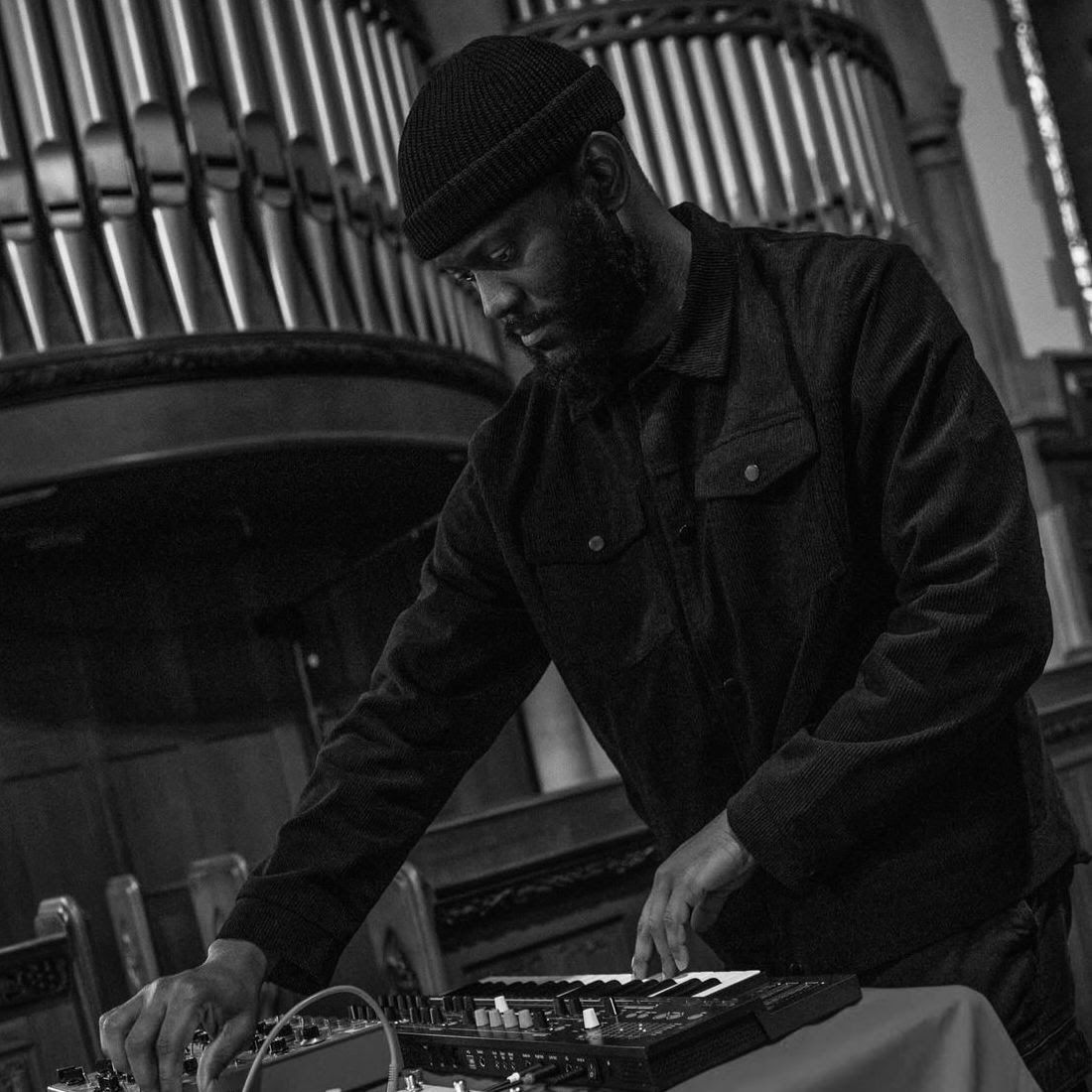
Published
Name: Ibukun Sunday
Nationality: Nigerian
Occupation: Producer, composer
Recent release: Ibukun Sunday's new album Olùsìn [Worshippers] is out August 28th 2026 via Phantom Limb.
If you enjoyed this Ibukun Sunday interview and would like to stay up to date with his music, visit him on Soundcloud, Facebook, and bandcamp.
For a deeper dive, read our earlier Ibukun Sunday interview.
When it comes to experiencing strong emotions as a listener, which albums, performances, and artists come to mind?
Albums:
Wilder Paths by Black Brunswicker, …
"Times and Travels" by Alexey Seliverstov, …
Performances: Hainbach, Suzanne Ciani
[Read our Black Brunswicker interview]
[Read our Hainbach interview]
[Read our Suzanne Ciani interview]
There can be many different kinds of emotions in art – soft, harsh, healing, aggressive, uplifting and many more. Which do you tend to feel drawn to most?
Soft, healing, uplifting also emotions and energy.
I have had a hard time explaining that listening to death metal calms me down. When you listen to a song or composition, does it tend to fill you with the same emotions – or are there “paradoxical” effects?
I get that. "Death metal calms me down" sounds like a contradiction to a lot of people, but it's actually super common.
In as far as it plays a role for the music you like listening to or making, what role do words and the voice of a vocalist play for the transmission of emotions?
Wow great question - what I think is words and voice are like two different channels for emotion, and they don't always say the same thing because some brainw pick up pitch, rhythm, texture, and breath before they process meaning.
But the pattern I see is: the voice transmits how you feel, words transmit why you feel it, and music transmits how big that feeling is.
When it comes to experiencing emotions as as a creator, how would you describe the physical sensation of experiencing them? [Where do you feel them, do you have a visual sensation/ representation, is there a sense of release or a build-up of tension etc …]
For me when creating, I see memories, dance movement. And sometimes when I perform I see patterns of colors.
How much of the emotions of your own music, would you say, are already part of the composition, how much is the result of the recording process?
The composition: the blueprint of emotion 80-90%.
For Olùsìn [Worshippers], what kind of emotions were you looking to get across?
100% catharsis + calm, communal connection, grounding, reverence without words, ambience, prayers.
How do you capture the emotions you want to get across in the studio?
When creating in studio, the storyline needs to come in first. After that, memories and emotions start building - that’s it.
In terms of emotions, what changes when you're performing live on stage, with an audience present, compared to the recording stage?
The thing is, I love performing on stage because of the energy I get from the audience. I think it’s also the same as a recording too.
What kind of feedback have you received from listeners or concert audiences in terms of the experience that your music and/or performances have had on them?
So much different feedback from the audience.
Some of them say, oh this reminds me of someone. Or oh, this reminds me of a particular country, this reminds me of a location, this reminds me of a place, this reminds me of someone that I lost many years ago.
Many of them say, oh this is so calming.
Would you say that you prefer to stay in control to be able to shape the emotions or do you surrender to them and allow the music to take over? Who, ultimately has control during a live performance?
Sometimes when I perform and the energy comes in, it takes over my body - but I am still in control of it.
The emotions that music is able to generate can be extremely powerful. How, do you think, can artists make use of this power to bring about change in the world?
YES.
Music is one of the few things that can bypass the logical brain and hit people straight in the body. That's why it's so powerful for change — it doesn't just tell you what to think, it makes you feel something first. And feeling is what moves people to act.
With Worshippers, for example reminding people that devotion can be rhythmic and collective, not just silent and solitary. That alone can shift how a community practices faith and care for each other.