Published
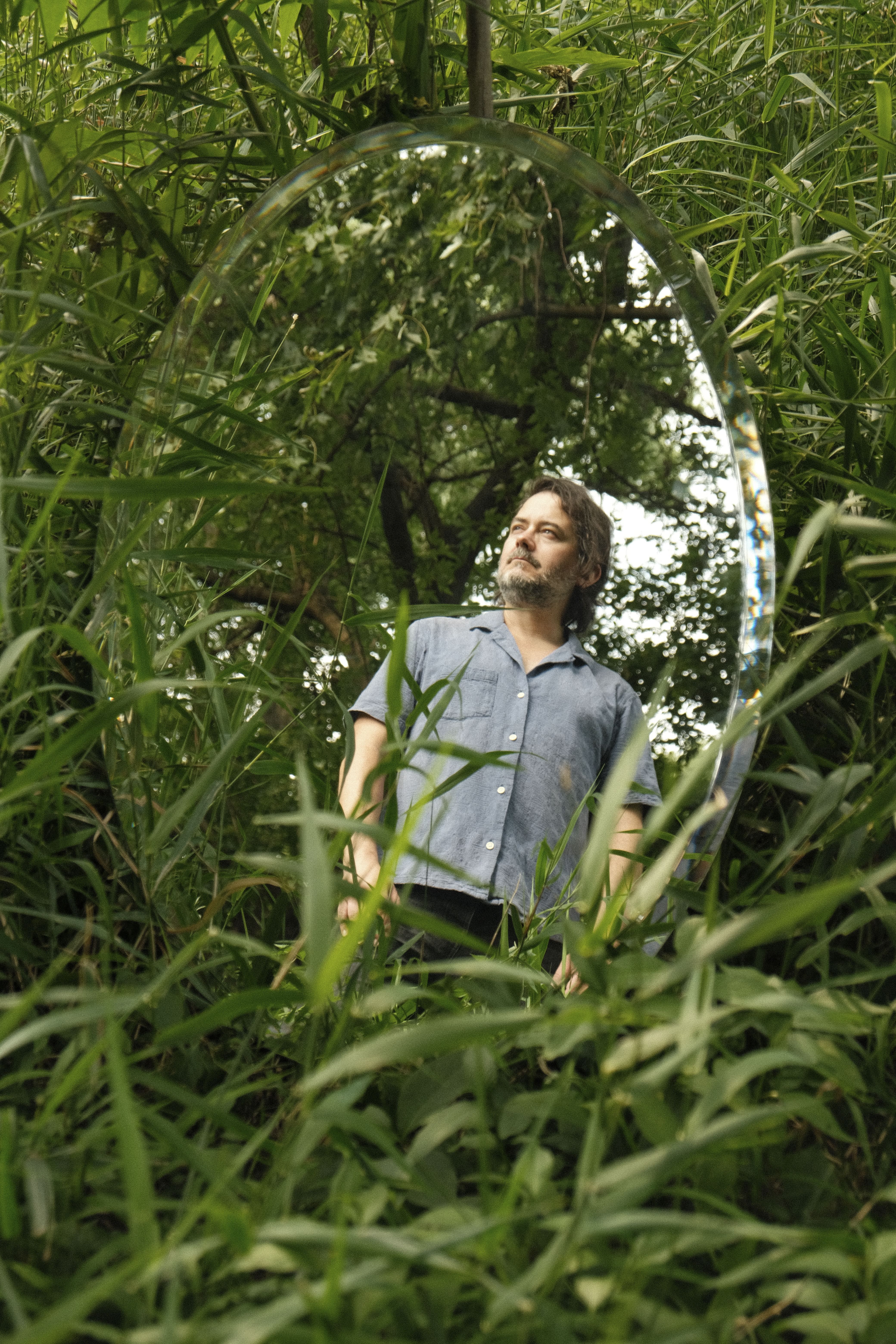
Name: Jeremy Cunningham
Nationality: American
Occupation: Composer, drummer, producer
Current release: Jeremy Cunningham's latest single, “To the Sky” is out via Northern Spy. It is taken off his upcoming full-length album Passing Fires, expected October 2nd 2026.
Hometown Recommendation: Anna Butterss recently took me to the Art Institute of Chicago to show me the miniature rooms. It’s the cutest installation and my kids love it too. Go.
[Read our Anna Butterss interview]
If you enjoyed this Jeremy Cunningham interview and would like to find out more about his music and upcoming live dates, visit his official homepage. He is also on Instagram, Facebook, and bandcamp.
Where does the impulse to create something come from for you? What role do often-quoted sources of inspiration like dreams, other forms of art, personal relationships, politics etc play?
I think it comes from wanting to find a way to tell a story.
You know how when you look at old photographs for awhile the subject seems to come to life? I grew up in the eighties, and Polaroids were a big deal. It was such a fun invention, because it was instant gratification for getting a photo of your family and friends. Someone lines up the shot, hits the button, and the it spits out this little square that slowly develops.
When I think about different memories or dreams or maybe ideas I have, I often think how I can bring some life and humanity into the musical work. That’s why I include iPhone recordings of my family or friends, or piano sketches in my finished work: I want people to hear what my life sounds like.
Because at the core, I think there’s a chance that what is being represented in the song can feel familiar and make a connection.
For you to get started, do there need to be concrete ideas – or what some have called a 'visualisation' of the finished work? What does the balance between planning and chance look like for you?
Yeah, I need a place to start, which can be pretty daunting. I’m still trying to figure out a better way.
On The Weather Up There, I had a concept from the outset. I wanted to honor my brother Andrew and find a way to let people know what happened to him, and how his death from gun violence affected all the people that loved him. The album was all about that ripple effect.
Mike Reed really helped me focus my ideas and asked me some questions about my intent. He wanted to make sure that I was seeing the whole picture, that I wasn’t just going to make a heavy album only focused on the worst thing that ever happened to my family. He asked me about the good stuff, the happy memories, what it was like being kids.
Mike’s always been a great foil for ideas. And he’s one of my favorite folks to listen to play music. He helped me get a better story together that gave a complete picture, and in many ways it made the feeling of the heavier songs make sense.
On my new album, I had some sketches together from dreams during the early part of Covid. The first thing I wrote during that time is a piano sketch that starts the album. My oldest daughter was only five, and she’s in the background saying “ Aw man, I don’t wanna go to school!”
It’s just really warm and funny to me. And it made sense to start the album with something that sounds like my home.
Is there a preparation phase for your process? Do you require your tools to be laid out in a particular way, for example, do you need to do 'research' or create 'early versions'?
Not really. I just usually sit down at a keyboard and start figuring it out. It can be hard to sit there sometimes, but I think the more you make the time, the more musical ideas will show up and start getting you inspired to make stuff.
I’ve really been trying to really learn that you just have to keep making stuff as much as you can, because on some level you are never just going to make songs that are great every time you sit down and try to write.
In fact, I think sometimes you have to get some of the not great music out to just see it through. It clears the way for the more interesting work to come out.
Do you have certain rituals to get you into the right mindset for creating? What role do certain foods or stimulants like coffee, lighting, scents, exercise or reading poetry play?
I really don’t. But I have noticed that I seem to get more musical ideas in my head when I’m jogging.
I think it has to do with the cadence and breathing. The back and forth motion of my arms. My thoughts become clearer and I feel like I can start to work through musical ideas in my head. I can hear the people playing the different parts.
For Passing Fires, what did you start with? If there were conceptual considerations, what were they?
I knew I wanted to try to tell a story about my life from early 2020 until 2025 when the awful fires in California destroyed my friend Paul Bryan’s home and caused my friend Jeff Parker to have to live outside his home for months on end. It was like these really heavy bookmarks that framed the beginning and end of a tumultuous period of my life. Anything after the fires that I’ve written just felt like it was new music to me.
Like I was saying earlier, the first song on the record is a short piano sketch I recorded on my iPhone during the early days of the pandemic. My kids were still pretty young, and you can hear one of my daughters talking about how she doesn't want to go to school.
It’s just sort of a moment that reminds me that I used to say that a lot, and now I’m the parent hearing it in the morning. It’s sort of a universal statement, and I love the idea of inviting people into the sounds of my home. It feels real to me at a time when everything feels fake and surreal.
More than this concept, I wanted to collaborate with all the people that helped me through a very tough time in my life. I think me and Jeff Parker and Makaya McCraven called each other on the phone almost every day during Covid lockdown. It was like once the kids went to bed, we’d all be on the phone like we were out at a bar hanging out. Those guys, plus Anna Butterss, Greg Ward, Christian Dillingham, Nick Mazzarella, and Tim Stine kept me from really sinking into depression.
My Dad died during the pandemic from colon cancer, and when he first got sick and was hospitalized, I couldn't even go visit. It was that awful phase people endured that were sick: no outside visitors. It really sucked, because I got robbed of the last few months with my Dad. He was my best friend, and the greatest storyteller I’ve ever met. He would always give me these mantras like ‘mind over matter.‘ Or ‘try thinking positive; what do you have to lose?’
I wrote “You’re Still Here,” shortly after he died. I kept feeling his presence around me, and I could hear his voice at times telling me that ‘you’re alright Jer.’ I wanted to capture the feeling of that loss, but also the beauty of watching my kids grow up. You know, I would’ve been on the road a lot with Resavoir that summer, and I wouldn’t have had all that time with my kids.
[Read our Resavoir interview]
Tell me a bit about the way the new material developed and gradually took its final form, please.
When I wrote “Beyond the Veil“ the idea came from how my dad’s favorite band, Pink Floyd makes time sound.
When I was young, my Dad was always listening to those early Floyd albums. He’d pick me up from little league practice in the summer in his old Buick, the airconditioner turned down to about 68, Pink Floyd blasting on the stereo.
Dark Side of the Moon has so much space and openness in the music. I wanted to write something that captured that almost dreamy space and see what Jeff, Josh, and Paul would make out of my ideas. They’re all so great that we pretty much had it on the second play through.
Many writers have claimed that as soon as they enter into the process, certain aspects of the narrative are out of their hands. Do you like to keep strict control or is there a sense of following things where they lead you?
I believe in the power of collaborative music making. I have been lucky to find so many great people to make music with in Chicago, and lately I just get together with people and make stuff up until something causes a spark.
“Windows,” started from an improvised music session at my house with Will Miller (Resavoir). He was playing a Fender Rhodes run through one of Mikel Avery’s lovely pedals, turning the dials and creating these really interesting textures along with some lovely chords. I sort of held down this soft hi-hat beat on the bell and a boomy bass drum.
When we listened back, we talked and thought Josh Johnson would be a great person to get involved. Josh edited the form and then added some more melodic material and some new warm sounds that were somehow also ethereal in a way. This might be the first song I’ve ever named based on how it makes me feel.
So, for me the best way to make something is to let it breathe. Trust your people. Let go of trying to control what’s developing naturally. The more I hold onto something, the less it reflects the strong idea.
There are many descriptions of the creative state. How would you describe it for you personally? Is there an element of spirituality to what you do?
It feels like a zone to me.
I had this great teacher named John Von Ohlen that was all about finding that space. He taught me to focus on my sound at the drums and get it to be exactly how I wanted it to sound. Somehow when you focus in this way and get deep into the sound, the music seems to take over all other conscious thoughts.
I’m trying to get into that space by making sounds that sound good to me.
Once a piece is finished, how important is it for you to let it lie and evaluate it later on? How much improvement and refinement do you personally allow until you're satisfied with a piece? What does this process look like in practise?
I wish I could turn off critique at a certain point. Once I start finishing a piece I get too critical and it becomes a hindrance. I think Wayne Shorter said in an interview once that you can’t create while you critique, and I think he’s right.
I mean, call up Paul or Josh and ask them how many times I freaked out over an arrangement or edit. It’s ridiculous. I totally freaked out once and called Makaya and asked if I wrote a smooth jazz song. It was my song “Hike.” He said something like ‘when was the last time you listened to smooth jazz?’
He made me pull something up on iTunes and stayed on he phone while I listened. He was laughing so hard when it dawned on me that my music sounds nothing like that.
And honestly, who cares? I mean, people love all kinds of music. But more importantly, get some good friends that will help you through those moments of harsh critique.
How do you think the meaning, or effect of an individual piece is enhanced, clarified or possibly contrasted by the EPs, or albums it is part of? Does each piece, for example, need to be consistent with the larger whole?
I do believe in making the album as a work of art. I think DSPs really messed up what is what like to buy an album when I was a teenager:
I mean, you couldn’t just buy the song you liked; you had to buy the whole album. If I would’ve just bought “Love Song” off Disintegration when I was a teenager, ...
… maybe I would’ve never heard “Plainsong,” which is my favorite Cure song of all time.
But if that isn’t reason enough to buy a full album, think about the impact you are having on musician’s lives when you buy a full album: I know for me, that I would have more time to make my own music instead of constantly hustling to pay bills.
What's your take on the role and importance of production, including mixing and mastering for you personally? In terms of what they contribute to a song, what is the balance between the composition and the arrangement (performance)?
It’s vital. So much so, that since I finished this album I’ve been learning as much as I can about audio engineering: Taking mixing lessons, reading, and experimenting.
I did a lot of production work on my own on indivudal songs on this album like “To the Sky,“ for instance. For other songs the production process was collaborative.
When I think back to where things ended up, I want to make my next work armed with tools and a vocabulary to be specific about what I’m looking for in an arrangement or mix. I really don’t want to keep talking in metaphor or simile when I’m dealing with sound.
Music and the accompanying artwork are often closely related. Can you talk about this a little bit for your current project and the relationship that images and sounds have for you in general?
My last two albums were old photographs from my childhood. There’s a texture to those photos that feels warm, slightly pixelated, and nostalgic.
I use memory a lot when I write music, and those photographs felt closely related to the core of what defines my inner self.
After finishing a piece or album and releasing something into the world, there can be a sense of emptiness. Can you relate to this – and how do you return to the state of creativity after experiencing it?
It’s not emptiness for me: It’s anxiety and second-guessing. Truly an awful experience that I 100 percent don’t recommend. LOL
I would love to know a little about the feedback you've received from listeners or critics about what they thought some of your songs are about or the impact it had on them – have there been “misunderstandings” or did you perhaps even gain new “insights?”
Lots of folks have reached out over the years to tell me about how my work affected them. I think there’s enough out there about what my music has been about that there’s not really anyone that has gotten it wrong.
I will say though, that when people write an email or DM on the socials, it really means a lot. Knowing my music is connecting with all these different folks is an absolute honor that I don’t take lightly.
Creativity can reach many different corners of our lives. Do you personally feel as though writing a piece of music is inherently different from something like making a great cup of coffee? What do you express through music that you couldn't or wouldn't in more 'mundane' tasks?
Yes, writing music is different than cooking, or writing, or painting. And rather than get into the differences of what I think music can express from those mediums, I’d rather talk about how much I hate AI tools in music production.
It is an absolute theft of my work, all my friends, and everyone that came before us to use those tools to generate some crappy song. Even if the song is ‘good’, the act of using those tools is harmful. I don’t want AI generating art when the tools were stolen from musicians.
No permission was asked of me to use my work, yet it’s in a database. Songs that have my Dad’s voice, my kids, songs about my brother dying from gun violence is all listed in this database that trained AI models. And all the while some tech CEO is going into interviews saying how not fun it is to get good at an instrument: yeah man, it wasn’t fun for you buddy. Because you probably had gave up too quickly. Or perhaps you just didn’t have the aptitude. But for chrissakes, don’t take that frustration out on the whole fucking history of song writers!
In the words of one of my dear friends: every day it’s some new bullshit.