Published
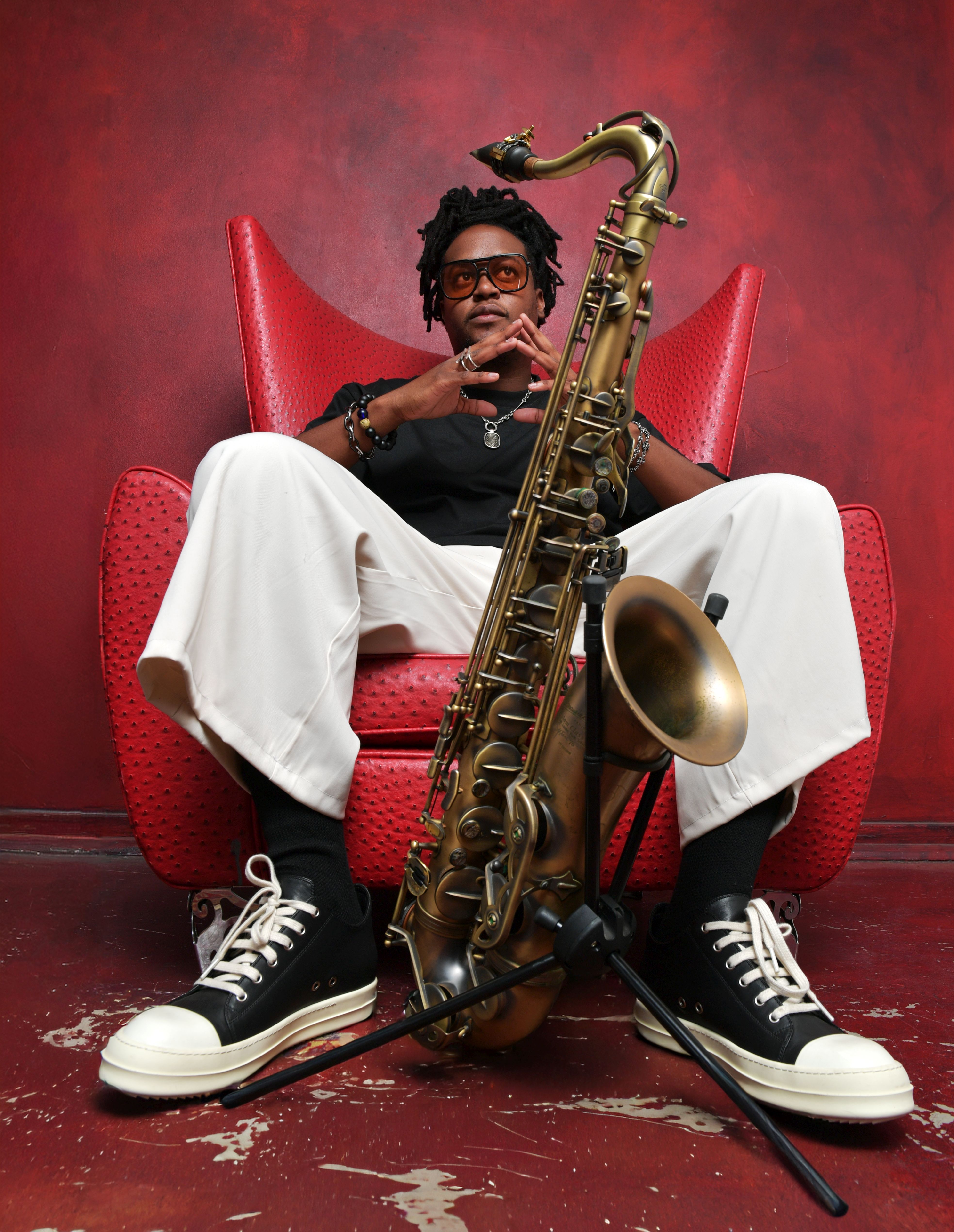
Name: Linda Sikhakhane
Nationality: South African
Occupation: Saxophonist, composer, improviser
Current release: Linda Sikhakhane's new album LINDA is out via Blue Note. Listen and stream here.
Shoutouts: A shout out to all my people that make it possible for our voices to be heard; Big Brother Nduduzo Makhathini who produced all my albums and has mentored me through the years, artists that feature on my latest album; Kabelo Mokhatla, Cameron Campbell, Conway Campbell Jr, Ludwe Danxa, Omagugu, Zuluboy, Phila Dlozi and Ovuyonke. Labels: Universal Music South Africa, Blue Note Records and Skay Music Records, my independent label that helped document my earlier albums.
Recommendations for Durban, South Africa: Visit all the music spaces, you’ll be amazed by the creative beauty that resides here.
Things that I am passionate about but rarely get to talk about: All that I’m passionate about is already a part of my life. I never leave anything out.
[Read our Nduduzo Makhathini interview]
If you enjoyed this Linda Sikhakhane interview and would like to stay up to date with him on Instagram and bandcamp.
What were some of the musical experiences which planted a seed for your interest in jazz?
I was fascinated by the idea of improvisation being an integral phenomenon in jazz. That planted a seed after seeing a jazz band rehearse for the first time at the Siyakhula Music Community Centre in my hometown.
This is where I would take jazz lessons with Dr Brian Thusi, a jazz musician who founded the institution.
What does the term jazz mean today, would you say?
Evolving expressive music that documents different periods through sound and innovation practice.
As of today, what kind of materials, ideas, and technologies are particularly stimulating for you?
A combination of acoustic instruments with electronic gadgets is stimulating for me.
This is a new path that I’m trying to navigate and the evolution that comes with various technologies makes this creative world an interesting one.
Where do most of your inspirations to create come from – rather from internal impulses or external ones? Which current social / political / ecological or other developments make you feel like you need to respond as an artist?
I would say my internal impulses, which are sometimes triggered by external happenings.
Coming from the African continent, we are constantly trying to escape the confines of this “3rd world” categorisation, which comes with a deep sense of invisibility – even though the African continent has been the hub for inspiration for decades.
Our music seeks to sound against the silencing.
Tell me a bit about the sounds & creative directions, artists & communities, as well as the colleagues & creative hotspots of your current hometown, please. How do they influence your music?
Innovation while preserving culture is at the core of our creative directions.
The voice of a community is more impactful than that of an individual. In a way, our sounds are shared with the idea of cultivating a communal voice, and this has created space for different music sensibilities to interweave through various collaborations that are not restricted by genres.
What role do electronic tools and instruments play for your creative process?
I see these as tools to express my inner-voice.
The creative process becomes interesting because instruments and electronic tools enable an artist to create beyond human limitations.
Thanks to technological advances, collaboration has become a lot easier. What have been some of the most fruitful collaborations for you recently and what approaches to and modes of collaboration currently seem best to you?
Being able to circulate files globally and collaborate remotely on album recordings has been fruitful.
Our communities keep expanding because of such creative options.
Jazz has always had an interesting relationship between honouring its roots and exploring the unknown. What does the balance between these two poles look like in your music?
I see these as two important pillars for my creative journey – my music is a result of honouring the roots while exploring the unknown.
How much potential for something “new” is there still in jazz? What could this “new” look like?
That’s a difficult question to answer.
They say, “there’s nothing new under the sun,” but I do believe in new approaches that speak to a particular time. So there is always potential for new approaches.
For many artists, life-changing musical experiences take place live. How do you see that yourself?
I see improvisation as a way to surrender and being vulnerable to the unknown.
This comes with different experiences on the bandstand, and some of these experiences have been life-changing in my musical journey.
How, would you say are your live performances and your recording projects connected at the moment? How do they mutually influence and feed off each other?
My recordings serve as a guiding map for creative expression.
While an album recording is an attempt to immortalise narratives – live performances become a vehicle to engage these narratives in real-time with an audience.
Improvisation is obviously an essential element of jazz, but I would assume that just like composition, it is transforming. How do you feel has the role of improvisation changed in jazz?
I feel improvisation responds to the current happenings in the world, so any kind of transformation would inform the shape of improvisation in that particular time.
What, would you say, are the key ideas behind your approach to improvisation?
I try to express from a deep place of originality – I see improvisation as a meditation for self-discovery, while inviting listeners to also find themselves through my music.
There are of course fundamental technical aspects but beyond that, this where I’m currently at.
The Montreux Festival intends to preserve its archive of recordings for future generations. Do you personally feel it's important that everything should remain available forever - or is there something to be said for letting beautiful moments pass and linger in the memories of those that experienced them?
From where I come from it is believed that for us to know where we are going, we need to know where we come from – so I feel preserving is important.