Published
Part 2
In your best improvisations, do you feel a strong sense of personal presence or do you (or your ego) “disappear”?
GL: It depends so much on the context. For me, it all comes down to presence.
ME: I believe that the self acts as a filter and a resonator in relation to your surroundings which in essence means that you are using your consciousness as a tool to navigate through a musical situation. Your “job” in this situation as a musician is to stay focused on the unveiling of the music as it unfolds before you, to remain in the almost present and to be able to stay in the presence of music.
This requires a balancing act in which your mental state is kept in a state of suspense - the in-between-state of tension between merging the music and watching it from a distance. This is not easy but all you can do is to try your best.
What are some of your favourite collaborators and how do they enrich your improvisations?
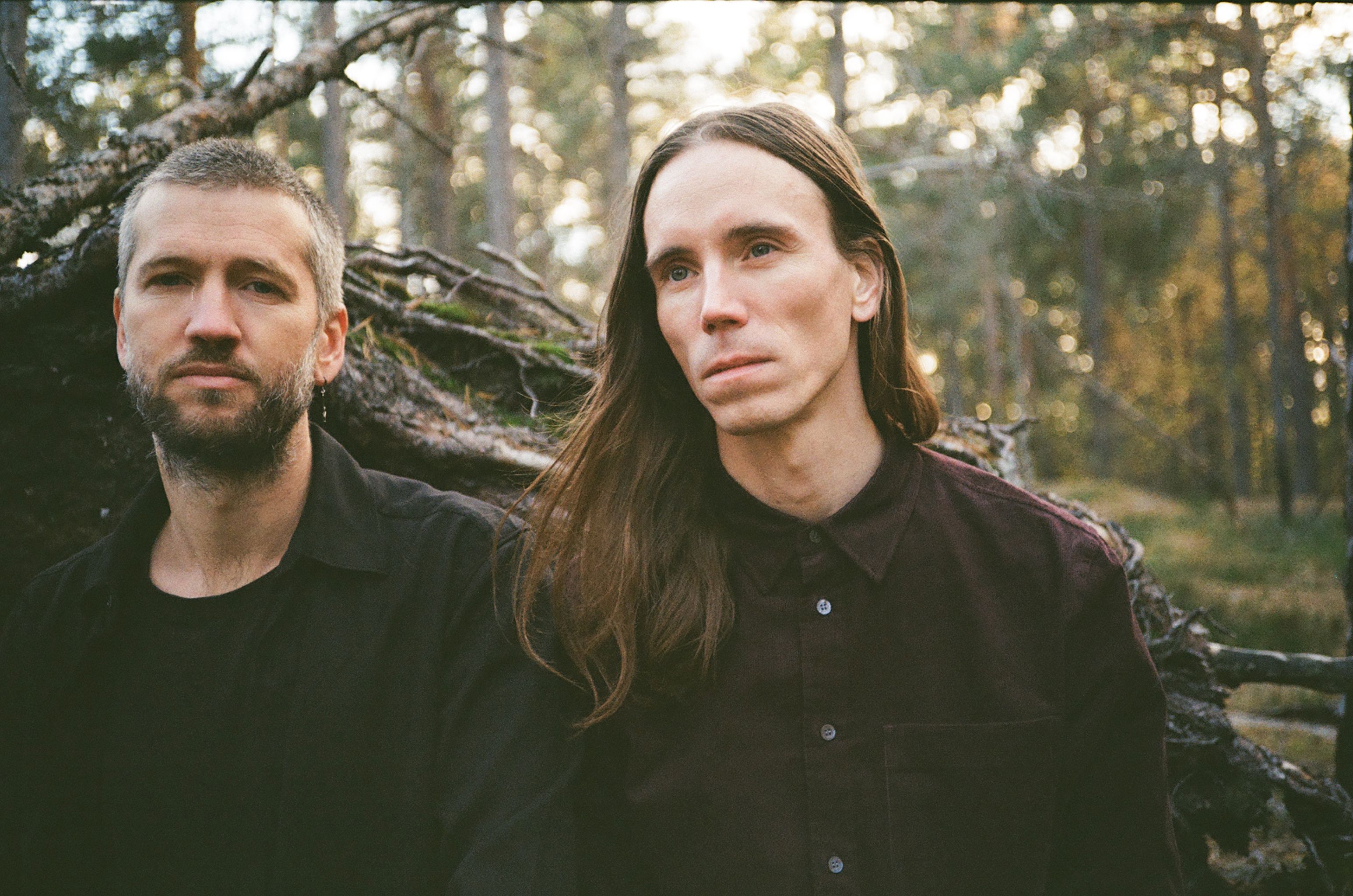
ME: Yair Elazar Glotman, Maria W Horn, Gus Loxbo and Sara Parkman are all people who have meant a great deal to me as musical collaborators, and who have all in their own way made me see the work we have done together from a different perspective than my own.
In the case of Gus I find that over time he has refined qualities that he already possessed when we first met in 2001 - an enormous sensitivity to sound as matter and an uncanny ability to intuitively navigate a musical situation using whatever tools are at hand with intensity and ease.
[Read our Maria W Horn interview]
GL: Thank you, that’s nice to hear! It’s always fun working with Mats. We’ve taken rather different directions in our musical lives, but whenever we meet up to play, there is always something exciting that happens. I think that has helped keep my own music-making alive and prevented it from becoming stagnant.
Mats works more methodically and carefully than I do, which I appreciate, and I’m always happy to let some of that rub off on me.
In a live situation, decisions between creatives often work without words. From your experience and current projects, what does this process feel like and how does it work?
ME: This goes far beyond the live situation specifically - that type of interaction is at the basis of playing music together with other people. At best the unfolding of music is perhaps like the uncovering of an object in the dark seen from different angles by the players involved.
GL: In recent years I’ve also been working as a music therapist alongside my own music-making. When I meet people with nd variations (neurodevelopmental differences) whose verbal communication may be quite limited, music becomes a super-tool as an alternative communication method.
Imagine being used to the other person having a hundred times more ability to express themselves through the established means of communication — words. When we instead bring our instruments and begin exploring without any particular expectations, impulses can be answered, and the otherwise very clear boundaries between right and wrong are suddenly gone.
What remains are the foundations of a shared language: energy, willingness, intention, attention - and the possibility of responding to one another without having to agree on a single word.
Stewart Copeland said: “Listening is where the cool stuff comes from. And that listening thing, magically, turns all of your chops into gold.” What do you listen for?
GL: We should not play something just because we can.
I don´t like giving too much attention to chops, of course they exist, but they very often take away from the act of listening. I try to listen beyond the chops, and maybe that’s what Copeland means too. But in much music I find that tricky.
As a listener, do you also have a preference for improvised music? If so, what is it about this music that you appreciate as part of the audience?
ME: That just depends on where you draw the arbitrary border which defines improvised music in relation to non-improvised music, and that distinction is to me, at best, blurred.
All types of music that I can think of contain elements of improvisation in terms of its execution even though these might not be seen as such formally - even in the case of something which might appear very strict on paper like a Beethoven string quartet requires the players to make endless micro-decisions based on the surrounding musical situation with regards to dynamics, pitch and rhythmic articulation which could all be considered improvised.
Similarly, on the other end of the spectrum, something like Dhrupad from north Indian is usually thought of in the west as containing a fair bit of improvisation still follows a strict traditional system in terms of the unfolding of the music in time.
Even something like free-improvised-music which grew as an extension of the free jazz of the 1960s clearly has a fixed frame of reference in terms of the aural result and uses improvisation as a tool to achieve this result, which sometimes even appears to be defined as a negation of another musical structure - i.e it is a texture which is supposed to not sound like Autumn Leaves.
GL: I remember sometimes struggling to “find my way into the music” at concerts of improvised music — and other music too, for that matter. I would sit there trying my hardest to find a way in, almost willing myself to like it. I had the feeling that there was something I didn’t understand, or that I simply wasn’t “ready for” yet.
At the time, I asked my teacher Raymond Strid, who was my mentor at the music college and a major influence on me, what I should do if I was at a concert of free improvisation and didn’t like the music. Did he have any tricks?
He said: “It probably just means you don’t like it. Leave.”
I appreciate his direct, straightforward answer, which so often brought me back down to earth. We laughed, played music and ate pea soup.
These days I think it doesn’t really matter whether I understand, like or feel something for a piece of music — or any other form of art, for that matter. That’s not why it exists. If I’d had the chance to ask John Cage, I imagine his answer would be: listen again.
In a way, we improvise all the time. In which way is your creative work feeding back and possibly supporting other areas of your life?
ME: For me my engagement with music has shaped all parts of my life for such a long time now that it is not really useful for me to speculate who I would have become if it weren’t for being exposed to the mind-blowing transformative potential power of heavy metal manifested through KISS at 10 years old in 1995.
Similar revelations tied to musical expression and other artworks have happened at various times throughout my life and have shaped my thoughts and actions more than anything else I can think of.
GL: We all find our own ways through life, and somehow they are all connected.
I often feel that my surroundings are improvising with me. I hear music all the time, in everything, just as I see dance in everything that moves. To me, much of these nice things springs from the same source.