Part 2
Tell me about your contribution to harkening critters, please. What were your considerations going in? When, where and how was it recorded?
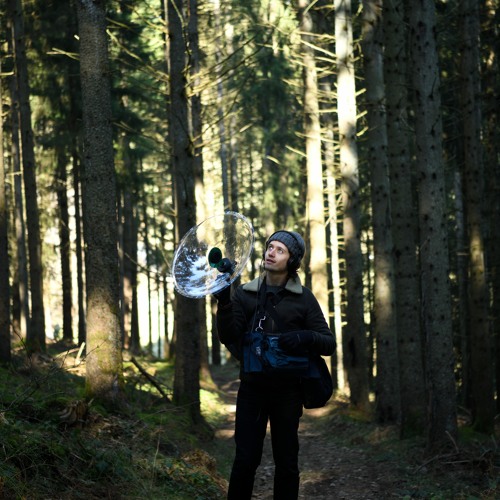
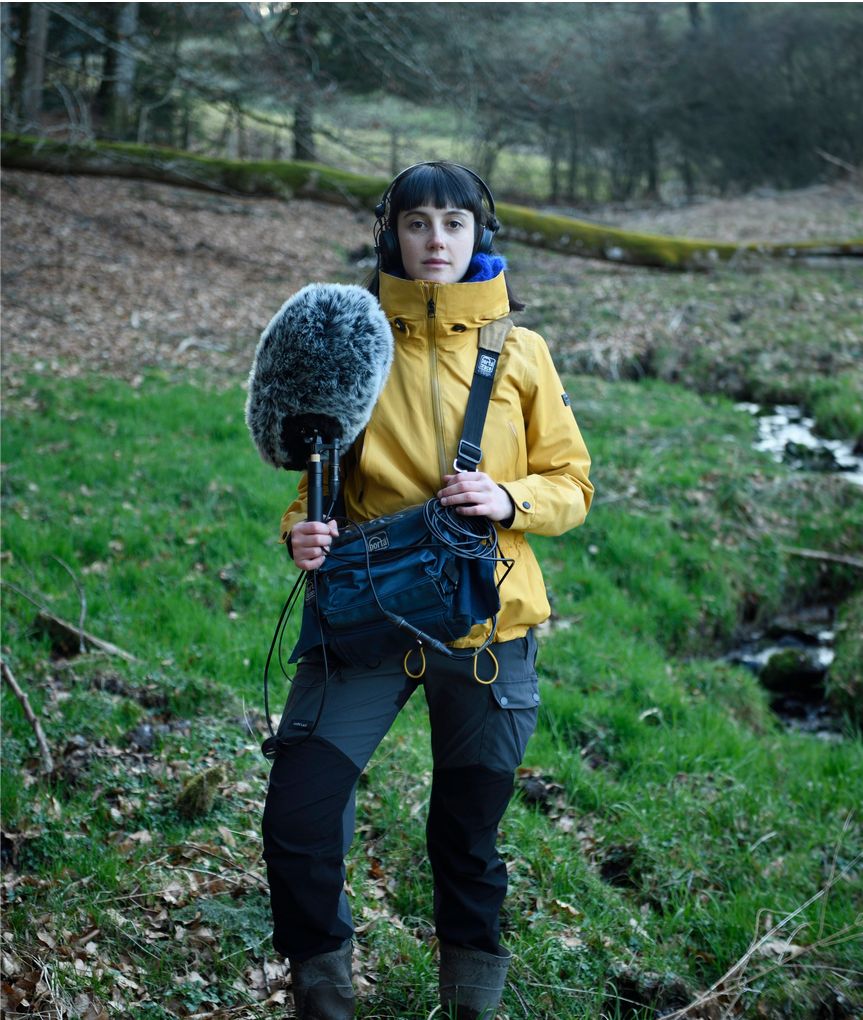
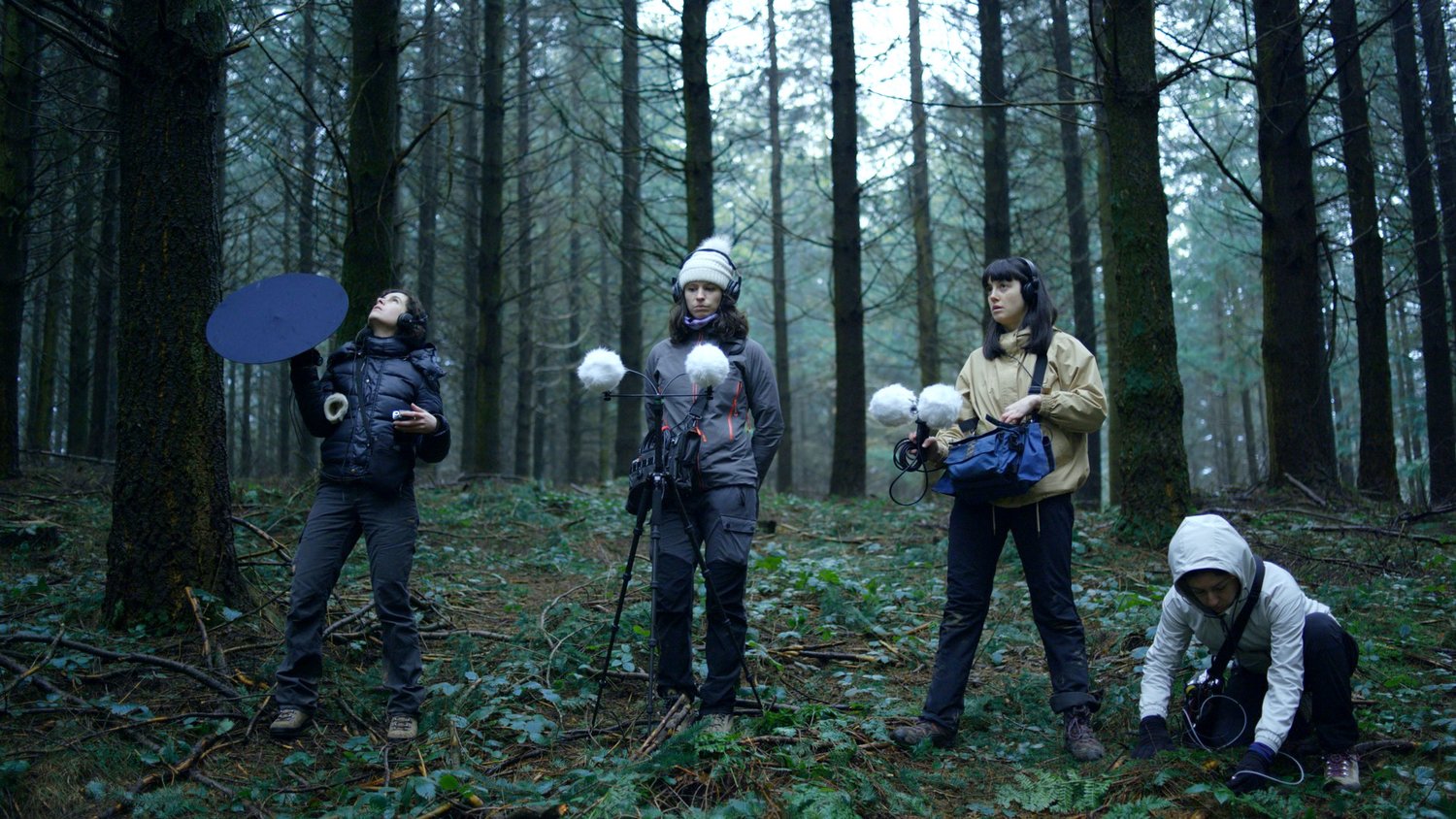
M/Greg: Working a lot as a duo, we also sent 2 sounds. The first one was recorded two years ago.
We were for the first time around the Lac du Der in France. It is an artificial lake designed to regulate the amount of water flowing in the Seine river, and famous during fall and winter for hosting thousands of common crane halting here during their migration. 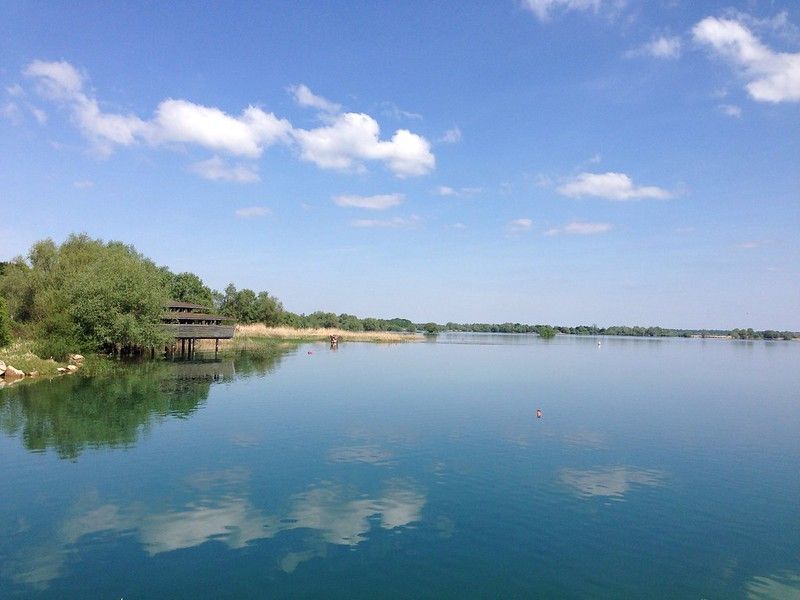
Lac du Der Photo by Tourisme Champagne
Each night, after a day spent harvesting in the surrounding fields, cranes come back hundreds by hundreds in the middle of the lake where they spend the night.
Although they are really loud, large and protected birds, they are also really shy, so we decided to leave a pair of microphones at the edge of a forest next to the lake, hoping for the best, after noticing a nice acoustic and a wide variety of water birds in the area. Also, being at the junction of two different environments is often interesting.
When we listened back to the recording, we found that amazing sequence where a fox (probably female) and a pack of cranes seemed to interact for more than ten minutes. It was really tempting to call it a “dialogue” but that is probably a really anthropogenic way of seeing things.
The second contribution we shared, “Glis glis EM272”, is also taken from an overnight and unsupervised recording made during the Red Deer rut season in Vercors, in 2023.
We were looking to record Edible Dormouse and left the microphone up in a tree where they like to be active during the night. When we came back to pick up the mics, one was completely off, hanging from the branch where it was supposed to be. On the spectrogram, we saw this huge bright colour: for almost 10 minutes, one of our microphones has been licked, scratched, humped. From what we saw and heard of that place, we suspect an Edible Dormouse to be the author of this harassment.
What is nice is that somehow we will never really know what happened that night and it’s all left to our interpretation.
Now you've had some time to hear the other pieces on the release, what are some of your favourite recordings by the other participants – and why?
M/Greg: They are all equally great. We have a special crush on the Great Snipes Lek recording made by Izabela Dłużyk.
Because Snipes are really fascinating birds and the recording is testimony to how diverse a courtship display can be.
[Read our Izabela Dłużyk interview]
The press releases to harkening critters uses the word “signals” to classify the sounds on the CDs. Undeniably, there are many “musical” moments on harkening critters, but how do you feel about using the term “music” for them? What sets “signals” apart from “music”?
M/Greg: Both are probably valid and are different perspectives on the same thing.
“Music” is a very anthropogenic term, and knowing that arts have been inspired by nature and wildlife, it is not surprising that we could hear music in those animal signals, though animals probably don’t think of their vocalisations as music.
Do you think that true creative collaboration between animals and humans, as has been attempted for example by artists like David Rothenberg, is possible? Are there any such collaborations you've engaged in or would like to try?
M/Greg: We both don’t think so. Animals will eventually react to stimuli coming from humans, but it is neither a collaboration nor music. They are answering to a dupe message they might take for a threat, or coming from another individual in a way we interpret as music or art.
Actually, the best that we can do (at least with wild animals) is to leave them alone.
Based on your thoughts, experiences, examples, or intuitions, do you think it is possible that examining animal signals will at some point lead to understanding and, eventually, communication? What is your personal threshold for considering interspecies communication as successful?
M/Greg: It depends what you mean by “communication”.
Exchanging information for passive or active cooperation, yes. Wild animals do that all the time. A jay screeching in the forest as you enter it, informs every other inhabitant of the forest that a potential threat is coming.
We also do that all the time with our dogs and cats. They know how to tell us they are hungry or when they want to go out, they understand quite a lot of indications we give them. We understand each other emotional state. But I don’t think we will ever be able to exchange more than that.
Bioacousticians went pretty far on wild animal communication. They can tell a group of monkey to climb up on a tree by diffusing a “beware, snake!” call to them. But they are fooling them, making them believe the call came from another monkey. Is that really communication? I don’t think so.
But we will be able to understand quite a lot of things for sure.
Interspecies communication is increasingly extended to plants as well. What are your thoughts on this?
M/Greg: For sure, as any other living being it seems logical that plants may exchange information, be it by their roots, scents or whatever way they like. There is still a lot to discover !
Some have argued that recording animals is a form of appropriation and that they should be compensated in some form. Do you have any thoughts on this?
Greg: I think that biodiversity and ecological questions should be at the top of our concerns and defended. As Françis Hallé (French botanist and biologists) said, “we can only defend what we learned to love”. And I think having empathy and wanting to protect wildlife can pass by recording the wonders they sonically or visually represent.
But it is obvious you have to do it without any negative impact on them…
Being exposed to the richness of the world of animal sounds can be an intense experience. How has listening to animals changed your views on various topics? (ecology comes to mind, but there may be more).
Mélia: The more I listened to animals, the more I started to hear them in urban environments as well, sometimes almost completely masked from other sounds, especially traffic. I started to notice their presence in very unwelcoming areas.
In winter, my attention was caught by their voices and following my ears, I saw nests in trees which had plastic in it. I spent more and more time with their voices, with microphones or not, and this completely changed my consideration of their presence and our common ways to cohabit.
Already considering the CO2 impact of the car, I started to consider my sonic impact when I have to use it. Things like that.
I also started to be more silent, walking very slowly in the forest, without trying to disturb. The thing is, when you are walking like this, your movement can really be interpreted as a hunting posture …