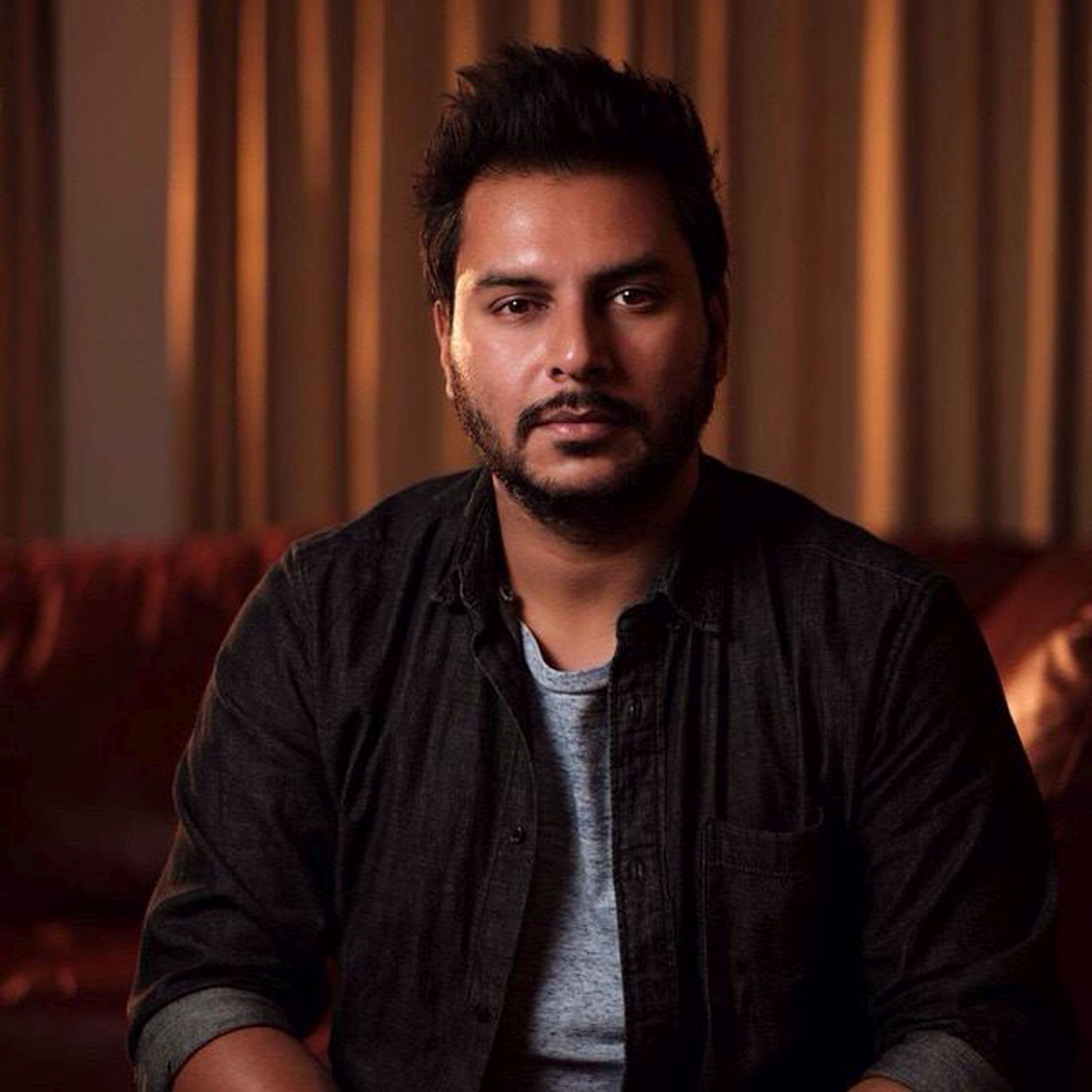
Published
Name: Pawas Gupta aka Pawas
Nationality: Indian
Occupation: Producer, DJ
Current release: Pawas is among the artists included on compilation Indian TechXpress 2, compiled by Alexander Robotnick, out via Hot Elephant. Other artists on the release include Pawas, 5volts, Farhan Rehman, and Noni-Mouse.
Recommendation for Berlin, Germany: Berlin in Summer … don't miss out on it. :)
[Read our Alexander Robotnick interview]
[Read our Farhan Rehman interview]
[Read our 5volts interview]
[Read our Hybrid Protokol interview]
[Read our Noni-Mouse interview]
If you enjoyed this Pawas interview and would like to stay up to date with his music, visit him on Instagram, Soundcloud, Facebook, and bandcamp.
Are there examples of minimalism in music – and outside of music – that impressed you early on?
Finding minimalism in the middle of all the chaos and rush of daily life in India wasn’t easy. But with a bit of patience and consistency, I got there. Eventually, that mindset found its way into my music too.
Minimalism’s always been part of music. A typical band setup—four or five people—is pretty minimal when you think about it. Then came electronic music, which totally flipped the script. Suddenly, one person could make tracks that sounded like a full band of 30 or 40 members.
But I like to keep that original “band” idea in mind, no matter what genre I’m working on. If you apply that principle—just a few solid elements—it naturally keeps things minimal. That’s how I work in the studio: strip it down, don’t overcomplicate it, and try not to get buried in an ocean of synths and plugins.
Same goes for my personal life as well. The simpler, the better.
Do you tend to find that, as many claim, “less is more?” Are the notes you don't play really as important as the ones you do play?
"Less is more" or "more is less"—it's all pretty subjective. At the end of the day, what really matters is the final product.
Every note or sound has its place, even if it doesn't end up in a track right away. I’ll often write sketches or build out ideas, and even if something doesn’t make the cut, I’ll save it for another track.
It’s like building my own little ecosystem of electronic music—recycling sounds, reusing ideas, and letting everything find its moment.
Do you feel as that making music is a process of adding elements until it is done – or one where you chisel away pieces from something that is already there?
Making music is about creating something from nothing. The more you add, the more it starts to take shape—but if you overdo it, it just becomes a mess of sounds, and the music itself gets lost. It's like cooking.
You’ve gotta find the right balance with the ingredients and their purpose, or it all falls apart.
What were some of the starting points for your most recent release?
I just start with a clear head—no thoughts, no influences, nothing heavy. I let the creative process do its thing and see where it takes me.
Do you like to set yourself limitations? If so, which were some of those limitations for the new pieces?
It’s not really intentional … but when I’m using my 4-track sampler with another synth, it naturally limits me to just 5 elements.
It’s definitely a challenge, but in a good way—it pushes me to think differently and get more creative. You start to understand your gear better and figure out how to really get the most out of it.
Thanks to sampling and digital synthesis, there are endless possibilities for sculpting the sounds and overall sound design of a piece or album. What are your considerations in this regard?
Modern technology and easy access to tools definitely have their pros and cons. You can use them to build something from the ground up or just to shape and share your sound.
But at the same time, it’s easy to go overboard and end up over-processing something you’ve made. It’s all pretty subjective —depends on how you use it.
What were some of the most important pieces of gear or instruments for this release?
Soniceware Liven Lo-fi Sampler + Technosaurus analog bass module + MBF 522 and TB 03.
Reducing one's options and techniques often implies a different way of working with the materials. Tell me about yours, please.
I don't really have a technique or way of working. I just believe that you have to let things happen / come to you and in this state of mind anything can happen.
You just have to embrace it / follow it and that's when the magic happens.
French producer Guillaume Duchastel told me: “Minimalism is about more than owning fewer things. It’s about focusing on what truly matters.“ What are some of your strategies for separating what matters from that which doesn't?
I totally agree with Guillaume. We often forget to focus on what really matters and get distracted by everything around us and the desire for more. Instead, we should be nurturing and making the most of what we already have.
Doing what actually makes sense helps me separate myself from things that don’t really matter ... makes sense, right? ;)