Part 1
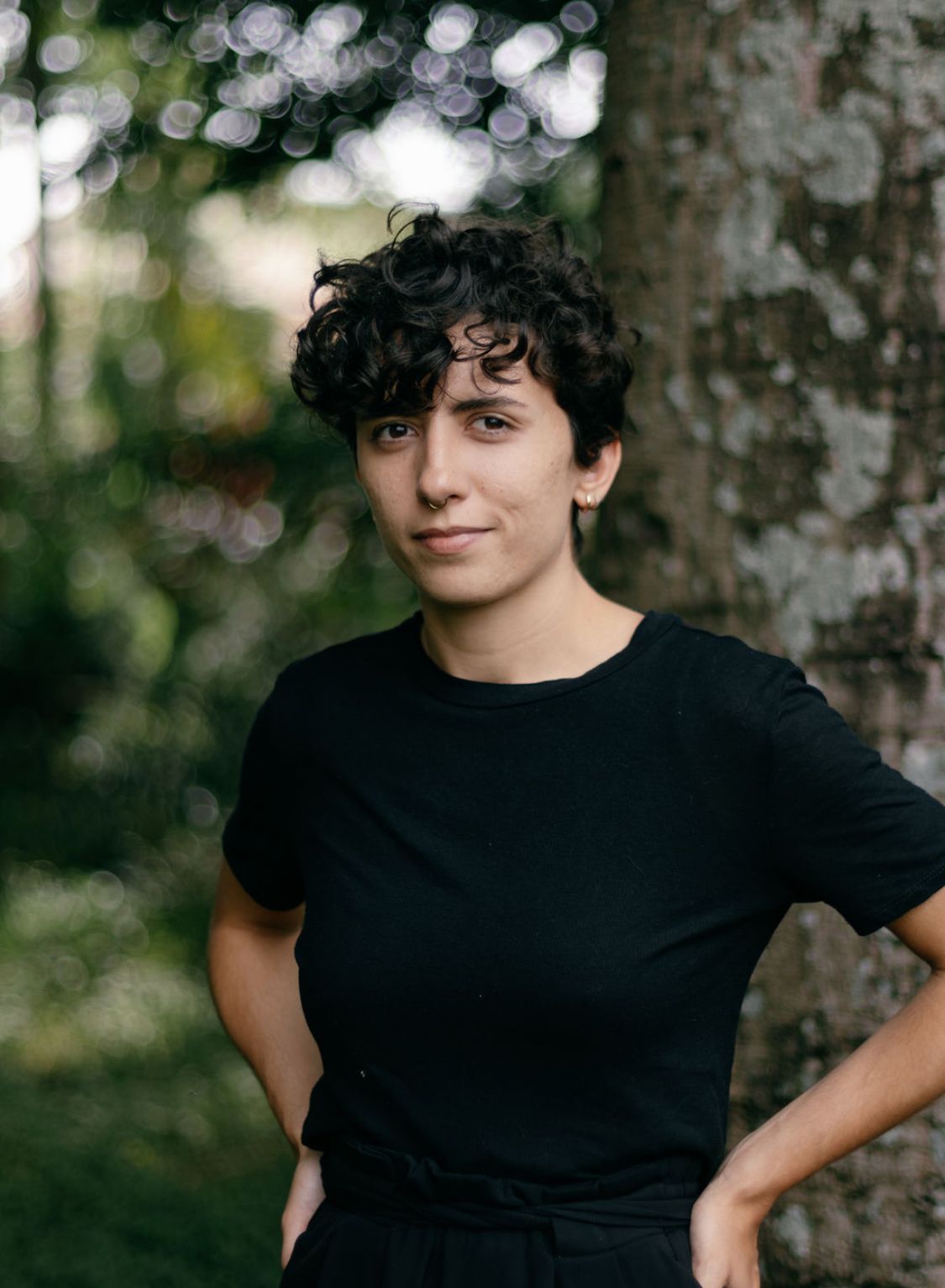
Name: Stephanie Borgani
Nationality: Brazilian-American
Occupation: Composer, arranger, vocalist
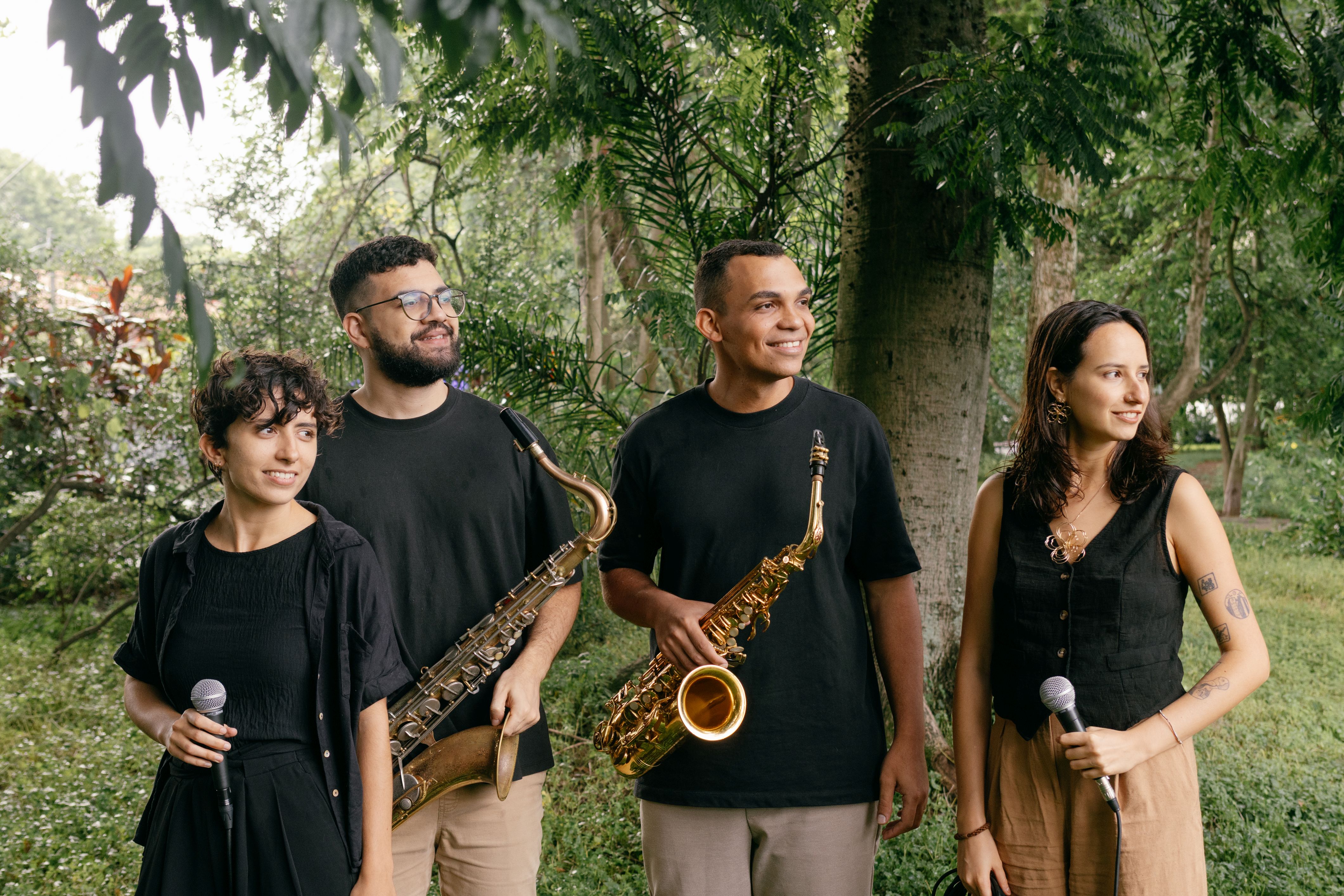
Current Release: Stephanie Borgani's new album Mímica: Música para quatro instrumentos is out via YB Music.
If you enjoyed this Stephanie Borgani interview and would like to find out more about her music and upcoming live dates, visit her official homepage. She is also on Instagram, and bandcamp.
When did you first consciously start getting interested in singing? What was your first performance as a singer on stage or in the studio and what was the experience like?
As a kid, I took lessons in classical violin, then classical piano, and eventually Jazz piano - which became my main focus during high school and college. Singing was something I was doing simultaneously, but never formally.
My mother is a Jazz vocalist and teacher, and she would have me sing in her students’ recitals, in church choir, in family band (I come from a family of musicians). She insisted I study piano formally, though, rather than singing. I think that experience made me think of the voice like an extension of the piano keyboard rather than a foreground instrument. I would sing along with my right hand when improvising or putting together solo arrangements (which is something I still do today).
My favorite repertoire as a piano student was the music of Egberto Gismonti and Hermeto Pascoal, and I remember loving to sing along with those and being curious about ways to integrate the voice into my playing.
As a listener, the vocal recordings I found myself drawn to were things like Esperanza Spalding's first album, Junjo, or Maria Schneider's Choro Dançado, which both feature the wordless voice as an instrumental component.
It took a lot longer for me to be consciously interested in more traditional types of singing - especially Jazz singing.
Besides the fact that I had become involved in instrumental genres, aesthetically speaking, the role of the singer is something that has always been a little less comfortable for me. Especially the role of the female Jazz singer - where one is traditionally expected to be feminine, physically expressive, decking the center stage in a bright red dress and lipstick to sing love songs.
As a nerdy, socially awkward teenager, I remember feeling a specific disconnect around singing that made piano-playing feel like home. I think I gradually turned this discomfort into a drive to carve out new options for the singer role. During college I started to really insist on singing instrumentally as a matter of principle.
I started to learn composition and arranging so I could create settings that required the type of singing I wanted to be doing, and eventually came to a place where I can sing even the standards in ways that feel authentic (some techniques include coating some lyrics with irony or allowing myself to treat them as sounds and nothing more, standing in a semicircle rather than in the front of the band, choosing tunes and keys and tempos that are enjoyable for everyone involved).
Re-inventing the role of the vocalist really became the central piece of everything I am currently doing as a performer and as a composer, and it's something I could talk about for days.
Can you tell me a bit about what you like about the voice as an instrument, compared to other breath-related instruments?
I really love how the voice carries a special warmth for the listener. Even without words, it's actually not a neutral sound at all, which is what makes it so fun to play with!
I’ve talked about this with a few people who regularly use voice in their music (such as the amazing Gaia Wilmer), and I’ve heard a lot of comments about how the voice naturally draws attention, allowing you to write the melody in the middle of a dense texture without losing its effect, for example.
I think having voice included can also make even the most cerebral, dissonant writing much more approachable to the general public, even when they don’t normally listen to instrumental music.
I totally understand what you're saying about the stigmatisation of the jazz vocalist. I'd be curious if you feel that part of the issue could also be resolved by picking/writing/commissioning different repertoire with less stereotypical lyrics and arrangements? Are there artists you feel closer to in this regard?
I do think a change in repertoire could be important! Just to have the issues around vocal repertoire acknowledged, especially by prominent and influential people in music, would be a big step forward. And to bring around new repertoire could also be very positive, of course.
I do think it’s important to still maintain a relationship with the standards (and to acknowledge and study how other singers have dealt with this repertoire in the past), while always taking care to be conscious about how that relationship happens.
There are many artists who do amazing work with standards by paying homage to the musicians who sang them, or selecting more forgotten tunes, or selecting standard-style tunes written by the singers themselves (Betty Carter comes to mind!).
It is quite intriguing that in all the decades we have seen so little work done in the direction you're describing! I'd be curious what your findings were in terms of how taking your approach changes the dynamics within the group and how the other instrumentalists respond to the new situation.
Actually, there’s a been a lot more work done in this direction than we give credit to.
From Villa-Lobo’s Aria from Bachianas No. 5 to Duke Ellington’s "Creole Love Call" to Ella Fitzgerald singing "Airmail Special" to Abbey Lincoln in parts of Max Roach’s "Freedom Now Suite" to Hermeto Pascoal (and the list goes on), there are so many examples of “non-traditional” vocal use across time periods and genres.
I think there are extramusical reasons why we don’t give these more attention, reasons that probably have to do with keeping women in their stereotypical roles in music.
To address the second part of the question, I honestly haven’t had much trouble in ensemble dynamics. Besides the occasional initial surprise that it’s possible to have the voice in this position, I’ve had great relationships with my bandmates.
In my experience, self-led groups tend to be much more welcoming than instructor-led groups, probably because I’m able to select specific musicians who I know will be open-minded.
Are there things you can do with wordless singing that would not be possible in a traditional lyrics-based environment?
I think the biggest difference is being able to sit outside of the foreground, musically. In lyrics-based music, the voice is traditionally the center focus of the music - and without words, it’s easier to be part of the background.
That being said, there are also so many examples of lyrics-based music that use text in non-traditional ways, especially in the new music/contemporary scenes. There are a lot of ways we can be challenged as listeners to reshape our understanding of the voice in music, with or without text.
Maybe it goes back to singers simply having the agency to make their own creative choices instead of being forced into specific roles.
What were some of the main challenges in your development as a singer/vocalist? Which practices, exercises, or teachers were most helpful in reaching your goals – were there also “harmful” ones?
I've been lucky to have a lot of amazing teachers, among them singers (Dominique Eade and Christine Correa, namely) and non-singers (Frank Carlberg, Ole Mathisen, Jason Moran, Miguel Zenón), who have been inspiring, warm and supportive of my pursuits as a vocalist in instrumental music.
Despite this, I find the Jazz education system unnecessarily challenging for singers - something I have found to be true after speaking with vocalists at different institutions in different cities and countries.
I mentioned earlier the role of the female Jazz singer (and the archetypical Jazz Singer is quintessentially female) as one who is expressive, feminine, dolled-up, front-and-center. This also translates to singers being taught to, above all else, emote text to an audience and to lead a band in Vocal Jazz standards (i.e. love songs) instead of learning to function as an equal member of a group, to improvise together, to support the other musicians on the stand, to learn the standards as means for musical dialogue and interplay.
This translates to a widespread prejudice against singers as less capable or valuable musicians, but there are a lot of structural effects, too.
Personal experiences of mine include: being denied entry to ensembles as a college student (singers were directed to a single Vocal Jazz ensemble); being exempted from doing the homework in an advanced improvisation class during my Master's (“it's too hard for singers, you can just listen"); being asked if I can read (as a selected member of the highest-level student group at a prestigious program); being expected to not improvise during jam sessions; being expected to not know the commonly called tunes during jam sessions (instead, hearing “what ballad do you want to sing, dear?" while the horn players go for a smoke break).
A lot to say about jam sessions (fellow singers will agree) and a lot of things that count as general sexism as well. It's not a coincidence that in most cases, the vocalist vs. instrumentalist binary maps neatly onto the gender binary, with singing gendered female. And both are constructs!
During my education, the bar for singers’ musicianship felt either patronizingly low (teachers were surprised and complimentary at a vocalist's slightest ability to read music, improvise, arpeggiate harmonies) or unfairly high (a vocalist should be able to read and improvise at the same level as any pianist or saxophone player, even without perfect pitch, keys, frets, or encouragement from teachers and fellow students).
I survived my college years because I was a good enough pianist to (barely) place in the lowest-level ensemble my first year, and as a low-level pianist I was given the proper tools to improve.
I don't regret the way things worked out for me, and I learned a lot by having to push through and insist. But I don't think it's fair for that to be the only way vocalists can grow as musicians. There should be structural support and widespread peer encouragement, and as a now-teacher, those are things I think about a lot.