

Name: Vincent Rein Quintet
Members on the new album: Vincent Rein (bass, compositions), Fabio Devigili (tenor & soprano saxophones), Michael Salvermorser (trumpet, flugelhorn), Max Hacker (piano), Konstantin Krautler-Horváth (drums)
Interviewee: Vincent Rein
Nationality: Austrian
Current Release: The Vincent Rein Quintet's new album Variants is out via Radau.
Recommendations: There is basically one thing you can and should do: go hiking! Whenever I need inspiration or a clear mind, the mountains never disappoint.
If you enjoyed this Vincent Rein interview and would like to know more about his music and upcoming live dates, visit his official homepage. He is also on Instagram, Facebook, and bandcamp.
Why do you like playing in a band rather than making music on your own?
As a bassist, playing in a group is what I was trained for. It’s my job to support others and make them sound even better than they already are.
I enjoy practicing and playing music by myself, but I believe that music ultimately needs to be experienced together.
What, to you, are some of the greatest bands, and what makes them great?
I really adore bands like Radiohead, The Wood Brothers, The Bad Plus, Kneebody, Deftones, Brian Blade’s Fellowship, etc. There are many more that you probably wouldn’t describe as bands in the traditional sense, because they are formations led by a “star musician” for a single record. Chris Potter’s band on his album Eagle’s Point would be a good example.
Every musician is a household name in their own right, but they all play in service of the music and the song. That’s what defines a great band for me: working together and putting egos aside.
[Read our The Bad Plus interview]
[Read our Kneebody interview]
How did the quintet come together?
I had just moved back from Munich to my hometown in Austria, knowing it would be harder to find work here simply because it’s much smaller than the city. I knew I had to try something on my own. I had already written some tunes I wanted to keep, along with sketches that couldn’t wait any longer to be finished.
Feeling the need to connect both parts of my life, calling musicians—friends, really—from Germany and Austria was the logical thing to do.
What were some of the reasons, do you think, that you wanted to play in this constellation?
I had played a lot of gigs in smaller bands, mostly trios, and it was simply time for a bigger sound.
Although we don’t sound like it at all, and the music I composed for the record goes in a completely different direction, I just wanted to have a quintet like Art Blakey’s! I love every album Art Blakey and the Jazz Messengers put out. The records are always full of energy and passion—something I wanted to feel in my own music.
I love moments like the horns playing the melody in unison on the opening track, “City of Nokia.” Classic jazz quintets often don’t seem to do much more than that. It’s a statement: that’s the tune, and buckle up, because here comes the solo section!
How do your different characters add up to the band's sound and in which way is the end result – including live performances – different from the sum of its pieces?
Konstantin, Fabio, Max, Michael, and I really do have different emotional landscapes and energy levels.
Each of them brings their own experiences and opinions to my tunes in order to make them sound as good as possible. They might question my choices—or the suggestions of other band members—but always for the sake of the music, which is a gift. If the people you’re playing with don’t try to get involved in the music, you don’t really have a band.
On the other hand, when the solo starts, it’s no longer my tune. As long as they are playing, it becomes their song in that moment. Everyone in the band understands this, and we are all willing to accompany the soloist on their journey. That seems to be a way of making room for every individual while still serving the band as a whole.
Is there a group consciousness, do you feel? How do you experience it?
I don’t think we have developed something like a group consciousness yet, simply because we haven’t been together long enough. But we do listen—always.
For example, on the fourth tune of the record, “Unexpected,” there were things happening between my bass solo and Max’s comping that sounded as if we had planned them.
At one point I started playing a long run up the neck, and in the split second of silence I left before continuing, Max jumped in and answered my line. At the end of Fabio’s solo, he and Konstantin somehow arrived at the same idea for a series of kicks.
It’s pure magic—and it only happens because we listen..
Tell me about the process behind your debut album Variants, please.
Variants looks both forward and backward at the same time. It revisits older songs like “Farewell” while also introducing new ones like the title track. I wanted to reflect on everything that has happened in my life so far while also catching a glimpse of what might still be ahead.
Because the band members live in different cities and countries, rehearsal time was scarce. We managed to play one show and had one proper rehearsal, which was just enough to get an idea of each tune. I had confidence that everyone would do everything they could to make it work, and I believe that, in the end, the limited preparation time became one of the record’s defining features.
Once we entered the studio, everybody knew they had to stay alert and fully present in the moment.
How does the creative process typically get started and what is your sense of ownership like as part of the songwriting process?
Inspiration reaches me in many different ways. Sometimes I hear a song and want to understand why it affects me. Is there something special in the harmony or the rhythm? Once I figure out what caught my attention, I try to recreate it and make it my own.
“Havona” by Jaco Pastorius has these really interesting chords at the beginning, which I played over and over again.
After many hours, I got lost in the sound and started creating something from there. Which ended up being “Unexpected.”
“Farewell,” on the other hand, came to me during a very dark time. I had just lost someone important to me and hoped to find some solace in music.
As soon as I finish drafting a tune, though, I’m always open to suggestions from the band. I’m not a pianist or a drummer, I don’t play trumpet, and although the saxophone was my first instrument, it’s not one I could comfortably perform on anymore.
Hearing from my band what changes could make the music stronger is something I always look forward to.
What tend to be the best songs in your opinion – those where you had a lot in common as a band or those where you had more differences? What happens when another musician take you outside of your comfort zone?
Most of the songs on this record turned out pretty much the way I imagined they would, and we agreed on most things. But I’ve also been part of projects where things took turns I could never have anticipated.
Stepping outside your comfort zone is always a good way to learn something new. It doesn’t always work out, and sometimes you never want to try a particular idea again—but that’s all part of the process.
What are your thoughts on the need for compromise vs standing by one's convictions? How did you resolve potential disagreements?
If you feel strongly about something as a bandleader: I think your band should respect your final decision. At the same time, you need to be very careful. No one is an expert in everything.
You have to listen to every idea in the room before making the final call. Once everyone has had a chance to express themselves, you’ve already eliminated most of the potential for disagreement.
Do any of the band's members also have solo projects? If so, how do these feeds into the band's creative process?
They are all active in other bands, though not necessarily as leaders themselves.
Konstantin is part of the Austrian piano trio Owls, which works a lot with soundscapes and melodic movement.
Fabio is not only a musician but also returned to university and works as a cardiology nurse. Highly admirable—and despite that, he remains one of the most in-demand players around. Max primarily works with the Bolandi Trio, which has built a reputation as one of the most stylistically flexible bands in the Munich scene.
Michael, besides DJing, is also a member of the renowned Jazzrausch Bigband.
They all come from very different musical backgrounds, and that diversity is exactly what I benefit from. It’s something I could never get by simply hiring a group of bebop cats.
In a live situation, decisions between band members often work without words. From your experience and the performances of your current tour, what does this process feel like and how does it work?
When we play live, there’s a lot of laughter on stage. We communicate through eye contact, respond to what someone has just played, and try to bring as much energy as possible to the performance.
Trust, confidence, and curiosity are the three main ingredients. If you want to try something—go for it. The band will follow.

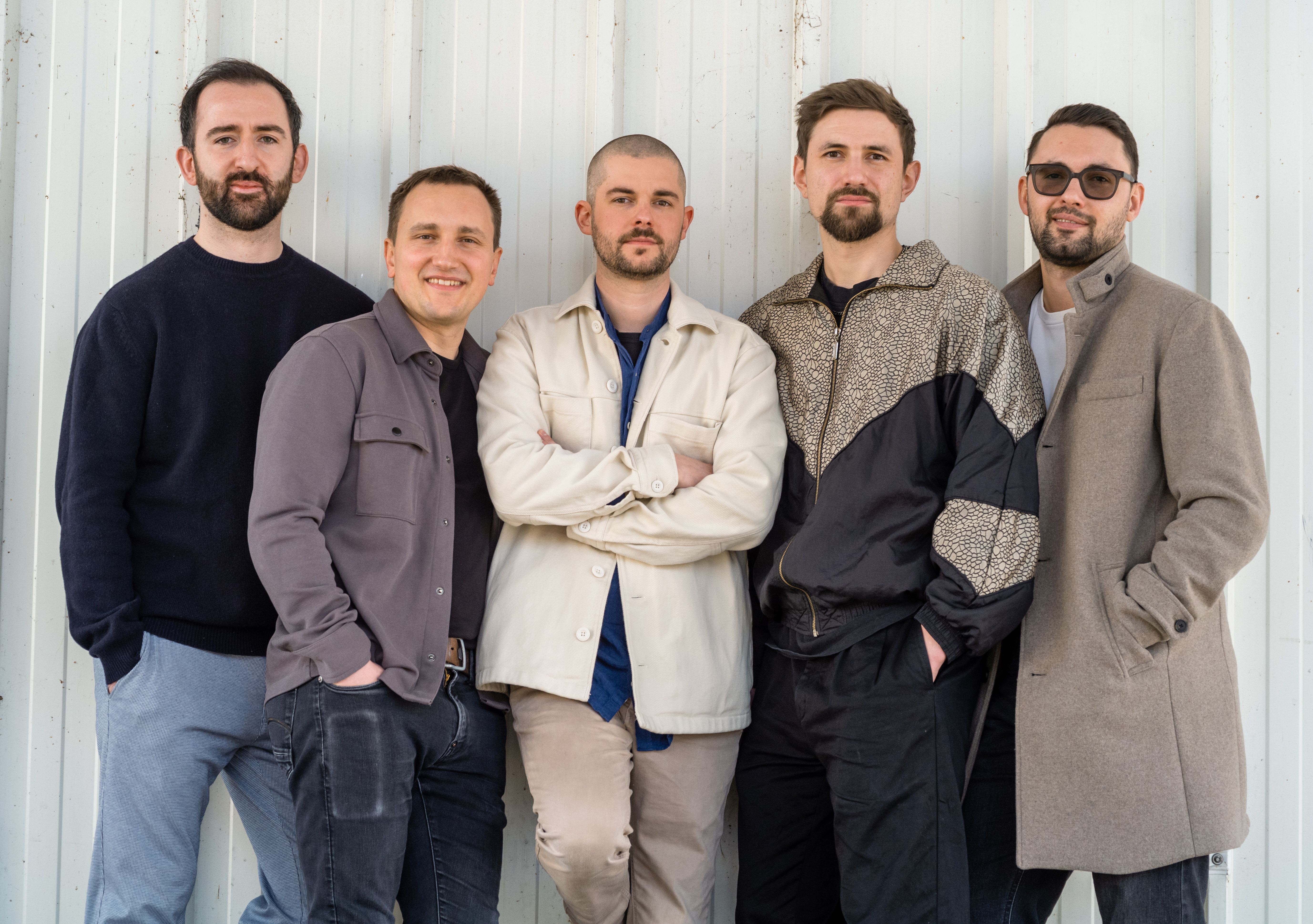 Vincent Rein Quintet Interview Image by Jan Scheffner
“If the people you’re playing with don’t try to get involved in the music, you don’t really have a band.”
Video
