Published
Part 3
What kind of feedback have you received from listeners or concert audiences in terms of the experience your music and performances have had on them?
Years ago, early on a Saturday morning, I’ll never forget, a woman wrote to tell me she was playing one of my songs and shared how the tempo of my song matched the pacing of her husband’s breath as he took his last one. If that doesn’t forever change you, I don’t know what will.
I never met her. I never heard from her again, even though I reached out and then finally decided she wanted to leave that moment where it was. But that was the morning everything changed for me. She wasn’t thinking about charts or stages or even Chad Lawson, really. She just needed someone to sit with her in the hardest moment of her life, and she chose my music to be there. That was when it stopped being about me.
Since then, the notes keep arriving, and they all seem to carry a similar story. Someone in a hospital waiting room says the music helped them breathe. A parent plays it so their child can finally fall asleep. A couple walks down the aisle to one of my pieces. A family has it playing when their child is born.
And to be honest, while I do get the occasional, “This is beautiful,” what I hear far more often is, “This really helped me when I needed it most.”
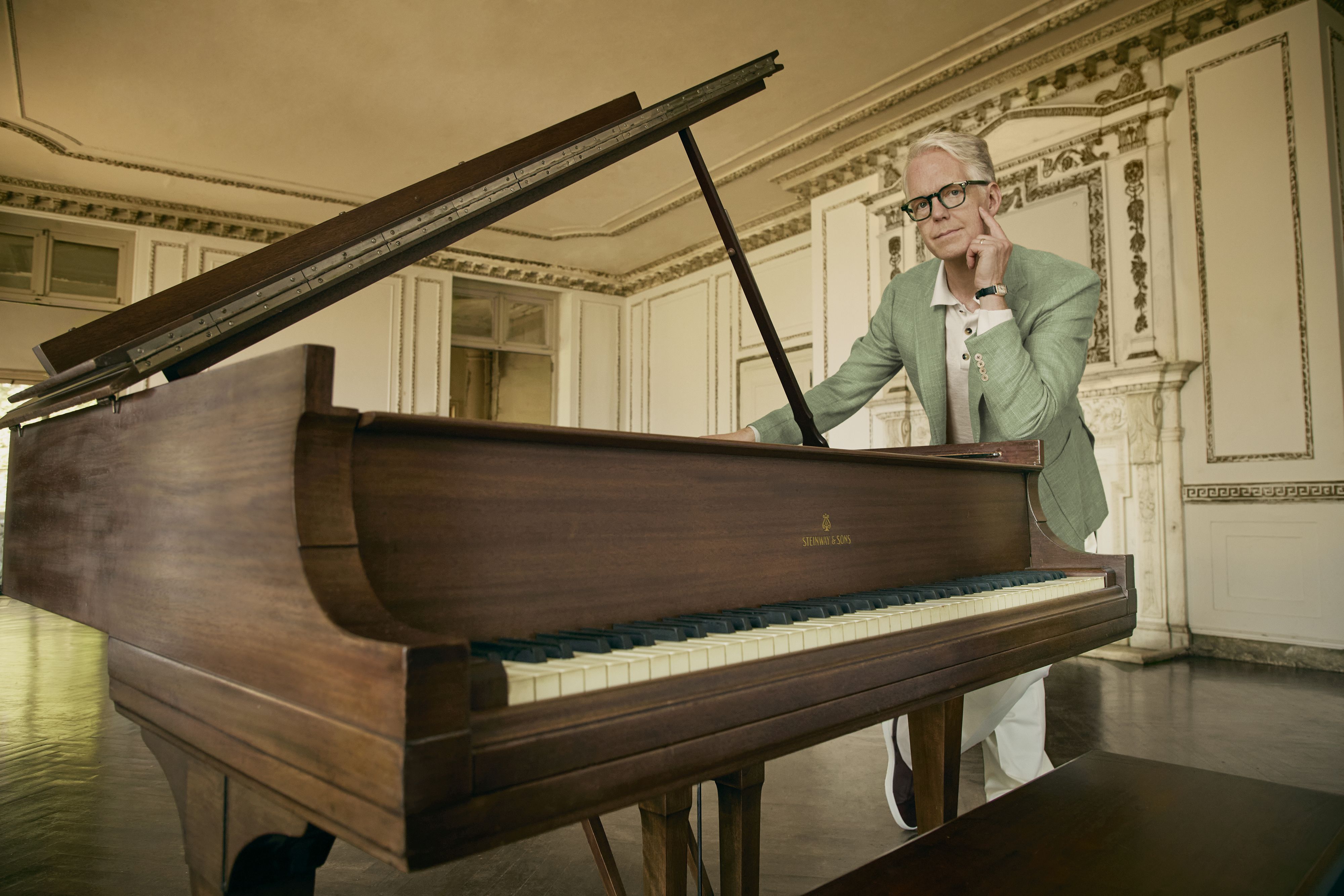
I joke that I chose the wrong career because I don’t fantasize about seeing my name on a marquee or being featured on the cover of Rolling Stone. That’s just not what gets me up in the morning. I don’t make music to be praised. But what that woman taught me was that if my name being in a magazine, or on a stage, or in the spotlight means that someone like her finds the music at the exact moment she needs it, then okay. Now I understand what the spotlight is for.
And if that means one more person finds some comfort, or feels a little less alone, then that’s why I sit at the piano. To help people. Nothing more complicated than that.
That sounds terribly serious, and I suppose it is. But I take it seriously because they do.
Would you say that you prefer to stay in control to be able to shape the emotions, or do you surrender to them and allow the music to take over?
I have this theory. Sit with me for a minute because I know it’s a little out there.
What if every song has already been written? I think about ideas this way too. What if an idea is almost a living thing, and when one arrives, it’s basically saying, “Of everyone in the world, I trust you to do something with me.”
How beautiful is that? Also, no pressure. :)
Because having the idea is only the beginning. You still have to bring your ability, curiosity, experience, discipline, whatever you have, and actually make the thing. Plenty of great ideas probably die sitting in somebody’s Notes app. But songs feel very much like that to me. Almost as if the song chooses the composer rather than the other way around. How many doors did a melody knock on before somebody finally heard it?
And maybe that sounds a little woo-woo, that’s kind of what composing feels like to me. I don’t sit down and decide, “Today I’m going to write a song about longing.” The melody shows up first. Then I have to pay attention long enough for it to tell me why it’s here.
That’s also why I almost never title anything while I’m writing it. Usually the title comes much later, sometimes well after I’ve recorded the song or album. If I decide too early that a song is called “Sunflowers,” I’ve already put it in a box.
Maybe you hate sunflowers. Maybe the song had absolutely nothing to do with sunflowers and I just happened to be looking at one that afternoon. I have now officially killed the emotion of the song by letting my ego get in the way rather than being patient and listening for what the song was trying to show me.
In a song, eventually there’s an emotional current underneath the piece that starts revealing itself. That’s how I end up with titles like “Stay” or “Fields of Forever.” “Stay” went on to become a Gold record (single), which still feels rather surreal to say, but the title didn’t create the emotion. The emotion eventually revealed the title.
So when you ask about control versus surrender, for me it has to be surrender. Not surrender in the sense that I don’t do the work. I absolutely do the work. But I don’t want my mind deciding everything before the music has had a chance to speak. Because once I start overthinking it, making it too scholastic, trying to dictate every turn, all the curiosity disappears. Where’s the fun in knowing exactly what comes next?
When the mind gets in the way, the song has no play. That’s how I see it. My job is to stay curious long enough to hear what the song came here to say.
The emotions that music is able to generate can be extremely powerful. How, do you think, can artists make use of this power to bring about change in the world?
I think the artist’s first job is to be honest. Honest with themselves, honest with the people listening, honest about how they see the world.
The second you start creating with an agenda, it can get slippery pretty quickly. Obviously there are exceptions. Commercial work, work for hire, something specifically built around a cause. But I think people can feel when they’re being sold something.
Which brings me to my thoughts on artists in general. Personally, I think there are two kinds of artists. There are artists who create because they absolutely have to create, whether anybody listens or not. The Beatles. Bowie. Hendrix. They’re following the creative pull wherever it goes.
Then there are artists who are very aware of the people on the other side. They know why that audience keeps coming back. They understand what they’re being trusted with. The great thing is we need both. And I would definitely put myself in the second group. I know my lane is to help people. Pure and simple.
Years ago after a show in Nashville, a woman came up to me and told me she taught psychology at a university there. She said they had spent the semester studying music and emotional wellness, and after listening to a lot of different composers, she kept coming back to mine. She said, “There’s almost a key in your music that opens something in people. I can’t quite figure out why.”
I could have come up with any number of “reasons” and launched into some intellectual dissertation on keys and melodies and pauses. But the longer I stood there, the only thing I could really say was, “Thank you.” Because it isn’t a formula. Sometimes emotion doesn’t care about our reasoning. There’s a knock, you open the door, and all of a sudden it’s standing in your living room. At some point, I just stopped trying to figure it out.
You hear enough stories from people using the music to comfort themselves, to slow down, to get through grief, to sleep, to breathe, and eventually you stop dissecting why it works and you start respecting that it does.
I see it happen live too! At the beginning of my concerts, I don’t start by jumping into the first piece. I start by trying to get everybody into the room. Because physically they’re there. Mentally? Good Lord, who knows. They’re still in traffic, or mad at the waiter for forgetting their cheesecake or calling the babysitter to make sure the house hasn’t burnt down … you know, just every day stuff.
So I have everyone close their eyes and breathe with the chords I’m playing. They don’t really know this, but I’m taking them through a form of Sama Vritti, box breathing. I’m going around the ‘box’ with four counts each side a few times. Then five. Then six. And slowly there’s this beautiful downshift that happens together in the room. You can almost watch it like a wave from the front row all the way to the back.
The chords I’m playing are actually built from the opening piece, so eventually the breathing just becomes the song and some people don’t even recognize the song has begun. They’re just sitting there with their eyes closed and a sense of peace over their face.
It’s one of my favorite moments of the night because nobody has been told what to feel. We haven’t told anyone what to feel. We’ve just given them a chance to actually ‘be’. And for the next hour or so, they don’t have to be anywhere else.
A lot of our decisions come from fear or shame. Not all of them, obviously, but those two are pretty high on the list. If something can help us tap the brakes for even a second before reacting from either one, that matters. Maybe you get enough space to ask, What am I actually afraid of here? Then you can start peeling that back.
To me, that’s far more interesting than trying to tell someone what they should think. We’re meant to mend, not manipulate. And I think people are becoming incredibly sensitive to the difference. We’re surrounded by manipulation now. Social media, politics, advertising, algorithms. Everybody wants something from you and everybody has gotten pretty good at smelling the nonsense. But underneath that, I think we’re also becoming more aware of how much mending we need.
As creatives, particularly empaths, we have a chance to make something that truly helps. Not because we have the answer. Not because we’re here to fix anybody. But because sometimes making something honest gives another person enough room to recognize something honest in themselves.