Published
Part 1
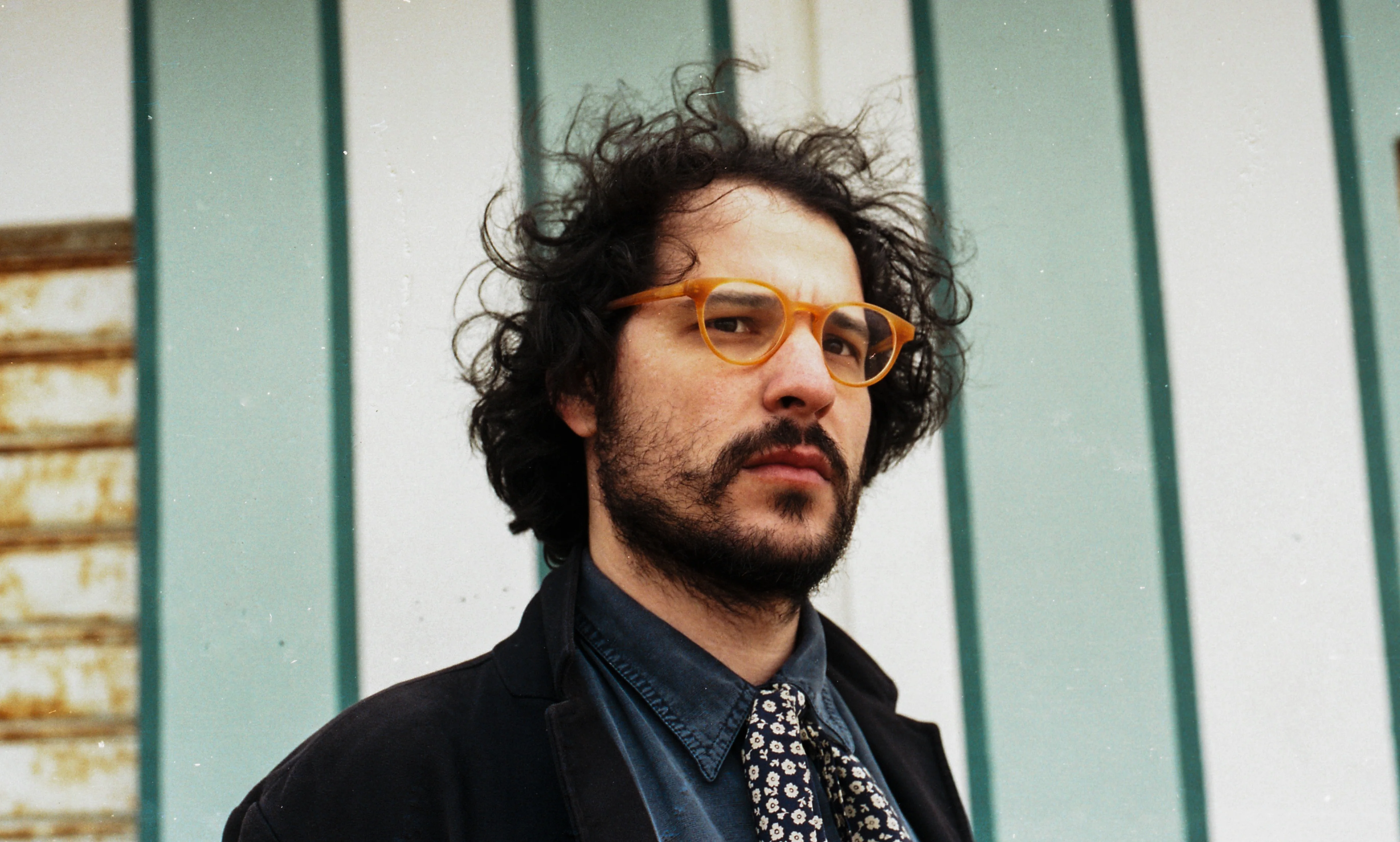
Name: Giacomo Zanus
Nationality: Italian
Occupation: Composer, guitar player, improviser
Current release: Giacomo Zanus's new album wandering away is safer than getting lost on your own is out via Okum.
Things I am passionate about rarely get to talk about: Since I grew up in a small village close to the Dolomites in northern Italy, I spent many winter days as a child cross-country skiing with my father and my brother. Today, I still feel that same call, and I can't wait for that time of year when I can return to those same forests blanketed with snow.
Recommendations on the topic of sound:
- Writing the Field Recording: Sound, Word, Environment, Stephen Benson and Will Montgomery (2018,Edinburg),
- Any of the listening meditations by Pauline Oliveros. (A good book with writings and pieces is her Software for People);
- "Silence" by John Cage;
- "From here to Tibet - A conversation between two walking artists", Hamish Fulton, Michael Hopfner (2022, Humboldt Books)
- Fieldwork for Future Ecologies: Radical practice for art and art-based research, Bridget Crone (2022, Onomatopee)
- Let's Become Fungal! Mycelium Teachings and the Arts - Yasmine Ostendorf-Rodríguez, Rommy González (2023, Valiz)
- "In terre lontane" by Walter Bonatti (I hope you can find an english edition too)
- "Birds as individuals" by Len Howard (London: Collins Press, 1952);
- films: Il pianeta azzurro (by Franco Piavoli, 1981), all the films by Abbas Kiarostami; Little Forest: Winter/Spring and Summer/Autumn by Junichi Mori.
If you enjoyed this Giacomo Zanus interview and would like to know more about his music and upcoming live dates, visit his official homepage. He is also on Instagram, and bandcamp.
What, would you say, are the key ideas behind your approach to improvisation?
I've always seen improvisation as a key to individual freedom—an expressive channel that connects us to something mysterious, both within the music and within ourselves. In this sense, the approach I feel closest to is free improvisation, because it allows me to fully exist within that space of the unknown, embracing the unpredictability that comes with taking risks and being present in that unique and irreplaceable moment.
At the same time, I know that part of my musical journey is rooted in melody, idiom, and the search for structure—for a meaningful trace. More specifically, I see composition as a privileged form of dialogue, equal in importance to improvisation. However, even when I approach composition, the process itself is deeply informed by exploration. So I would say that, ultimately, improvisation remains at the heart of it, shaping the way ideas emerge, evolve, and eventually find their form.
I find interesting try to bring these two practices into conversation, searching for a synthesis that feels genuinely my own. I think it is an endless process of research, and sometimes one takes precedence over the other.
I deeply love, for example, the song form, the power of lyrics, and the entire evolution of popular music—from traditional chants from all over the world to contemporary songwriting and folk music. At other times, I feel closer to improvisation, and it becomes the driving force. More and more, I'm interested in using improvisation to build a relationship around the timbral nature of a sound—following how its character can evolve, transform, and lead somewhere else.
Let's say I like having the freedom to move in and out of these different spaces, experiencing music as something all-encompassing, whether it's rooted in a specific musical language or not.
What does the term jazz mean today, would you say?
I find it difficult to answer this question.
First of all, because I don't really believe in labels of genre or style. I don't play jazz, and I don't feel like a jazz musician. I wonder whether it still makes sense to use the term “jazz” today, and what value that label actually carries. I think the word “jazz” itself is becoming outdated, and perhaps the moment we give music a name or try to define it, we somehow seal its fate.
I'm deeply interested in the social and political context in which jazz emerged and evolved. I care about the poetic and expressive universes that have grown out of that language over time—worlds that are rich, complex, and highly specific.
More broadly, though, I care about MUSIC as a whole, especially music that belongs to the present. Within today's scene, I think there is an incredible community of musicians and improvisers whose background is rooted in jazz, especially in its philosophical outlook. What they continue to embrace is that approach to improvisation as common ground—a shared space for dialogue, discovery, and expression.
That, perhaps, is where I would place the emphasis: on the practice of improvisation itself, and on what it means to be an improviser nowadays, rather than on the label of jazz. To speak exclusively of jazz as a specific musical idiom that emerged and developed more than eighty years ago can feel somewhat contradictory today.
Where does the impulse to create something come from for you? What role do often-quoted sources of inspiration like dreams, other forms of art, personal relationships, politics etc play?
I don't know exactly whether there is a place where inspiration already exists and then comes to you, or whether you reach towards it when you need it. Honestly, I still haven't figured out how it works ...
What I do know is that the creative impulse is, first and foremost, a natural process of self-discovery and human growth. I believe that every creative act should, in some way, reflect who you are as a person, like a mirror. This is something I feel very strongly about.
Then the more receptive I become to the world around me—willing to listen, to open myself up, and to reach out—the more my sensitivity is challenged, transformed, and deepened. And as my sensitivity changes, so do I. I find this one of the most powerful gifts I can experience through music and the creative process.
Personally, I think inspiration can hide in the most unexpected moments of everyday life: a long, tight hug, an unexpected smile or a tear, the colours of a sunrise in the mountains, a sunset over an endless sea, a plant expressing itself through the fragrance of its flowers ... or butterflies searching for one another even though they know they are going to live for only a few days. Mostly, I feel nourished by those kinds of mysteries that somehow always touch that mysterious part of my being as well. I think that everything that touches our spirit can also feed our creativity.
Then, of course, there are sources of inspiration that come from other art forms, which are very important to me. I've always been deeply drawn to cinema, visual arts, photography, and literature. My latest album, wandering away is safer than getting lost on your own, for example, is closely connected to a very specific visual and literary imagination.
Some pieces evoke a desert landscape made of dust, endless roads, and solitude. For example, I imagined "Return to Maren"—my hometown, a village of just over 800 inhabitants in the hills—as the perfect setting for a novel by John Fante or a film by Wim Wenders, where you can almost hear the wind and the silence moving through the abandoned alleys.
Likewise, the diptych "Half Awake" / "Half Asleep in the Water" began as an imagined—perhaps even dreamed—story after spending a long time contemplating Asako Narahashi's photographic work of the same name.
Do you have certain rituals to get you into the right mindset for creating? What role do certain foods or stimulants like coffee, lighting, scents, exercise or reading poetry play?
I don't have a specific routine.
For sure, I like to be focused and stimulated by an isolated and silent environment, with soft and warm light. Maybe the time I enjoy creating the most is late evening and night, when everything is still. That feeling makes me feel more alone with myself.
I find the spring time a moment of inspiration, especially because I love flowers in all their forms, colours and their scents. But I also find the winter months very nourishing, maybe bacause the almost fairy-tale-like quality of winter makes me feel productive while everything outside is slowing down and recovering.
That gives me a kind of dreamy protection, a space in which I feel safe.
What role do electronic tools and instruments play for your creative process?
I have to say that, when it comes to my creative process, I'm very much devoted to the guitar, which is my main instrument. At the same time, I have a natural curiosity and I like imagining where and how different instruments might fit within a musical idea—whether it's a sketch of a piece, an already composed melody, or an improvisational idea.
Alongside the acoustic nature of the instrument itself, in recent years I've also practiced electroacoustic music, both through my academic studies and in my musical practice. I love electronic processing as a way of investigating, questioning, and opening up new perspectives.
At the same time, I always feel the need to return to acoustic sound, a kind of return to the roots of things, to something visceral and elemental, closely connected to the ground, the body, and the essential. I need to feel the wood of thr guitar against my chest, to feel its vibration. I've realised that the further I move away from acoustic sound, the more I am drawn back to it. And whenever I return to it, I'm sure to find new secrets.
I mean, when I embrace the guitar, everything I need is already there ...
Tell me a bit about the way the new material developed and gradually took its final form, please.
The new album came about through a mixed approach.
Some of the tracks have a composed thematic framework—"Dear Palomar," "Return to Maren," "Canto pagano," and "Ymnus/Vesper", for example. In the studio, we recorded these pieces with specific spaces left open for improvised sections, as well as for the possible addition and overdubbing of certain instruments during the post-production process.
In other pieces, however, I wanted to experiment with a more creative approach led by myself. This was a very stimulating experience for me. I therefore recorded only sketches and initial ideas with the band, which I would later develop and complete on my own.
This gave me the time and freedom to develop a sonic concept around the recorded material and to balance the collective studio session, where every musicians brought its own personality, with more isolated work. This is the case with pieces such as "Half Awake" and "I Picked Up a Flower to Say Hello."
"Half Asleep in the Water," on the other hand, is the only piece on the album conceived entirely around guitars, a few synths, and percussion.
Here, the instrumental approach was different again, as I wanted to focus strongly on the timbral exploration: layering sounds, positioning them in space, and creating a stereo environment in which even the smallest detail and gesture could have its own place.
There are many descriptions of the creative state. How would you describe it for you personally? Is there an element of spirituality to what you do?
Well ... this question contains a multitude of beutiful worl(d)s within it.
I believe we are all born with a creative and expressive quality, but the way it manifests itself is unique to each of us. Personally, I feel fortunate enough to be able to express myself through a creative practice as music, and be guided by it, like a compass, through the strengths and shortcomings of my everyday life. It is an enormous privilege and the more I think about it, the luckier I feel.
The creative state, for me, is for sure an abstract, intangible, and mysterious state but I think it is also something deeply connected to our daily life. I realise that when I am creating and playing, I feel good and uplifted to a very high dimension, in which I can become aware of myself, of completeness and also my imperfections.
But what happens when I am not immersed in that dimension? Out there, there is everyday life, and sometimes I feel vulnerable and naked. Actually, I feel that music still has the power to help me reach that level in ordinary life as well. It is something magical and really powerful. It is as if music can shape my empathy and sensitivity, taking care of me.
So, for me, the spirituality connected to creative practice has to do with openness and the willingness to grow as human beings: cultivating compassion, nurturing our emotional world, recognising, processing, and overcoming pain, embracing tenderness and happiness, and developing the sensitivity to truly see and listen to what surrounds me.
It also means inhabiting nostalgia and melancholy, giving them a meaning, a place, while finding a new focus that allows me to feel alive and projected towards tomorrow. To feel strengthened by this feeling.
I realised that the delicate emotional sphere still remains the flame that fuels the creative urgency, and I have to take care of it somehow. No doubt about it. Music, in this case, is here to help me. Doesn't it sound like a gift?
So every day, when I play my instrument, I try to go deeper and deeper, to fail better, and hopefully to improve as an artist and as a human being. Then, eventually, I can consider myself fortunate if I am able to draw even a little of this personal path towards others through my music, trying to share and reach out with a little bit of beauty, stitching worlds together.
In this sense, I think the spiritual connection is about learning more about each other, learning more about ourselves.