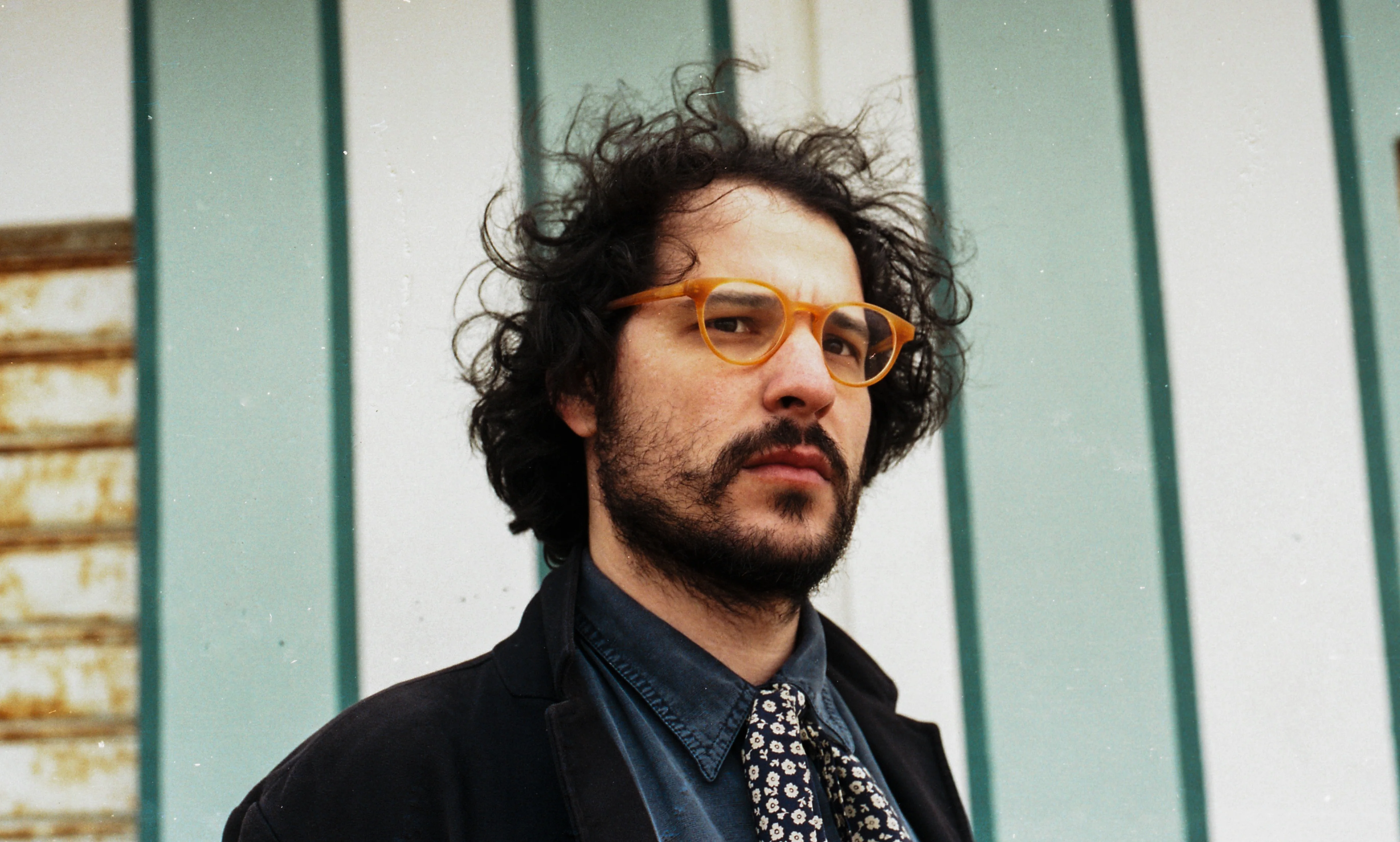
Published
Part 2
What's your take on the role and importance of production, including mixing and mastering for you personally? In terms of what they contribute to a song, what is the balance between the composition and the arrangement (performance)?
Over time, I've become much more aware of the importance of having a clear vision of the sound I want to achieve, and of how that vision can take shape throughout all the different stages of a project, from the composition to the studio session where every decisions about the timbre of each instrument, tunings, microphone choices, and the way sounds are built in post-production and mixing, become part of the whole creative process. I want to be present and consciouss about that entire process.
Of course, this mostly depends on the nature of the music itself and, just as importantly, on the people you're working with, how open you are to leaving space for other people's interpretations and creative contributions. When you're the composer and responsible for your own record, being able to communicate your ideas of sound without, hopefully, having to compromise on what you feel is essential to your music, is always very tricky. I am working on it..
It's not just about making the right musical or technical choices; it's also about the human connection and the trust that develops between collaborators and friends you're working with. I need to feel that I can entrust someone with an idea that is still taking shape, knowing that they can understand it, contribute to it, and help you bring it to life.
Creativity can reach many different corners of our lives. Do you personally feel as though writing a piece of music is inherently different from something like making a great cup of coffee? What do you express through music that you couldn't or wouldn't in more 'mundane' tasks?
Mundane tasks are very important for feeling present. I really like making coffee ... after all, I'm an Italian guy rooted in a few but strong traditions ... ahaha. I think they are both ritual actions, and they can introduce you, let's say, to a contemplative dimension.
Thinking also of other routines, like taking care of your plants or gardening ... all these things make us feel good, enriching our lives. Music as well.
But I believe the creative act is both a physical act, involving the body, but above all an event that touches the mind, heart, and spirit. In this sense, music for me cannot be experienced intensely simply as a language, a meaning and a set of rules and gestures to be managed in order to create sound. There is much more to it. There is that common ground that moves our empathy and our souls, that bridges the gap between people, places, and cultures, and brings us into resonance with one another.
That's perhaps something irreplaceable that other “mundane” tasks don't have ...
How important is sound for our overall well-being and in how far do you feel the "acoustic health" of a society or environment is reflective of its overall health?
This is such an urgent theme. I think we've reached a point of saturation in many areas of society and everyday life. Our modern tendency towards excess and overproduction is certainly driving us into a machine that is, in many ways, deeply unhealthy.
Within this context, there is also, of course, an extraordinary amount of sonic bombardment and pollution. I think about all the places where social life takes place, where we are constantly exposed to a kind of passive listening that we never actually chose: public offices, shopping centres, cafés, shops. Everywhere, we are continuously fed an enormous amount of sound and music, almost entirely unsolicited, with the sole purpose of entertaining us. What a mass …
It seems that entertainment has become the central focus of our society, maybe as a way of avoiding a part of ourselves that we don't want to take care of. Silence and emptiness frighten us, so we feel the need to fill every space. Since I also work with children at school, sometimes I ask myself: will the next generations still know one day how to listen to birds?
How we consume music, for example, is another catastrophic issue ... How sick the system has become, and how everything is so superficial. As a result, attentive and deep listening—the experience of being fully present, of saying, “I am here and now, with my whole self”—has become so difficult.
Sometimes I don't want just to stay on the surface of things. I need to go deeper. I want to go deeper.
Sound, song, and rhythm are all around us, from animal noises to the waves of the ocean. What, if any, are some of the most moving experiences you've had with these non-human-made sounds?
For me, nature remains my anchor. It offers an ideal condition for inner cleansing, for practice, for refuge, and for a kind of physical and psychological well-being that, of course, also has to do with the health of our ears and our capacity to listen. It is a place where I can truly absorb the nuances of sound and the purity of sonic events, even more so when I experience it alone.
I often walk in nature, especially in the mountains, although I also like to change my surroundings. Walking activates a different kind of awareness. My body is constantly engaged, almost vibrating in relation to everything happening around me. Every sound, every movement is perceived with a different sensitivity: light and shadow, full and empty spaces, sound and silence, colours …
I notice that when I enter this dimension, I start asking myself an incredible number of questions, many of which I don't know how to answer. I become more receptive. I pay attention to all sorts of small things that, in everyday life, I am simply not used to noticing. Even the words I use seem to carry a different weight and meaning from those I use in everyday life.
For me, spending a night at 2500 metres with a tent, I think it is one of the best ways to experience silence and emptiness on a deeper level. Sometimes you don't even hear the wind, no animals, no apparent movement, just your heartbeat pulsing. And then, during the sunrise, you can hear something that makes the grass and the air shiver, and it's a shiver that runs through your skin as well..
Thruth is that nature can make us speechless, and as a consequence, my artistic practice is affected and moved by this shift as well. So, a kind of nourishing reciprocity begins to take shape, in which I can truly feel myself in relation to what is happening both within me and around me. Listening, then, becomes a form of care: care for ourselves, for others, and for the environment we inhabit.
So maybe I can start questioning an entire approach to life—one that calls for a greater ecological awareness, a rethinking, perhaps even a radical re-evaluation of materialism, consumerism, and the way we relate to one another.
Music and the accompanying artwork are often closely related. Can you talk about this a little bit for your current project and the relationship that images and sounds have for you in general?
I'm a lover and passionate amateur of photography.
Sometimes I like to preserve the intimacy of observing through a camera, and I usually discover aspects and levels of depth in this practice that I find just as interesting, and sometimes even more intense, than writing or arranging a piece of music. I approach it without any academic preparation or formal study, just with a pure and instinctive approach, led only by the way my senses filter what I have around me.
Sometimes I would like some photographs to have the structure and compositional framework of a written composition, while, on the contrary, I would like my written musical pieces to have the unpredictability of a photograph—the freshness and originality of that precise instant in which the image was captured. Let's say that I like to evok images from my music, describing a landscape or a frame, and creating a kind of dramaturgy made of small details.
For the cover of my last album, I was looking for an image that could express the sense of wandering, of travel, but also the connection with the literary and visual references within the tracks. Then I realised that moving in that direction could have been very predictable, a kind of cliché … So I started to think about something far away, even out of context with the entire sonic imagery of the album.
And then I found this beautiful analogue photograph taken by a friend of mine during an holyday in Sicily. I said, “Wait a minute ... this little lifeguard's house is so mysterious and essential in itself. It made me think: what is its relationship with the music? Is there a relationship? Why? Where does it take me?”
I think that photograph lets you imagine exactly what you expect to see—or perhaps, whatever you want to imagine.