Published
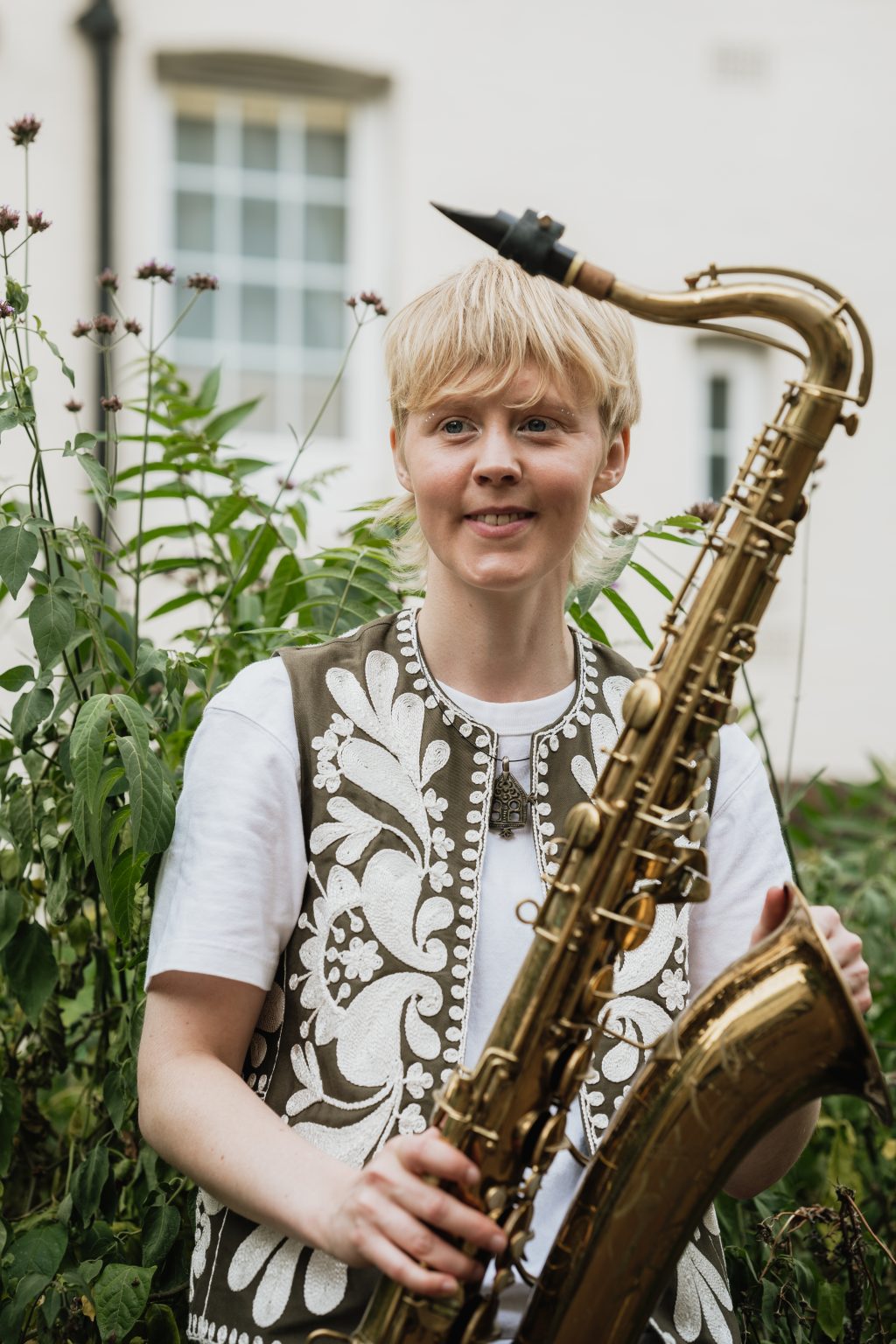
Name: Helena Kay
Occupation: Saxophonist, composer, improviser
Nationality: Scottish
Recent event: Helena Kay is one of the artists appearing at this year's EFG London Jazz Festival. The event will take place 15-24 November 2024 and feature artists such as Anohni, Imelda May, the Crosscurrents Trio, Charles Tolliver, Veronica Swift, Brandee Younger, Ill Considered, Tashi Wada, Yazz Ahmed, Spencer Zahn, Melike Şahin, Fabiano Do Nascimento, Belle Chen, the Neil Cowley Trio, Matters Unknown, Mark Kavuma, Avishai Cohen, Tigran Hamasyan, and Fran & Flora.
For tickets, head over to the festival's official website.
[Read our Ill Considered interview]
[Read our Tashi Wada interview]
[Read our Yazz Ahmed interview]
[Read our Melike Şahin interview]
[Read our Fabiano Do Nascimento interview]
[Read our Belle Chen interview]
[Read our Neil Cowley interview]
[Read our Matters Unknown interview]
[Read our Mark Kavuma interview]
[Read our Tigran Hamasyan interview]
[Read our Fran & Flora interview]
[Read our Anouar Brahem interview]
[Read our Dawn Richard interview]
[Read our Tami Weis interview]
[Read our matters unknown / Jonathan Enser interview]
If you enjoyed this Helena Kay interview and would like to find out more about their music and upcoming performances, visit their official homepage. They are also on Instagram, and Facebook.
The London Jazz Festival is just around the corner. Tell me just a little bit about your performance at the festival, please.
I’m doing three gigs in the festival this year:
A duo set with Fergus McCreadie at The Wilds in Barking on 16th November. Duo with Peter Johnstone at Milton Court on 20th November, which is part of the Guildhall School of Music and Drama Jazz Festival.
My Take Five Showcase at the Elgar Room on 21st November, which will be quartet with Peter Johnstone, Calum Gourlay and Stephen Henderson.
All three of these gigs will feature my original music, some new music I’ve been working on over the past couple of years, which will soon be recorded.
How, would you say are your live performances and your recording projects connected at the moment? How do they mutually influence and feed off each other?
I’m hoping to record my third album at the end of the year. I usually record live in the studio, so the music feels very similar live as it does recorded. The only difference this time with this album is the tracks will be much shorter.
My second album was recorded just after a tour, which was great because we’d been playing the music so much and developing it over the dates, I recorded each gig and listened back, which was really helpful. However we went into the studio with the same gig mentality, and all the tracks ended up being really long!
So we’re going to reign it in for the next album, I’ll be more strict with solo lengths etc.
In as far as you have any experience or insights, what's your view of the London jazz scene?
The London jazz scene is going strong. It’s a great place for grassroots jazz nights, those are my favourite gigs, and so important for musicians coming up in the scene, as well as established artists.
These grassroots nights come and go. When I was at music college it seemed like there were a lot, I was going out to these gigs all the time and it was a great education.
Music has become a lot more global and incorporating elements from other parts of the world or the musical spectrum is commonplace. Do you still think there are city scenes with a distinct, unique sound? What holds these communities together?
I do think there are different flavours in different places. People influence each other.
I think grassroots nights, jam sessions and collaborations hold these communities together, and the people who come out to the shows and work behind the scenes.
What does the term jazz mean today, would you say?
Language is complicated, words mean different things to different people. The jazz umbrella is so huge now. It’s all music.
It’s always important to acknowledge the roots of this music, it’s Black American Music.
Derek Bailey defined improvising as the search for material which is endlessly transformable. As of 2024, what kind of materials are particularly transformable and stimulating for you?
Sound. I’m trying to improvise on the flute more now, which is posing its challenges. I’m still learning language, phrases, learning tunes, discovering different note choices, scales, shapes, colours.
I’m trying to find new sounds on my saxophone too. I’m listening to more music being released by my peers these days, which is stimulating.
Thanks to technological advances, collaboration has become a lot easier. What’s your view on collaboration and its ongoing role for the music you make?
Collaboration is essential, especially in improvised music. I learn a lot by playing with more experienced musicians.
In terms of the results, the process, and the satisfaction, how do making music in the same room together versus filesharing compare to you, real concerts vs live streams?
The energy of real concerts can never be beaten. Like a zoom call vs talking in person, you get so much more depth and nuance when you’re in the same room.
I love playing for an audience, they really make (or break!) a gig.
It is often said, that the energy in the room on any given night will influence the performance. I have often wondered how this energy manifests itself. What is this like for you and how does it have an effect on what's happening on stage?
I think this is especially true of improvised music. The energy in the room can have a big impact on how I play. The audience or the other musicians on stage can really spur me on.
Positive energy is essential, on stage and off, it’s motivating and inspiring.
Ímprovisation is obviously an essential element of jazz, but I would assume that just like composition, it is transforming. How do you feel has the role of improvisation changed in jazz?
Improvisation is expression. It’s still as important as it’s ever been. It changes as musical language changes.
What, would you say, are the key ideas behind your approach to improvisation?
My training was rooted in Great American Songbook and jazz repertoire, bebop, straight ahead, and I love that kind of music, that was my way in to this genre, so I feel like that’s where I’m coming from when it comes to my improvisational language.
I’ve been playing more free/improvised music recently, which has had a huge effect on how I approach improvising in other contexts; it’s made me think more texturally, compositionally, and allowed me to express myself more freely, I think.
How would you describe your own relationship with your instrument – is it an extension of your self/body, a partner and companion, a creative catalyst, a challenge to be overcome, something else entirely?
My relationship with my instrument changes. When it’s working it’s an extension of myself.
I think also its limitations and my limitations inform my creative practice, both positively and negatively, which is something to work on, forevermore!
The term identity is an important aspect of many communities. Are you acting out parts of your identity in your improvisations which you couldn't or wouldn't through other musical approaches? If so, which are these?
I’ll approach the same tune differently on a different day, so my improvisations are an expression of where I’m at/how I’m feeling on that day. A composition captures the same thing but much more slowly and deliberately.
I’m trying to write more quickly these days, finishing a tune in a day or two, so that I’m in the same mindset while I’m writing.
My improvisations hopefully tell some kind of story, evoke some kind of feeling, and show my personality.
I have always been fascinated by the many facets of improvisation but sometimes found it hard to follow them as a listener. Do you have some recommendations for “how to listen” in this regard?
Our ears are drawn to what’s familiar, so I’d say keep listening. You could try honing in on one instrument at a time.
In a way, improvisations remind us of the transitory nature of life. When an improvisation ends, is it really gone, just like a cup of coffee? Or does it live on in some form?
The feeling and impression an improvisation gave lives on. Like the idea that people don’t necessarily remember what you’ve said, they remember how you made them feel.
And of course, if it’s recorded, it lives on, and becomes a composition, like the great solos that many of us have learned and transcribed.