

Published
Part 1
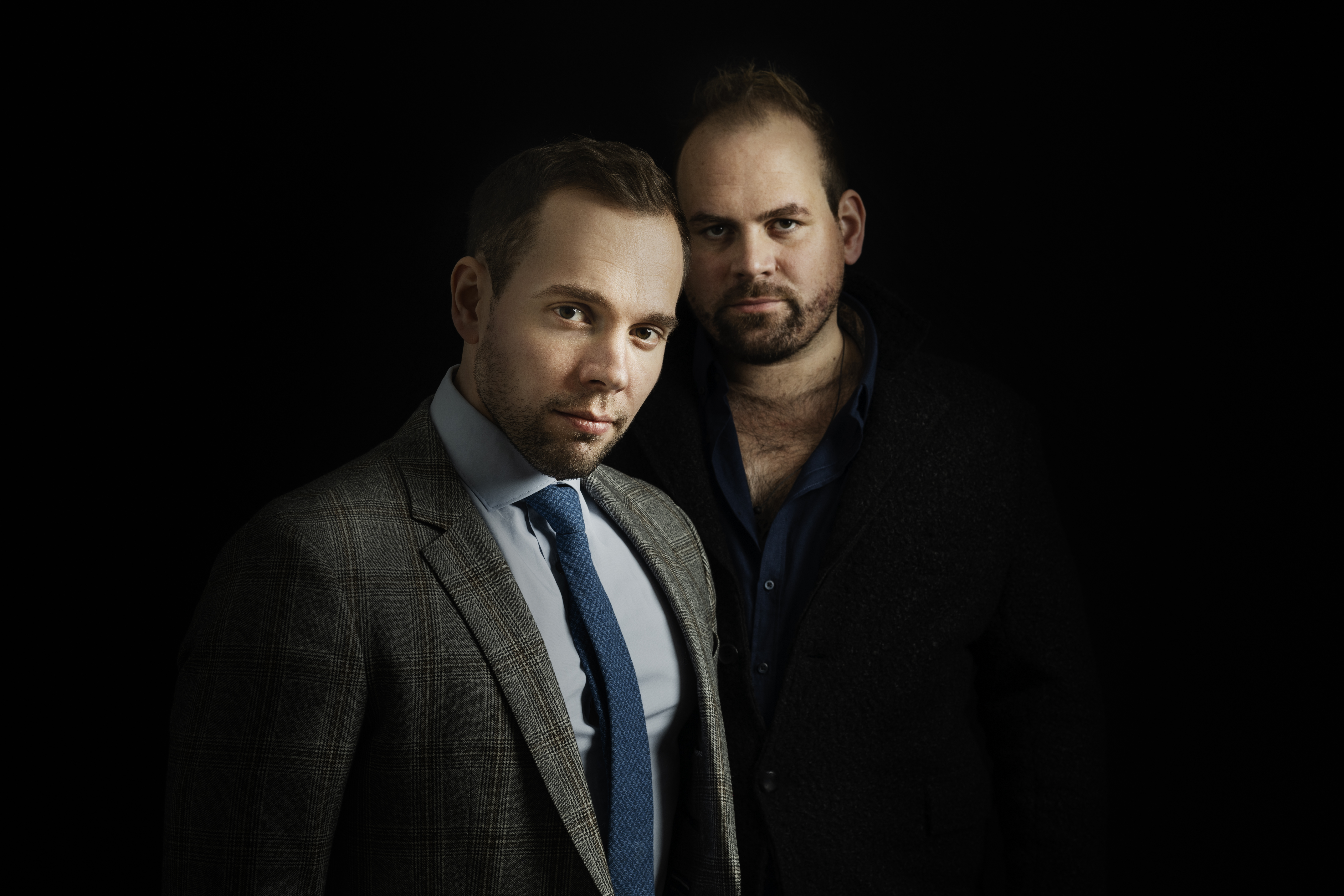
Names: Julian Wasserfuhr (trumpet), Roman Wasserfuhr (piano)
Nationality: German
Current release: Julian & Roman Wasserfuhr's new album TIMELINES is out via Schnaff.
Hometown Recommendations: Take a walk around the Bever reservoir just outside Hückeswagen – the Bergisches Land at its most peaceful. Then head into town for a Schnaff. And if you happen to be there on the right evening: come to a concert.
Things we are passionate about but rarely get to talk about: Beer! Since 2014 we’ve been brewing our own beer here in Hückeswagen – it’s called Schnaff. It started as a crazy idea among friends, and during the pandemic it became a real second pillar, with an online shop and distribution. Our favourites are a Pale Ale and a Brown Ale. Our label carries the same name – which probably says everything about how seriously we take it. Brewing and making music are surprisingly similar: you need good ingredients, patience and time, ideas have to mature, and you can’t force a recipe. And sometimes we even bring a keg along to our concerts.
If you enjoyed this Julian & Roman Wasserfuhr interview and would like to know more about the duo, their music and current live dates, visit them on Instagram, Facebook, and bandcamp.
What were some of the musical experiences which planted a seed for your interest in jazz?
Roman: We came to music through our parents. Our mother is a singer, our father a clarinettist and music teacher – music was simply always there at home, long before we knew the word “jazz”.
Oberkrainer music came later: today we play in an Oberkrainer line-up in our living room with our parents and two good friends. That’s why the first single from our new album Timelines has a Slovenian title: “Glasba je moje življenje” – “Music is my life”.
It describes what has connected us as brothers and as a family from the very beginning, long before it became a profession.
Julian: For me, the spark was Chet Baker. I got my first Chet Baker CD from Roman and our father – and that was it for me. That tone: fragile, very few notes, and every single one of them means something. That’s how I wanted to sound.
Our debut Remember Chet, which we recorded when I was 17 and Roman was 20, was basically a thank-you letter to him.
Shortly afterwards Nils Landgren brought us to Gothenburg for Upgraded in Gothenburg, and suddenly we were in the studio with Lars Danielsson, Magnus Lindgren and Ida Sand. That was a crash course in how much you can say with how little.
What does the term jazz mean today, would you say?
For us, jazz is less a style than an attitude: listening, reacting, being honest in the moment. It has always been a way of treating material rather than a fixed repertoire.
Over the years we’ve played The Who’s “Behind Blue Eyes”, the Beatles’ “Nowhere Man”, Gilbert O’Sullivan’s “Clair”, Tokio Hotel’s “Durch den Monsun”, Nirvana’s “Smells Like Teen Spirit” and Sting’s “Fields of Gold” – and to us that was always jazz, because of how we approached these songs, not because of where they came from.
Today jazz can be a Colombian rhythm, a beat you discover on YouTube or a freestyle rapper. What holds it together is curiosity and the willingness to take a risk in front of an audience.
And perhaps, at a time when everything is getting louder and faster, jazz can also be the opposite: the courage to be simple.
As of today, what kind of materials, ideas, and technologies are particularly stimulating for you?
Ideas: the meeting of different musical biographies.
On Timelines, our bassist Juan Camilo Villa brings the rhythmic world of Colombia, our drummer Dennis Frehse, who has lived in Tokyo for years, brings a very urban, precise energy – and we bring our European, melodic background. Colombia, Japan, Germany, Denmark, New York: five lines crossing on one record. We can hardly imagine more exciting “material”.
Technology: honestly, the most important technology in our lives right now is independence.
We recorded Timelines in March 2026 in our own studio in Hückeswagen, and produced and mixed it ourselves. It is also the first release on Schnaff Records, our own label.
After twenty years, having full creative control from the first note to the final mix is incredibly inspiring – and a little scary, in the best sense.
Where do most of your inspirations to create come from – rather from internal impulses or external ones? Which current social / political / ecological or other developments make you feel like you need to respond as an artist?
Both, and one constantly feeds the other. During the pandemic we suddenly had calm and time, and within two years we wrote 42 compositions – many of them ended up on “Mosaic”. That came from within, but of course it was triggered by what was happening outside.
A great deal of inspiration also comes from encounters – with musicians, with people you click with instantly, with friendships that grow over the years, like the one with Jörg Brinkmann, whom a tour through Central America brought us even closer to.
And sometimes it’s tiny moments in which suddenly everything feels right. That’s exactly why we wrote “Perfect Tiny Moment”: for that one brief instant in which everything simply is right, and feels right. We’re not protest musicians. But the way people treat and communicate with each other has always mattered to us, and today, with all its conflicts and contradictions, makes us think – about the world, but also about ourselves.
On Safe Place, there’s a piece called “Solitude” about the isolation of the Corona years.
Our answer as artists is to offer a counter-space – a “safe place”. By that we don’t mean a particular location or a particular person, but a state you reach when you immerse yourself completely in music.
Home, for us, means familiarity, warmth and self-reflection – and above all the people who matter to us: our relationship as brothers, our family, our musical friendships. This togetherness, the connection between people, is the core of everything for us. On stage we feel it when something emerges between the band and the audience that no one could have created alone.
In a world that seems increasingly chaotic, we want our music to be that kind of place: an anchor that helps you face life’s challenges with new strength. We’re guided by a sentence from the Colombian philosopher Nicolás Gómez Dávila: if we want something to last, we should take care of beauty, not efficiency. That’s probably our most political statement.
Tell me a bit about the sounds & creative directions, artists & communities, as well as the colleagues & creative hotspots of your current hometown, please. How do they influence your music?
Our music lives from a mix: the urban pulse of the big cities we experience on tour, and retreating home. On the road – whether in Brooklyn, in Central America or in Europe’s metropolises – we gather impressions, energy and encounters. Those are the impulses from outside.
And then we come back to Hückeswagen, a small town in the Bergisches Land region of western Germany. Here we find calm and the connection to ourselves – this is where what we’ve experienced turns into something of our own.
Our family and loved ones are here, and there’s a sense of togetherness that you feel very differently in a small town than in the anonymity of a metropolis. Our studio is here, our brewery is here, and Timelines was created entirely here.
We need both: the pulse from outside and the stillness within. It’s the mix that makes our music what it is.
What role do electronic tools and instruments play for your creative process?
Roman: Over the years I’ve tried quite a lot – synthesiser and celesta on Gravity, a Seaboard and marimba on Landed in Brooklyn, keyboards and Hammond organ on Mosaic. I’m a Hammond artist, and for me the organ is a wonderful instrument for building sound spaces.
We keep experimenting with sound spaces and electronics – that’s simply part of our curiosity. But the foundation is and remains acoustic: trumpet, flugelhorn, grand piano. For us that is the most honest sound. On Timelines I also play accordion.
Julian: For us, the most important “electronic instrument” is the studio itself. Recording, editing and mixing ourselves has changed the way we compose: we can try an idea in the evening and know the next morning whether it works.
But in the end, technology should always serve the melody, never the other way round.
Thanks to technological advances, collaboration has become a lot easier. What have been some of the most fruitful collaborations for you recently and what approaches to and modes of collaboration currently seem best to you?
“Mosaic” was our big long-distance experiment. During lockdown we listened to a lot of music and simply called or wrote to people we found fascinating – Keith Carlock, Tim Lefebvre, Harry Mack and others. Everyone had time, and almost everyone said yes.
The groove of “Target II” is actually based on a beat by Keith that we discovered in a YouTube video. Twenty years ago that would have been unthinkable.
[Read our Tim Lefebvre interview]
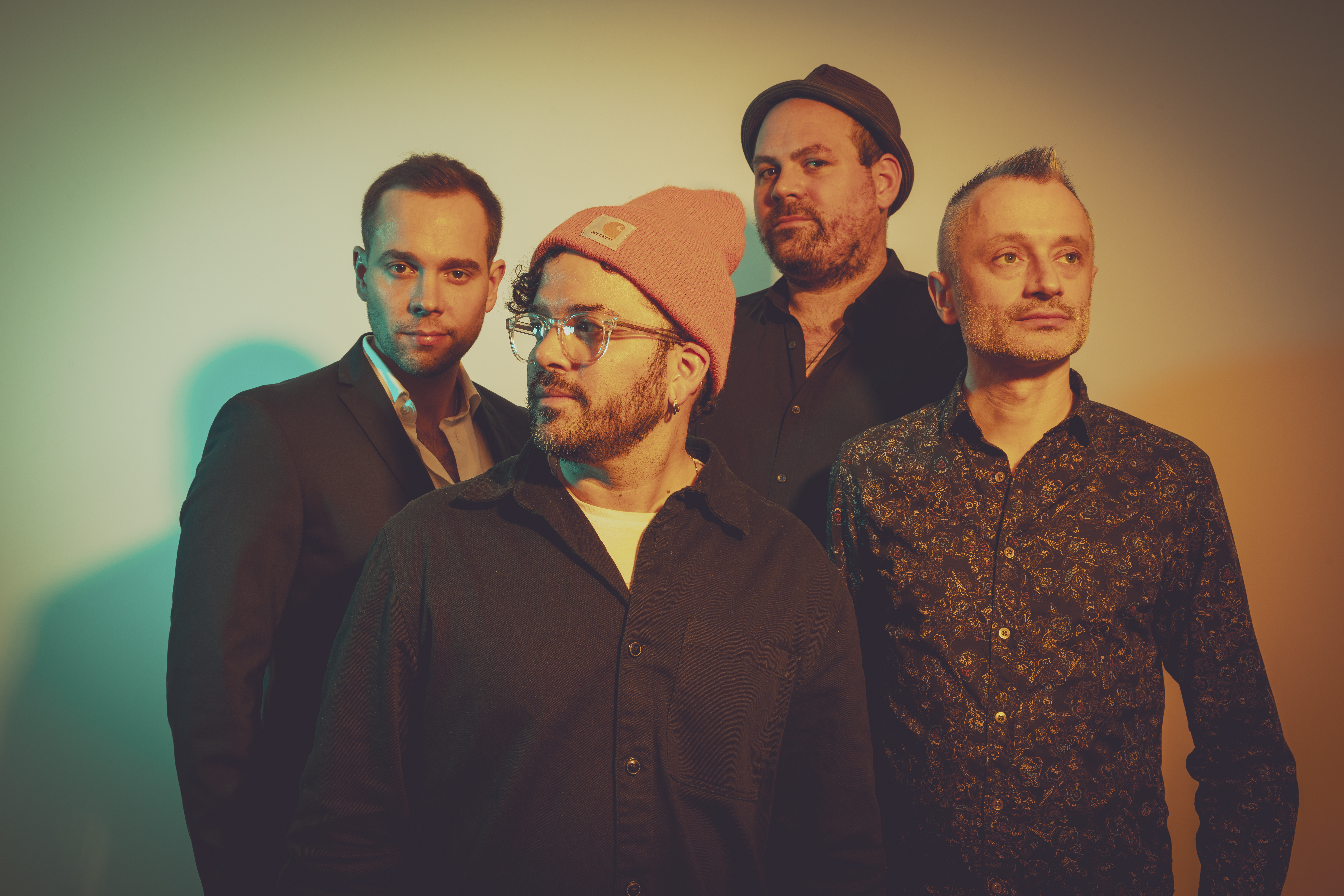
Timelines is almost the opposite. We reconnected with Camilo and Dennis, two old companions we had lost sight of for a while, and recorded as a quartet in our studio. Then four guests added their colours: Mathias Heise on harmonica from Denmark, Paul Heller and Jan Prax on saxophones, and Nir Felder on guitar from New York.
What works best for us: write with a specific person in mind, and then make sure there is real trust. Technology makes collaboration possible – friendship makes it good.