

Published
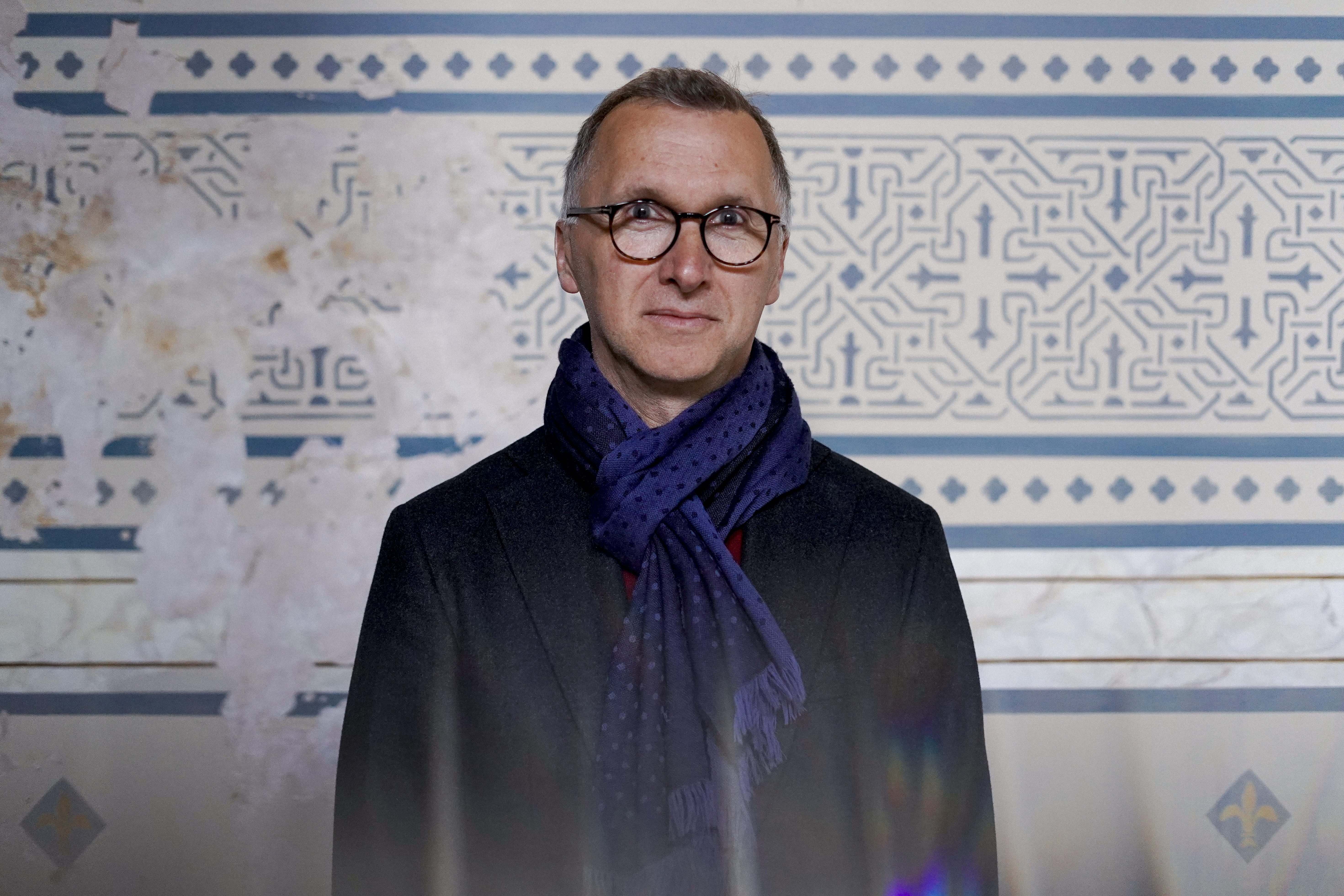
Name: Michael Price
Nationality: British
Occupation: Composer
Current release: Michael Price's new album The Seasons (1914-1918) is out via The Control Room.
Shoutouts: I’m blessed with so many amazing colleagues and inspirations - Hannah Peel is knocking it out of the park on every level, whether it’s her scoring work or venue residences such as the Barbican takeover in October 2026. I’ve just worked with four very different chamber ensembles, the Gesualdo Six, Connaught Brass, Solem Quartet, and Galliard Ensemble. Each distinctive, committed and creative. I also love the listening bar experience, with spaces like Spiritland in Kings Cross referencing the Japanese Kissa bar history.
Hometown Recommendations: If you do come to visit me in Berkhamsted we could walk past the 350 year old yew tree I can see out of my studio window, to the benches behind St Peter’s Church, which dates back to 1222. All of those 800 years of history will feel present in the here and now.
Things I am passionate about but rarely get to talk about: I am super into a very long list of things! Off the top of my head, I’m currently fascinated by the harmonics of bells, and the mathematical patterns of church bell-ringing; I can talk about Japanese planners and notebooks, and the optimal pen & ink combination, for hours; and then there’s first edition poetry books from the twentieth century, like the edition of the The Waste Land that Virginia Woolf herself printed. If anyone is reading this around Christmas, and is feeling generous, you know what to do!
[Read our Hannah Peel interview]
If you enjoyed this Michael Price interview and would like to know more about his music and upcoming live dates, visit his official homepage. He is also on Instagram, Facebook, tiktok, and bandcamp.
The borders between producers, sound artists, and even songwriters are becoming increasingly blurry. What does being a composer mean today, would you say?
The term composer still carries a lot of cultural baggage, but for me I think it means “an author of music”.
Many people perceive classical music and contemporary composition as having high barriers of entrance, both for listeners and musicians. What have your own experiences been in this regard?
I was lucky enough to have grown up in Yorkshire, in the North of England, where playing in brass bands, and singing in chapel choirs was part of working class life.
The discipline of wanting to play well, to respect your fellow musicians and the music you were playing was still there, in abundance, but a traditional music education wasn’t a barrier to playing in a brass band.
And then I went to university, where things were different.
As of today, what kind of materials, ideas, and technologies are particularly stimulating for you?
I get huge inspiration from archive materials - whether family history, or for instance searching out Edward Thomas’s handwritten poetry notebook in the British Library when I was setting some of his poems for The Gesualdo Six in my new work The Seasons (1914-18).
Where do most of your inspirations to create come from – rather from internal impulses or external ones? Which current social / political / ecological or other developments make you feel like you need to respond as an artist?
I’m very aware that I, like many people, have a very short memory. And so I’m inspired either by historic material that connects me, and I hope an audience, to a person or experience they may have not known about before, but are connected through music, and then through time.
Whether that is recent history, or Deep Time in the geological sense, like in the orchestral project I’m just about to begin “Moments in Deep Time”.
Tell me a bit about the sounds & creative directions, artists & communities, as well as the colleagues & creative hotspots of your current hometown, please. How do they influence your music?
We now live, my wonderful wife, our two children, and I, about 30 minutes North of London. When we lived in Central London, I think we fed off the intensity and speed of city life, but now we’re a little bit more in the countryside, it feels like there is more space to connect to nature.
There’s still a terrific contemporary chamber music scene in the town, like Clare O’Connell’s Behind the Mirror series, but I also revisit various meaningful places in the UK, like the Yorkshire Dales where my family are from, and Suffolk, where we take the kids on holiday every year, and I feel very connected to Britten and that musical focus around Aldeburgh.
Composing has always had an interesting relationship between honouring its roots and exploring the unknown. What does the balance between these two poles look like in your music?
Many writers have explored new external forms, whether sonic or theoretical - I’m more prone to begin with exploring what the ‘truth’ of any musical situation is for me, and then the architecture for that suggests itself, rather than build a structure first and try and fill it with authentic expression.
How much potential for something “new” is there still in composition? What could this “new” look like?
I think “new” is about context.
A C Major chord in 2026 is different to one in 1826, and very different to hearing one in 1526. So my sense of authenticity is about reacting to the cultural context I find myself in, here in 2026, and reaching for the most honest way to express myself.
That may be in a technological way that hasn’t been possible before, but it may also be by honouring sounds we may have heard in the past and framing them for a contemporary form of expression.
What role do electronic tools and instruments play for your creative process? What does your creative space / studio look like and what tools does it contain?
My favourite tools are those that are best suited for the musical language I’m speaking at any one time.
My study at home is more centred around paper, pencil and piano, although there is a computer for Dorico and to mirror my studio rig, but at my studio where I do most of my film & TV work there’s a treasure trove of analog synths and ways of generating sound that I’ve collected over the years, and analog outboard to mix through, so that room is more of a playground for sound, and my study at home is a playground for the mind.
It is my impression that adding a conceptual, non-musical dimension to one's work is almost a prerequisite for commissions and grants. How do you view this tendency and how “conceptual” is your own approach to writing?
There can be a perverse incentive if composers try and write grant applications first, and then have to retrofit music to that brief. Having written to plenty of briefs in the film and TV world I hope these days for the concepts in my work to come authentically from me trying to find the truth in a subject.
The album Tender Symmetry may be thought to be ‘conceptual’ in terms of the importance of writing work in response to historic locations, and then recording that work actually in the location itself, but that felt like the most honest response to the places and stories I encountered.
Working with long forms, complex concepts or new vocabulary is potentially more challenging today because they require us to remember things that happened perhaps minutes ago – while most of us are finding it hard to focus even on what's happening right now. Both as a composer and as a listener yourself, how do you deal with this?
On the one hand, our attention has been commoditised, and sold back to us as an experience, but on the other I think that people experience moments of flow and emotional immersion as deeply or even more so than ever before, perhaps because of their relative rarity.
I treasure vintage classical vinyl, for the history of the object, and the connection to the people who’ve listened to it before, so try to produce physical artefacts myself, wherever possible.
I’m a sceptical optimist for the future of the human condition.
For many artists, life-changing musical experiences take place live. Few works these days, however, are performed beyond their premiere. What, do you feel, does this mean for composers, and the music they write, and how does this reality influence your own work?
It’s true - it’s very hard to get second performances of new works, and often pretty hard to get the first one! This does reinforce for me the role of the traditional music publisher (I’m with Faber Music) who are connected with the musical community and can make your music the answer to an ensemble’s question.
Having said that, the different art forms have fundamentally different connections with the people experiencing them. There is only one original version of a great painting by Rothko which you have to see in person for the full experience, but a great novel can exist in millions of dog-eared paperback copies, and the essence of the work is intact.
Music only exists in that coming together of listener and performer, or listener and recording, and so composers since the great church musicians and singers have always had one eye on the practicality of performance and of the most effective way to reach their desired audience. That’s an honourable craft.
How, would you say are live performances of your music and your recording projects connected at the moment? How do they mutually influence and feed off each other?
I have been in the habit of being led by making recordings first. You can find videos of live performances, like the Tender Symmetry concert from Kings Place which is on YouTube, and that’s an area I’d like to explore more.
For me it feels like making a record is like writing a novel, and live performance, writing a play. I think by temperament I’m more of a novelist than a playwright.
To some, the advent of AI and 'intelligent' composing tools offers potential for machines to contribute to the creative process. What are your hopes, fears, expectations and possible concrete plans in this regard?
When I look at the music manuscripts in the British Library, I’m struck that the essential technology for writing music hasn’t changed in centuries, nor, in my opinion, does it need to. And we certainly don’t need to be able to increase the speed of musical mass-production, iterating to the lowest common-denominator. That’s the opposite of what music is for.
So for me generative AI being involved in the actual making of music is of very little interest, and only really as a reminder of what not to do. The wider economic effects of that automated music production on the music eco-system are hard to see as anything but negative and reductive.
I use all kinds of software myself, every day, but it should always be clear who the author is.
The Montreux Festival intends to preserve its archive of recordings for future generations. Do you personally feels it's important that everything should remain available forever - or is there something to be said for letting beautiful moments pass and linger in the memories of those that experienced them?
Being able to reach back through time and re-experience afresh something that was performed many years ago is a gift to future generations.
This week I brought back from my late mother’s home her handwritten household accounts, in ten notebooks that spanned over 50 years of family life. That’s something I’ll always treasure.
And musically, on my Bandcamp there’s a recording I made with Peter Gregson the wonderful cellist and dear friend, of three improvisations we did one night in a studio in Berlin then uploaded before midnight.
[Read our Peter Gregson interview]
[Read our Peter Gregson interview about Sleep, the Subconscious and the Value of Silence]
[Read our Peter Gregson interview about Directions in Contemporary Composition ]
The friendship (and whiskey!) of that evening is now lodged in our memory, but the recording means we can share it with others. May we all plant trees under whose shade we will never sit.