Published
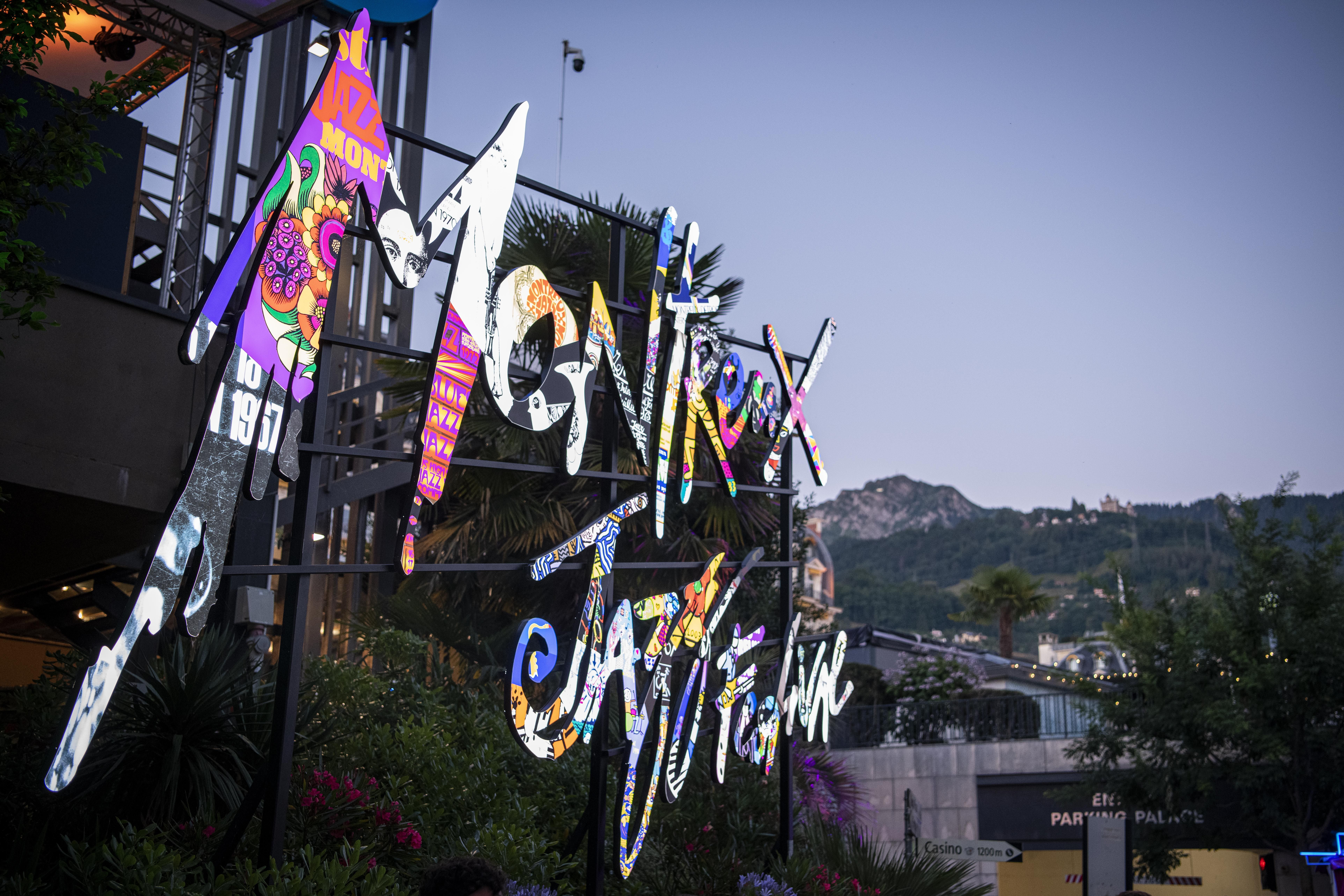
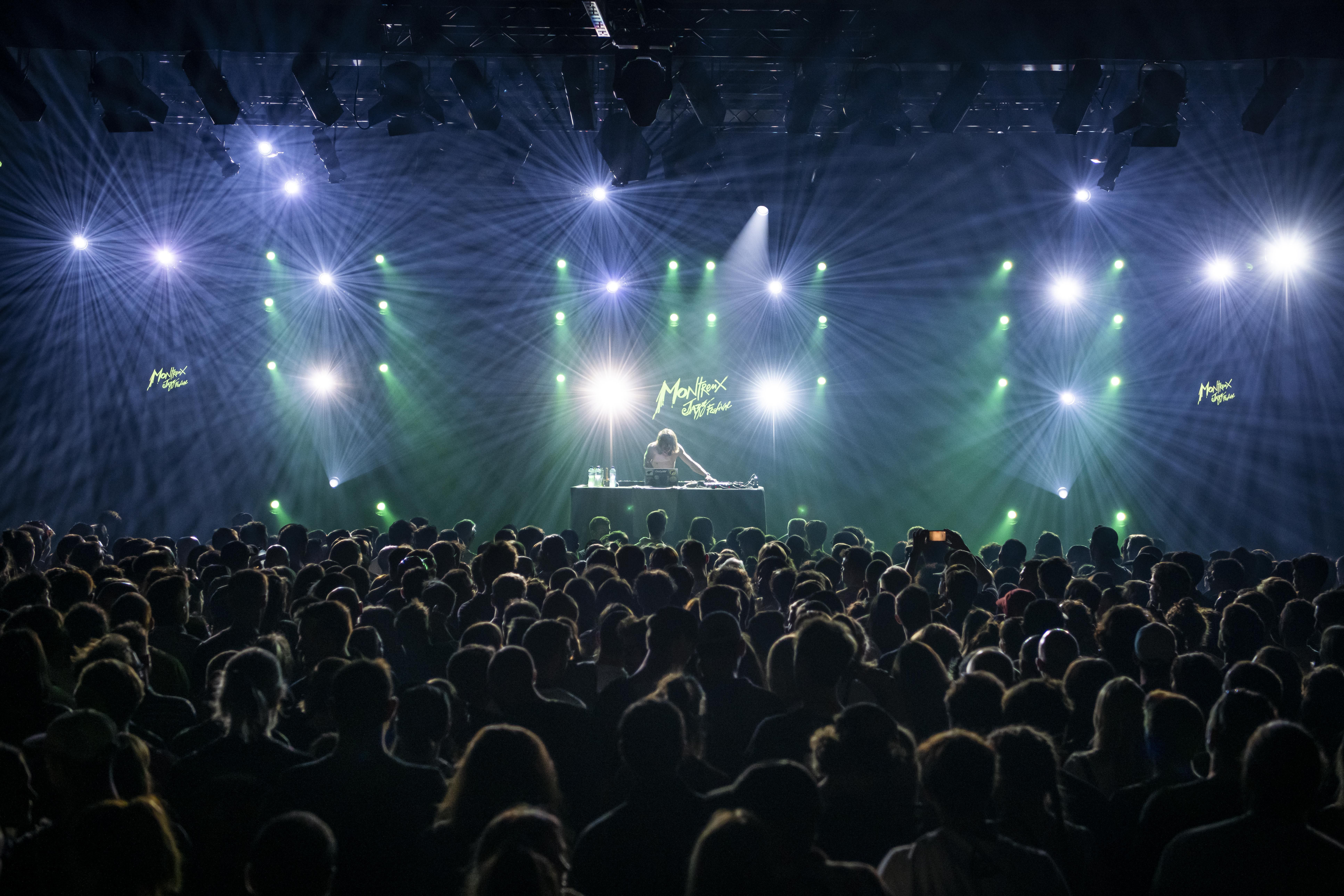
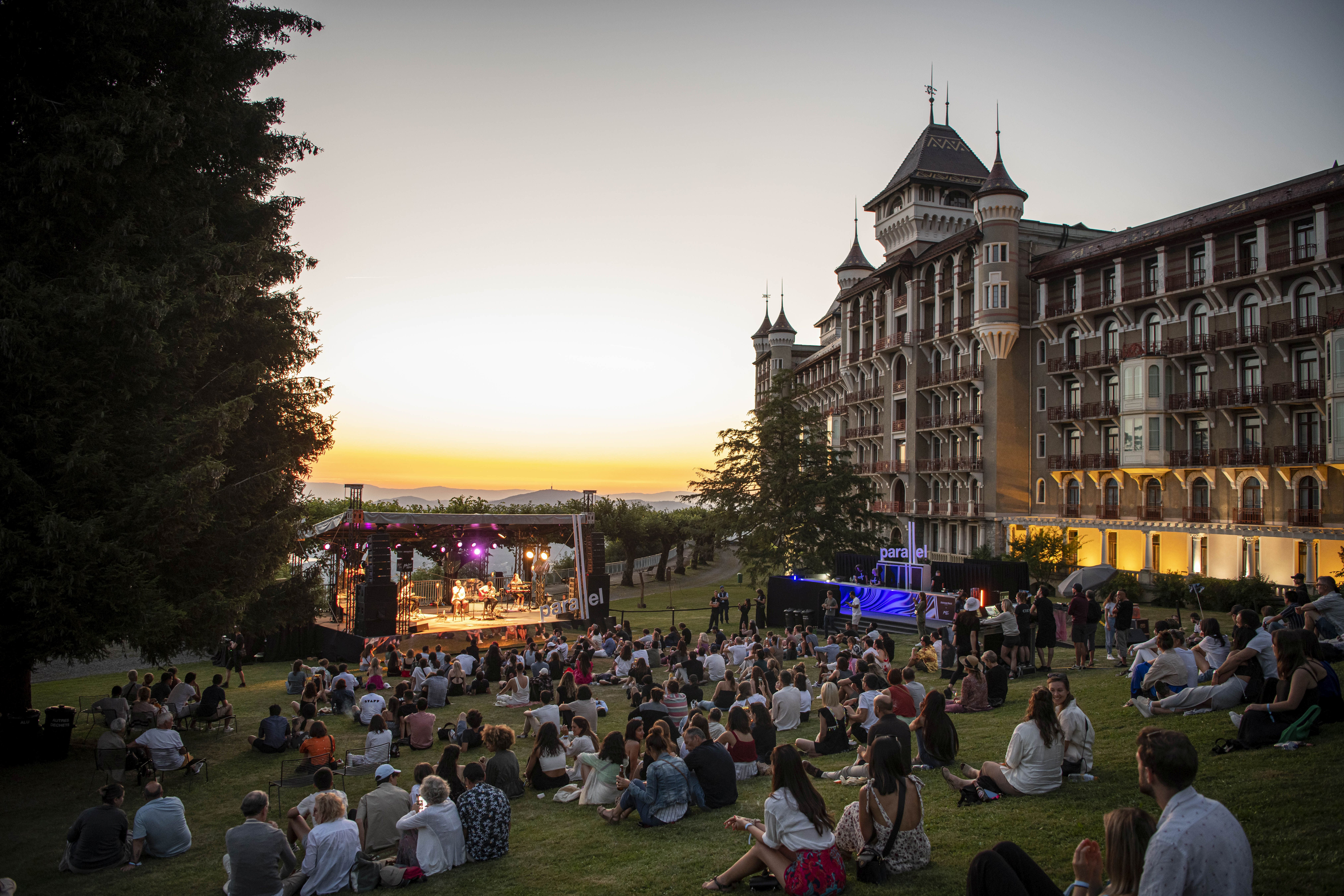
The is article is part of our coverage of the Montreux Jazz Festival 2024. This year's edition is more expansive and stylistically open than any previous one. Spread across the city, it will present 500 events on 15 stages, including concerts, discussions, and DJ sets.
For more information, visit the Montreux Jazz Festival website.
For a deeper dive, we recommend our expansive article about the Montreux Festival's recording archive and our corto.alto interview about his appearance at the 2024 event.
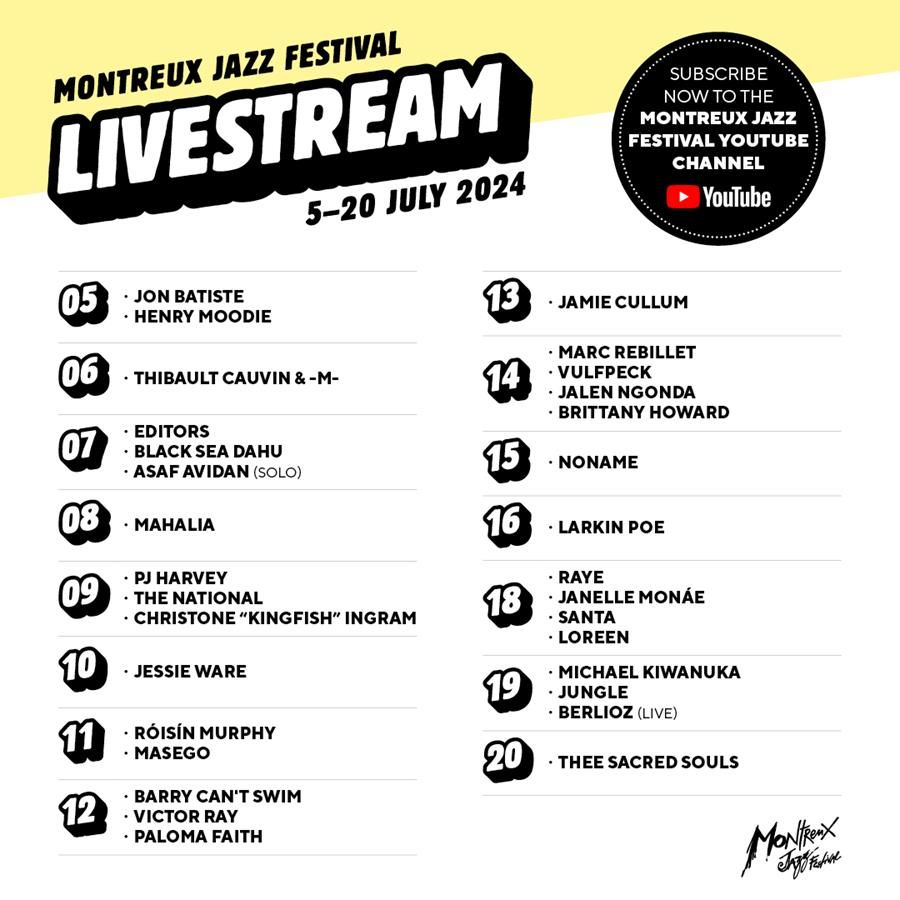
For the first time, this year's edition of the Montreux Jazz Festival will stream a selection of performances via Youtube for free. It may seem as if the event is opening up. In reality, despite its image of exclusivity, it has always been highly inclusive. The streams are not a transition or an innovation. They are a natural continuation and extension of the very approach that the festival's renown is based on.
And yet, when the late Claude Nobs began building the Montreux as a global brand, he knew that his warm and welcoming nature would create a paradox.
Even today, after some expansion work, the festival's main concert halls are medium-sized at best. With a capacity of 1,300 for the famous Casino and 4,000 for the newly built Auditorium Stravinski, the organisation could sell out the festival several times over. Nobs was, as it were, inviting the world but didn't even have enough seats for the local crowd.
In a bid of taking the pressure off, he set up more stages all around town and hosted a series of open-to-the-general-public events which would eventually become far bigger than the core concerts. 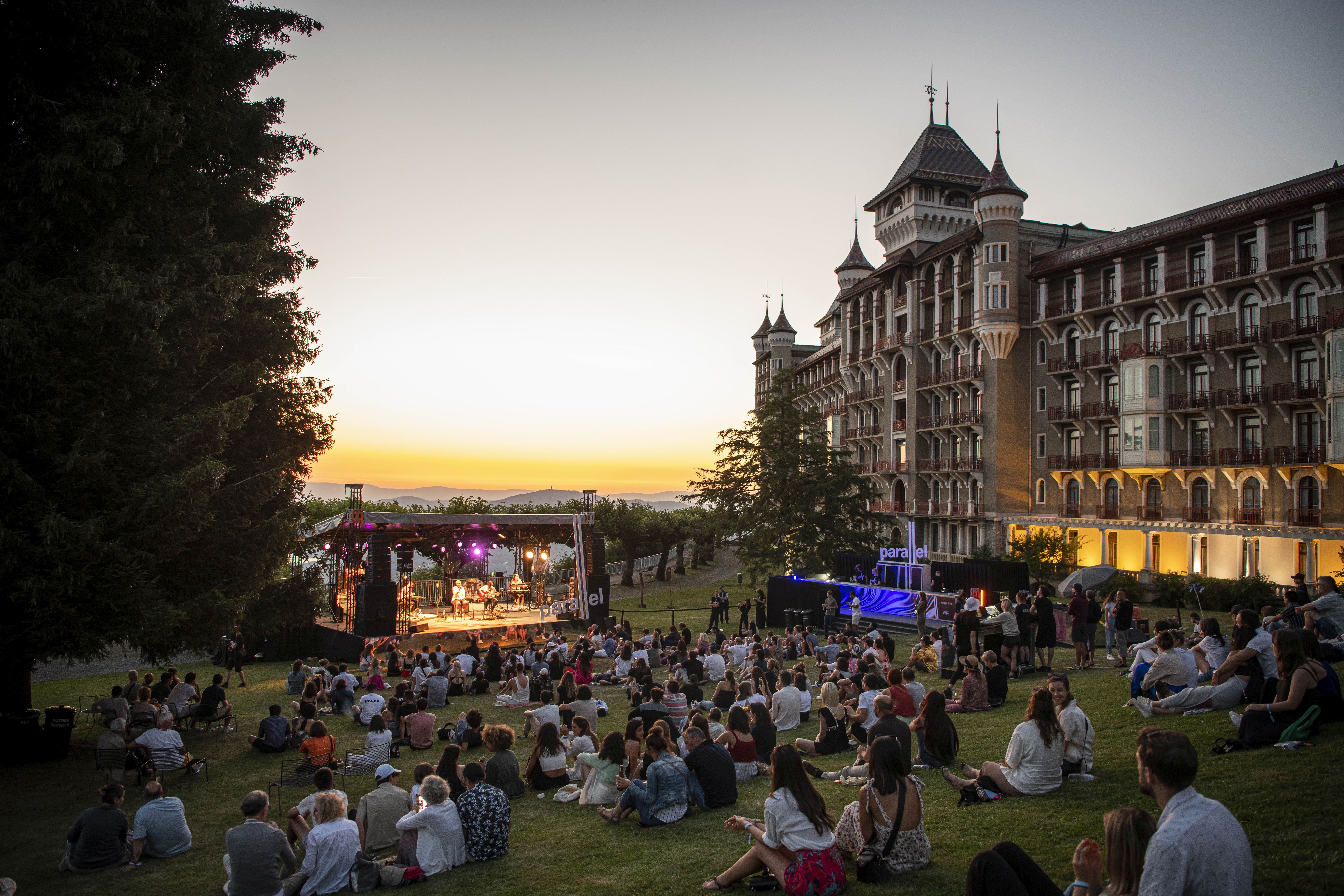
(c) Montreux Jazz Festival
Soon, Montreux saw a steady stream of jazz pilgrims taking to Montreux with little more than a sleeping bag and a bagpack. They would camp outside the casino, making the dual nature of the festival even more apparent.
You'd expect Nob's kind gesture to be treated with gratitude. As it turned out, however, it sparked the same kind of critique that has surrounded Montreux – and the jazz scene on a wider scale – for decades. One of the performances singled out for streaming was the live gig by British singer Mahalia. Her live act and stage personality stood out for its class, intimacy and frankness. And so, I was surprised to find how few of those who tuned it seemed to appreciate the deep grooves and poetry of the gig and instead dealt with how “not jazz” the music was.
It is certainly possible to argue this way. Mahalia's natural home turf are soul and rnb, her sounds certainly closer to the lineage running from Lauryn Hill via D'Angelo, Erykah Badu, and Jill Scott up to Jorja Smith and SZA. Also, I am not sure whether the festival picked the right artists for streaming: Being able to see The National play for free is clearly wonderful, as was PJ Harvey, whose trio injected the sparse, focused songs of her most recent studio albums with even more intensity and, as on “The Glorious Land”, with an almost Kraut'ish propulsion. But clearly, all of these acts are very far from being considered “jazz” in any capacity.
Then again, some of the festival's biggest and most legendary appearances have come precisely from this corner of the musical spectrum, including Marvin Gaye, Nina Simone, and Etta James, Radiohead, Nick Cave, and Björk. Their performances were not jazz either, in the strict meaning of the word, yet they somehow made complete sense juxtaposed with Nubya Garcia, Lady Blackbird, and Gilberto Gil.
If audiences are still debating these questions today, then maybe it's because Montreux's status as the leading event of its kind all but confronts us with them. Clearly, streaming also raises points about what constitutes a “live” event today. But: does it really matter? And if so, why? 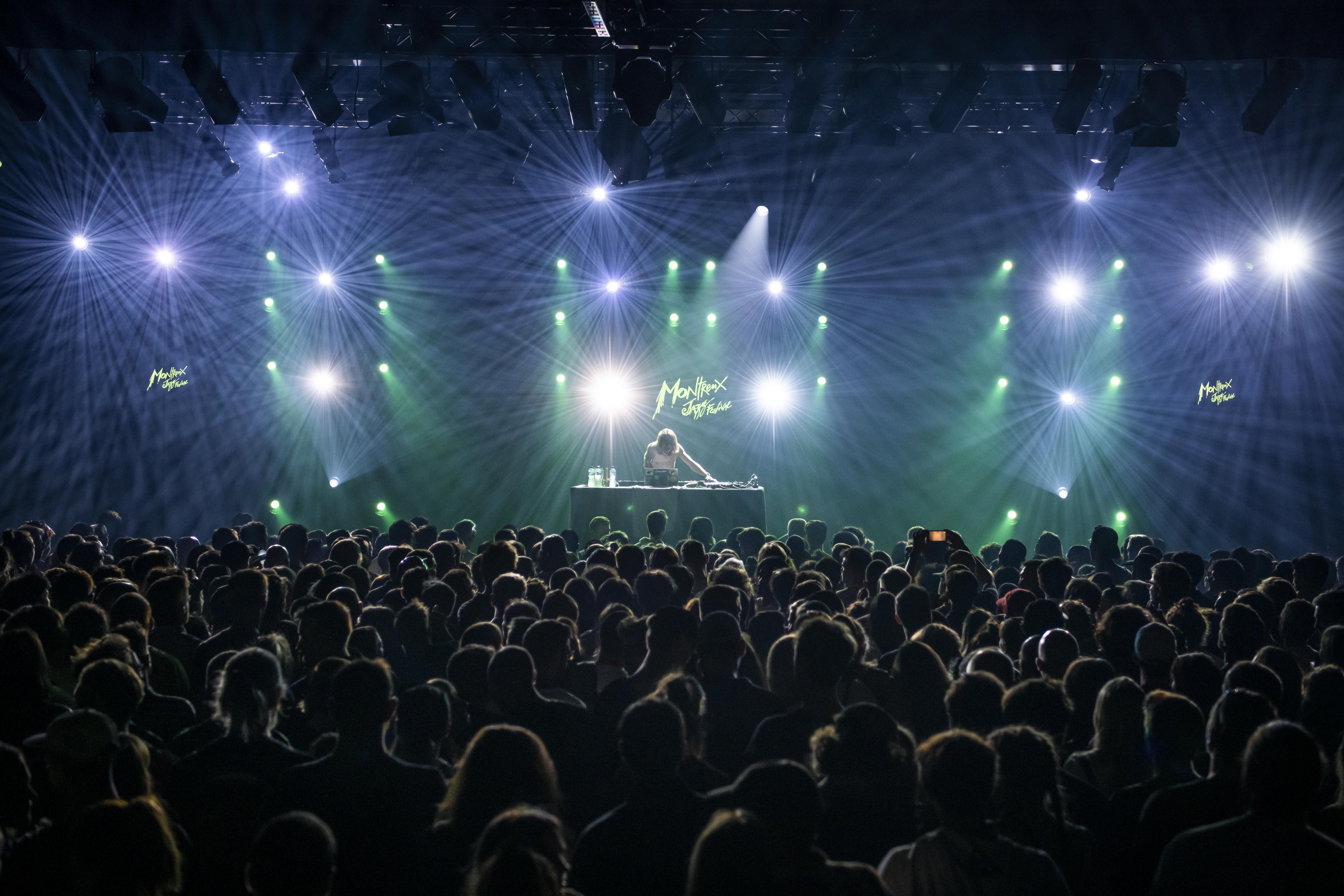
(c) Montreux Jazz Festival
Why play live?
For most artists, these points certainly touch on the very essence of their work. The post-Covid explosion of live activity has clearly demonstrated just how vital it is in terms of not just sustaining a career but also creating a direct connection between performers and listeners. If we ever doubted this, then it's probably because of the relative dominance of recordings during the 70s and 80s and a few notable artist personalities whose masterful use of the benefits of the studio tilted the balance.
Take Canadian pianist Glenn Gould, for example. Early on in his career, Gould decided that the stage was not for him. He withdrew from the public eye and henceforth dedicated himself entirely, save for the occasional interview or radio broadcast, to recording. Releasing up to six new LPs in one year, he left behind one of the classical world's largest overall discographies. It also made him a rich man at a time when albums were a mass medium.
But Gould was an outlier personality-wise. And the 70s, 80s, and 90s were outlier-decades in their preference of recordings of live performances. Even during those unusual years, most musicians continued to yearn for a direct interaction with their audience, and the thrill of the moment. In fact, Gould's life, akin to the career of similarly studio-obsessed acts like Steely Dan, serves as a warning against the dangers of withdrawing into the abyss that album production can be – he eventually died a sick, addicted and lonely man.
For Montreux-Jazz-Festival founder Claude Nobs, every concert, in contrast, was a celebration of being alive. As a somewhat obsessive horder, he had amassed a large record collection at an early age and continued to grow it well into old age. His legacy project of recording and archiving every single gig at the festival resulted in a mind-bogglingly vast galaxy of sound. But judging by the focus of recent documentary They All Came to Montreux, these things no longer held any real importance to him. At best, they amounted to snapshots in a photo album – carriers of memories which lacked almost everything that had made those memories so valuable in the first place.
Nobs did not consider every live gig as equal. Suffering from what one might call a “beneficial selfishness,” he wanted each performance at Montreux to be special – for the guests, for the performer, and, last but not least, for himself. He was quite insistent on the idea that these events should never be “yet another night” and was weary of booking musicians passing by Switzerland as part of a larger tour. Nobs gave artists carte blanche, but he demanded something in return as well.
Artists were supposed to tread unknown waters, try new things, make use of the opportunity as a lab for experiments and spontaneous collaborations. In They All Came to Montreux, Nobs expands on the fact that Nina Simone's short, yet almost unbearably intense 1976 concert at Montreux cost him a fortune but was ultimately the best gig he ever attended.
What was it about this particular night which The Guardian called “tough to watch for the uninitiated?” 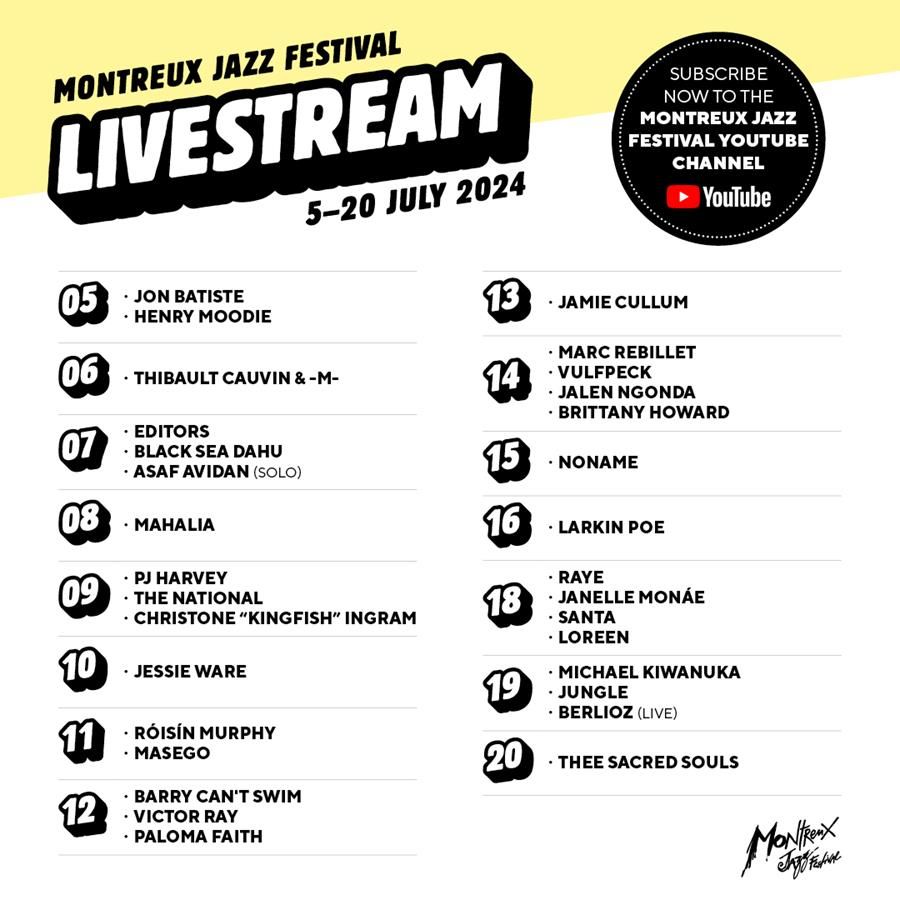
To improvise or not to improvise?
When we think of the magic of the live performance, many of us will instantly think of improvisation. As the genre which quite possibly placed more importance on improvisation than any other, jazz does indeed feel like the natural space to discuss these questions. And yet, Claude Nobs himself, already by its third edition, did not actually see his brainchild as a jazz festival. In fact, he even tried, for a few years, to do away with the terminology in the name – only to discover that people kept calling it “Montreux Jazz Festival.”
And so, eventually, the “jazz” returned, although, to its founder, the word was not an indication of style or approach, but one of “quality.” Tellingly, as indicated earlier, Simone's legendary 76 set – short, sometimes akward, mostly spellbinding – had very little in the sense of jazz to offer.
Of course, that's not saying much.
By now, after a massive effort to completely digitise its archive, the Montreux Youtube channel offers a fascinating timeline of clips from its illustrious history. If anything, these demonstrate not just how diverse its understanding of jazz as a genre was. It also suggests that most jazz musicians thought like Nobs and simply erected their own, highly personal concepts on the shoulders of those who had come before.
Jazz meant respect for one's roots and for tradition. But those roots were always in the present and the most important part of the tradition was to break with it. That's why modal jazz, jazz rock and fusion were all rejected by “purists” at their inception, that's why some of what is sold as jazz today would not even have been recognisable as such had it been presented to a 1970s Montreux public.
With that in mind, it is quite easy to gradually move away from regarding improvisation as an essential aspect of a live experience. Here's what corto.alto's Liam Shortall told me when I asked him about the meaning of jazz and improvisation today:
“To me jazz is a language and style of communication within music, and the way a group of musicians can agree on some set of rules, that then can be broken. I suppose it’s kind of transcended being a “genre”, but it’s obviously a huge and controversial question that I don’t really know the answer to. For my music at least, I am definitely moving away from having loads of improvised solos in my tracks, and more towards using elements like sampling, sound design and grooves in my music. I love hearing improvisation as much as most other fans of jazz music. But it’s not the only thing I am interested in [...].”
As mentioned, jazz is often defined through improvisation. But there are many ways how improvisation can infuse a piece of music. Take this version of “Compared to What” by Les McCann from his 1972 Montreux album.
Between each verse, there is a lot of playful instrumental riffing. Few of this amounts to what we would usually perceive as a “solo.” It's really the band continuing the funk, the flow, following the groove. And yet, no repetition is ever entirely the same.
And then, there's the famous version McCann performed with Eddie Harris for the Swiss Movement LP. Here, the line-up is more minimal which leads to the saxophone taking on a more prominent position – to the point that several of the interjections clearly have more of a “solo” feeling.
Is one more “live” than the other, or more “jazz” for that matter? That seems like an arbitrary distinction. Especially since many of the ideas of non-musicians about improvisation are often unnecessarily romanticised. Says Chris Corsano about the act of improvisation in his own playing:
“There is, on a micro-level at least, always going to be muscle memory at play and years of practice that somehow are going connect to the present moment. Same way as how I'm using the same old words right now as always, but stringing them together in a way that's responding to your prompts.“
Effectively, Corsano's statement questions whether inventing something on the spot is even possible at all. Vice, versa, our understanding of performing a score in the classical world – or a straightforward rendition of a rock-, metal-, or pop song - does not have to feel like a straight-jacket. It can, in fact, set the music free, as pianist Arsha Kaviani stresses:
“Improvisation is incredibly dear to me and I nearly do it in every single concert - there, my personality is entirely inseparable from what is heard. [Likewise,] there should be a good element of creativity when interpreting something. But sometimes the creativity consists in removing yourself from the performance and merely becoming a conduit for the objectivity of the work and allowing the audience to perceive it how they like.”
I do think that the context of playing at a “jazz” festival or taking cues from jazz music can influence the tone and approach that a band takes. Deep Purple's incredible early Montreux is a prime example for a group – and an entire genre – expanding its horizons through the association with improvisation.
“Wring that Neck” gets stretched to 17 minutes, “Child in Time” to 20. If you were to listen to the guitar solo around the four minute mark in the former without knowing the song or band, as a modern listener, you'd most likely classify this as jazz without hesitation.
For his appearance in Montreux, Mike Oldfield emphasised the subtle jazz influences of his early 80s albums QE2, and Platinum, and brought down early classics like Ommadawn and Tubular Bells from their orchestral grandeur to the size of a compact ensemble.
This is still, to this day, one of the most impressive re-imaginations. Oldfield had been performing with these musicians and a similar approach for a while, but something about the place and that night brought out the best in the band.
It is certainly exciting to speculate about the direction this could have taken him in his studio work had he pursued it further.
Even more intriguing are the cases when Montreux invited artists without any jazz affiliation whatsoever. In some cases, as with Korn, the band did not tweak their sound to the occasion. In other instances, things get blurry and exciting. This set by Alanis Morissette from 2012 certainly feels different from other gigs from the same time. Or maybe the fact that she is appearing on the Montreux bill just makes us listen to her music through the lense of soul, funk, and jazz.
This, and of course, the inclusion of jazzy organ vibes by virtuoso Michael Farrell.
The role of improvisation
From personal experience, I can definitely say that improvisation, oddly perhaps, is indeed not a particularly good gauge for measuring how spontaneous a performance is. I have seen classic jazz concerts which felt stale and mechanical, and rock gigs where a setlist of songs, performed in the same arrangement, felt entirely in the moment.
Clearly, then, there is a difference to be made between a performance where the musicians go through the motions and a performance where they are on alert. Alertness can result in a lasersharp focus or a passionate surrender and both inevitably lead to a removal of all superimposed filters.
As Butcher Brown put it:
“Jazz means freedom, self expression – it’s all about the imperfections, not about being perfect. It should be about showing your personality, heart and soul more than anything else. It’s a platform that can allow artists to be them and not think so hard about what they’re gonna play. Just play with love in your heart and a lot of conviction, and I think you’ll be able to get your point across to a lot of people.”
There are indeed many legendary live albums in jazz. But many of the most beloved “studio” recordings, despite being created in an entirely different setting, are capable of transporting a quite similar feeling. To pianist Clara Vetter, it is up to the artist to actively destroy the limitations that these situations seem to place on them:
"As an improviser, it's easy to hide behind the fact that you have more time to create a composition than an improvisation, which happens in real time. I don't want time to be an indicator that makes a composition more valuable because you have time to reflect/think/research. [...] There is probably no music without some layer of improvisation, at least when it is played by humans."
Of course, I don't for a second believe Nobs considered perfection impossible. Ultimately, this is a questions of semantics more than anything. I recently spoke to bassist Szymon Marciniak who, prior to recording pieces for piano and double bass from the Romantic era, performed them live several times, even missing the initial deadline by a year as a result.
The point was not to get better, he emphasised, or to achieve the “perfect” interpretation. It wasn't even about making no mistakes; in fact, the entire project was triggered by listening to decades-old vinyl recordings considered by many as inferior, outdated, and often technically flawed. What he was looking for was to get a recording where he knew that his decisions were both spontaneous and solid.
To get back to Corsano's earlier statement, each moment we use muscle memory to put sounds or words together in a different way. Each moment based on a previous one, yet brand new.
It is this point, I believe, where improvisation and interpretation overlap, merge, or intersect, and where a minutely refined studio recording can actually transport the same sensation as a live performance. Claude Nobs, tellingly, had a small cinema built in his chateaux, used for screenings of the video tapes made at Montreux. Here, he would relive those moments again and again. Here, the questions, comments, and debates simply did not matter.