Published
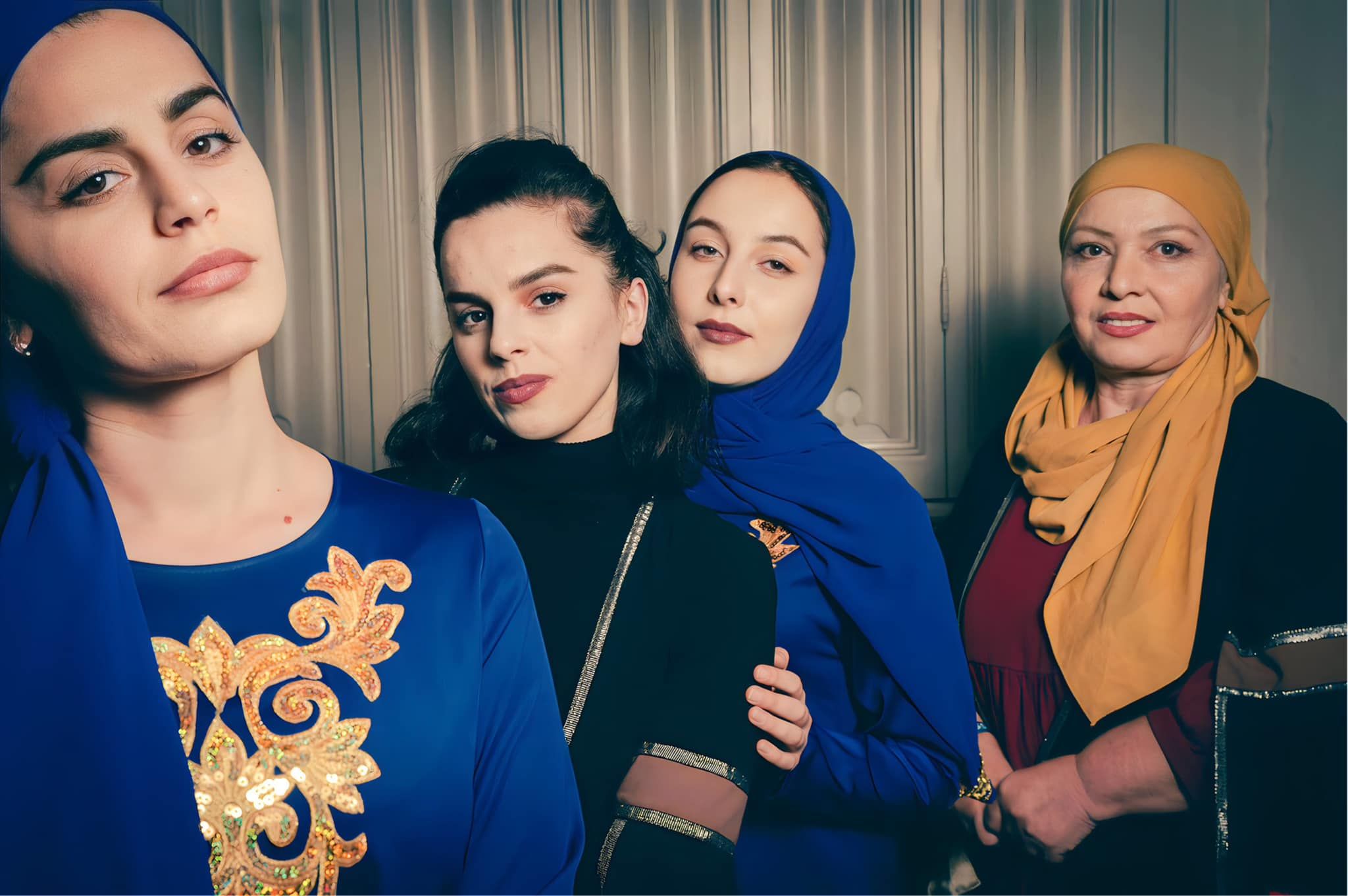
Name: Pankisi Ensemble
Nationality: Chechen
Members: Bela Mutoshvili, Lana Gunashashvili, Linda Gunashashvili, Mariam Bagakashvili
Current event: Pankisi Ensemble are one one of the acts performing at the Musicport Festival 2024. Under the headline of “A Magnet for World-Class Musical Diversity,” the festival will take place at Whitby’s landmark Pavilion - Friday October 25 – Sunday October 27 2024. Get tickets here. Other acts at the event include Divanhana, Afro Celt Sound System, Rokia Koné, Fulu Miziki, Qadasi & Maqhinga, Chahat Mahmood as well as Jah Wobble and The Invaders of the Heart.
[Read our Divanhana interview]
[Read our Johnny Kalsi of Afro Celt Sound System interview]
[Read our N'Faly Kouyate of Afro Celt Sound System interview]
[Read our Rokia Koné interview]
[Read our Qadasi & Maqhinga interview]
[Read our Chahat Mahmood interview]
Do you think that some of your earliest musical experiences planted a seed for your interest in your voice and singing? How and when did you start singing?
Definitely. All our voices are adjusted to our different experiences. We all have different ranges and voices.
I have been singing since childhood.
If you're also playing other instruments, how does the expressive potential of these compare to your own voice?
The sounds of our traditional instruments go well with our voices as we play our own ethnic instruments.
Singing is an integral part of all cultures, and traditions. Which of these do you draw from – and why?
We are a Chechen ethnic community, we have our own culture.
But at the same time, we have been living in Georgia for two centuries and we express the folklore of both countries because it is important to us.
What were some of the main challenges in your development as a singer/vocalist? Which practices, exercises, or experiences were most helpful in reaching your goals – were there also “harmful” ones?
The biggest challenge for me was not being accepted by society, because unfortunately our work is not acceptable to many.
How do you see the relationship between harmony, rhythm and melody? Do you feel that honing your sense of rhythm and groove has an effect on your singing skills?
Our rhythm, harmony and song come from the Chechen character. In this character there are speed, and temperament, and it is worth noting that the major song goes into the minor.
Our historical past is our melody.
What are the things you hear in a voice when listening to a vocalist? What moves you in the voices of other singers?
I feel the character of the melody and we are attracted by the timbre and individuality of their voice.
How would you describe the physical sensation of singing? [Where do you feel the voice, do you have a visual sensation/representation, is there a sense of release or tension etc …]
Depending on the lyrics and melody, our feelings and emotions are always reflected in our visuals during performance.
What kind of musical settings and situations do you think are ideal for your own voice?
The selected instrument and its accompaniment are most important to us.
We have a speaking voice and a singing voice. Do these feel like they are natural extensions of each other, ends on a spectrum or different in kind?
Our speaking voice is close to singing timbre.
From whispers to screams, from different colours to dynamics, what are the potentials and limits of your voice? How much of your vocal performance can and do you want to control?
We have such an individual range and timbre that we use as much of our repertoire as possible in all our songs.
We want to explore songs that are of a different ethnicity but are interesting, like African sounds ...
When you're writing song lyrics, do you sense or see a connection between your voice and the text? Does it need to feel and sound “good” or “right” to sing certain words? What's your perspective in this regard of singing someone else's songs versus your own?
Of course, we feel it, and that's why the songs are selected. We stand up to the songs sung by others.
We try to perform someone else's beautifully performed song, but if the quality of our performance is low, we do not perform it on stage.
Strain is a particularly serious issue for many vocalists. How do you take care of your voice? Are the recipes or techniques to get a damaged voice back in shape?
We live in a harsh climate and nature has greatly affected our endurance. So we don't have one specific method to take care of our voices.
How has technology, such as autotune or effect processing, impacted singing? Has it been a concrete influence on your own approach?
We sing live and hence there is no influence of technology on our performance. This is our signature.
For recording engineers, the human voice remains a tricky element to capture. What, from your perspective, makes voices sound great on record and in a live setting?
A lot depends on the singer's professionalism. Also complete flawless musical hearing.
Motherese may have been the origin of music, and singing is possibly the earliest form of musical expression, and culture in general. How connected is the human voice to your own sense of wellbeing, your creativity, and society as a whole?
Raising the mood is necessary for us and for society - sharing each other's stories, sharing different emotions, etc