

Name: Biomania
Members: Thierry Lemaitre (saxophone), Công Minh Pham (keyboards), Arthur Links (guitar), Nicolas Bauer (bass), Benjamin Pellet (drums)
Interviewee: Thierry Lemaitre
Nationality: French
Current release: Biomania's new Birds and Drones EP is out via Most Least.
Shoutouts: Villa Plagwitz in Leipzig, Germany! It’s an underground venue in a big house. I’ve played there many times, in this large, old living room with fireplaces in the corners. It has such a great vibe. You can’t really promote the gigs — you’re not even supposed to share the address — but people somehow know about them, and it’s always packed. I love that spirit!
If you enjoyed this Biomania interview and would like to know more about the band and their music, visit them on Instagram, Facebook, and bandcamp.
For a deeper dive, read our earlier Biomania interview, our Arthur Links of Biomania interview, and our interview review of their debut album System D.
When did you first consciously start getting interested in musical improvisation? What was your first improvisation on stage or in the studio and what was the experience like?
I was around 15 years old, a pretty rebellious teenager, studying saxophone at the conservatory, when I first tried to improvise over a blues. It was an amazing feeling and a huge way to express myself.
I remember playing very freely, using random notes. I didn’t know much about harmony yet, but it gave me the opportunity to “scream” through the instrument and release a lot of energy.
I also remember the intensity of expressing myself in front of teachers and other students. It was really intense — I could end up shaking after a solo.
Tell me about your instrument and/or tools, please. What made you seek it out, what makes it “your” instrument, and what are some of the most important aspects of playing it?
The saxophone is great because it feels a lot like singing, so you can easily get that beauty of vocal intonation into your playing.
Then you have a relatively easy fingering technique, which means you can say a lot with the instrument and play complex phrases quite quickly. That makes the saxophone really enjoyable to play.
How would you describe your own relationship with your instrument – is it an extension of your self/body, a partner and companion, a creative catalyst, a challenge to be overcome, something else entirely?
Definitely an extension of my body, my voice, and even my soul.
At some point, it becomes as natural as driving a car or holding a tennis racket. It becomes so familiar that you don’t even notice it anymore.
Derek Bailey defined improvising as the search for material which is endlessly transformable. What kind of materials have turned to be particularly transformable and stimulating for you?
We’re talking about a language, and that’s more than a metaphor. That’s actually what music is, in my opinion.
The material is the words, the expressions, the grammar and the basic sentences. You don’t consciously think about these things when you’re having a conversation — you just speak, trying to mean something and to be as expressive and eloquent as possible.
Improvisation is the same process. Music is the same process. And there are obviously many ways to say something: many words, many nuances, many images. Everyone has their own way of speaking, their own vocabulary, but basically we all speak the same language, which we can call music.
Do you feel as though there are at least elements of composition and improvisation which are entirely unique to each? Based on your own work or maybe performances or recordings by other artists, do you feel that there are results which could only have happened through one of them?
I’d go on with the metaphor: improvisation is speaking, composition is writing. They are very close, but they’re not exactly the same.
With improvisation, you are dealing with the present moment. You have a completely different relationship with time, and you don’t have exactly the same way of shaping and taking care of the form.
When you're improvising, does it actually feel like you're inventing something on the spot – or are you inventively re-arranging patterns from preparations, practise or previous performances? What balance is there between forgetting and remembering in your work?
You do invent an idea, a phrase, a moment. But if you don’t want to fall into complete abstraction, you have to use existing words, notes, phrases and patterns in order to be understood.
But a scream, a whisper or a silence can mean a lot, too. So there is no limit to expression.
Artists from all corners of the musical spectrum, not just “free jazz” have emphasised the importance of freedom in their creativity. What defines freedom for your improvisations?
Personally, freedom comes when you express yourself without a filter, without overthinking. When the idea, the meaning and the eloquence are strong enough.
When you’re able to say something deep and emotionally charged, you don’t have to say much to be understood. When that happens naturally, and when the band and the audience are connected to that message, I can definitely feel freedom, connection and some kind of magic happening.
It feels like something based on our souls — something bigger than the body and the mind, something different.
In your best improvisations, do you feel a strong sense of personal presence or do you (or your ego) “disappear”?
That’s a good question.
You need a little bit of ego to speak and say something interesting publicly without losing yourself. But the most satisfying feeling on stage after a solo isn’t really about that. It’s more about the connection people had with you in that moment.
That is much more fulfilling than a little ego trip, in my opinion — and I think it works better that way.
Stewart Copeland said: “Listening is where the cool stuff comes from. And that listening thing, magically, turns all of your chops into gold.” What do you listen for?
The interesting difference between an actual conversation and a musical “solo” is that you’re actually not alone, and you’re not the only one saying something. It’s a collective, simultaneous expression. That’s the best part of improvisation, which I would call interplay.
The soloist is more like a provocateur, a leader of the moment. But the game, the joy and the power come from building this interplay with the whole band — and even with the audience, actually.
There’s a very good tip for interplay: “Make your drummer play.” What that means is that you have to give your drummer rhythmic ideas to interact with. That’s a great way to make a solo interesting.
As a listener, do you also have a preference for improvised music? If so, what is it about this music that you appreciate as part of the audience?
To be honest, I don’t particularly have a preference for improvised music as a listener. However, I really enjoy playing improvisations.
In a way, we improvise all the time. In which way is your creative work feeding back and possibly supporting other areas of your life?
Take risks. Dare in life. Make mistakes — and, above all, have confidence.
And look for profound meanings.

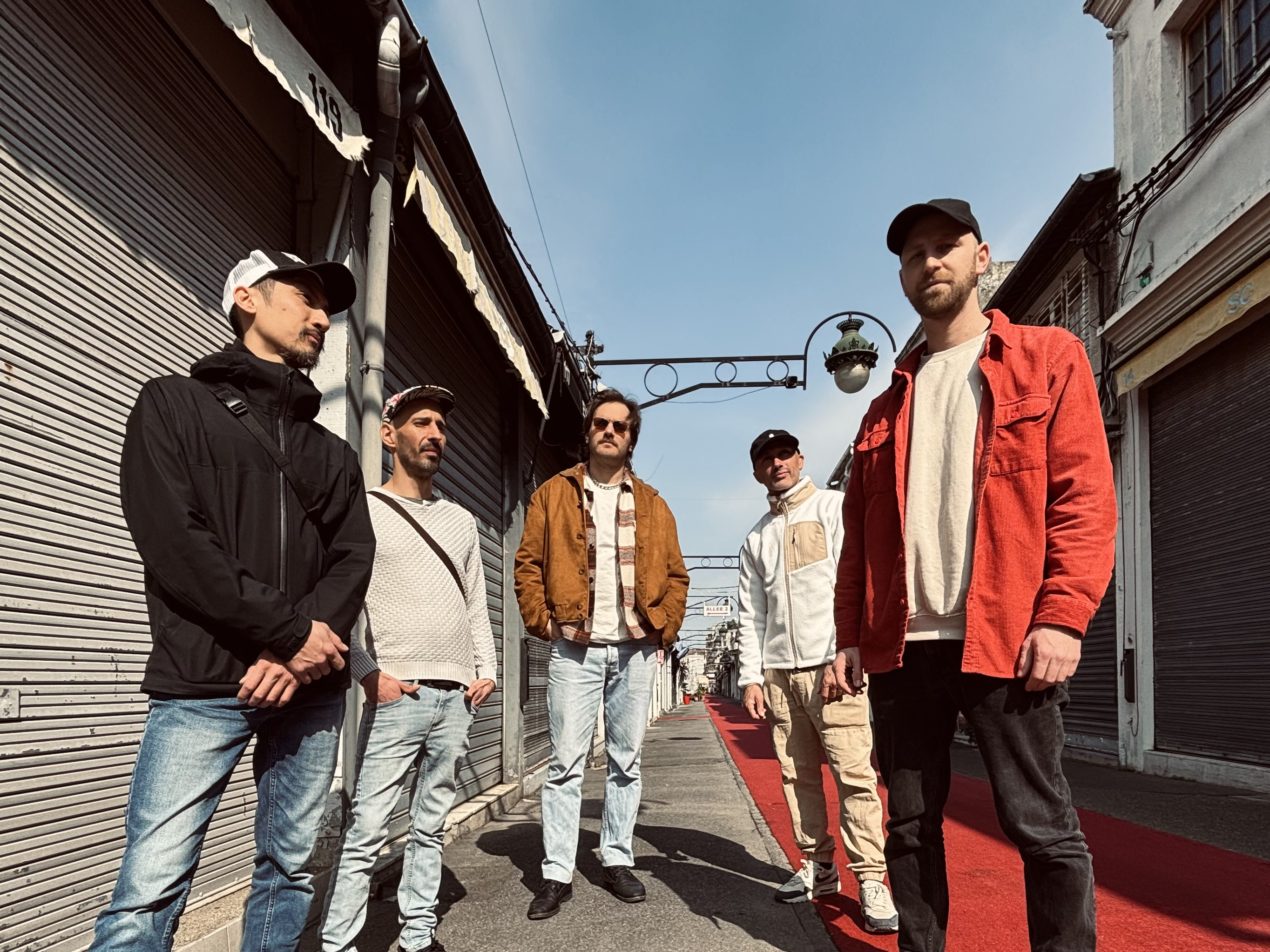 Biomania Interview Image (c) the artist
"Improvisation is speaking, composition is writing. They are very close, but they’re not exactly the same."
Video
