Published
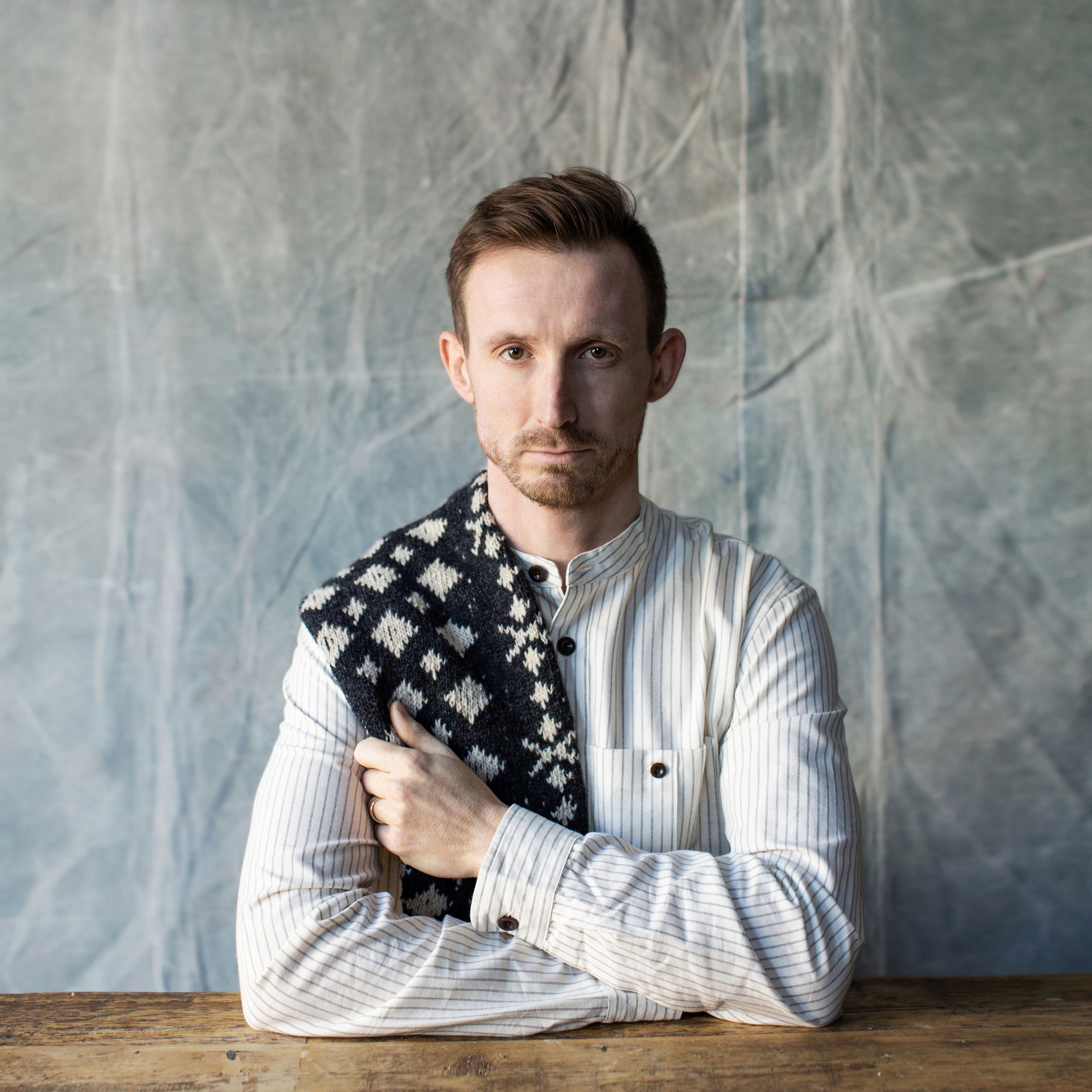
Name: Thomas Farmer
Nationality: British
Occupation: Composer, bassist, improviser
Current Release: Thomas Farmer teams up with Nathaniel Facey (alto saxophone), Shane Forbes (drums), Ivo Neame (piano), and David Preston (guitar) for the new Empirical album Like Lambs: To The Slaughter, out via Whirlwind.
Things that I am passionate about but rarely get to talk about: Rugby!!!! The physical side of life is not intrinsic to music making, but Rugby is a brilliant expression of it. The values of the sport could change our society - it's a genuine team sport where one player literally cannot be competitive without the selfless effort of 14 other players. We are very good at it in the UK and we should be more supportive of this excellent game.
[Read our Shane Forbes interview]
If you enjoyed this Thomas Farmer interview and would like to find out more about his music, visit him on Instagram.
Where does the impulse to create something come from for you? What role do often-quoted sources of inspiration like dreams, other forms of art, personal relationships, politics etc play?
For me it's less an impulse, more a compulsion! When an idea arrives, it has to be realised, otherwise it will distract me from my other musical work.
As a freelance sideman bassist, I'm always accompanying and therefore LISTENING deeply to music and musicians. 90% of my ideas are inspired by other music I have heard.
I have go to artists that I can rely on to bring me compositional musical ideas - Messiaen, Vijay Iyer, Steve Coleman.
[Read our Vijay Iyer interview]
For you to get started, do there need to be concrete ideas - or what some have called a 'visualisation' of the finished work? What does the balance between planning and chance look like for you?
It varies in the extreme!
Some ideas arrive fully formed, some need years of development. Some ideas don't need me to write them down, or sometimes even play them out loud. The conception is the full process.
On the other hand some ideas are just 'seeds' and need a process, development, playing with a band, re-composing, arranging.
Is there a preparation phase for your process? Do you require your tools to be laid out in a particular way, for example, do you need to do 'research' or create 'early versions'?
Yes, my preparation is capturing the idea - either voice note, or musical notation in my 'book of ideas'. The early versions are conceptual - what musical concept do I want to explore with this idea.
Often I am writing for improvisers so the 'research' would be hearing what they bring to it, or what essence they respond to.
Do you have certain rituals to get you into the right mindset for creating? What role do certain foods or stimulants like coffee, lighting, scents, exercise or reading poetry play?
Ha - excellent coffee is always welcome in creativity!
The ritual happens after the genesis of an idea - it's in the realisation phase, getting out my computer, tidying the desk and sharing drafts with the band.
For Like Lambs: To The Slaughter, what did you start with? If there were conceptual considerations, what were they?
Our latest release features music written by our drummer Shaney Forbes.
He developed this music with a number of conceptual considerations - musical forms to explore, cross genre settings, and arrangements to bring out our improvisational concepts within the composition.
We started with (badly written) scores - and a lot of conversational explanations of what Shane was hearing. I felt that the band was his drafting tool.
Tell me a bit about the way the new material developed and gradually took its final form, please.
We have recorded this music as an EP just after lockdown. We explored how to perform it in the studio - using click tracks and overdubs. This version was underdeveloped and didn't quite grasp what we were reaching for from the compositions.
A couple of years later, we had the opportunity to work with a larger ensemble - with piano and electric guitar - and decided to develop the Like Lambs suite making use of the fuller orchestration. These rehearsals, gigs and eventual recording proved much closer to the original intention - capturing the dramatic nature of the subject, the full dynamic breadth of the compositions and the intensity that we have developed in our band sound.
The final development was 'post production', employing some creative editing, effects and re-structuring of the material to create a through-composed journey to the suite.
Many writers have claimed that as soon as they enter into the process, certain aspects of the narrative are out of their hands. Do you like to keep strict control or is there a sense of following things where they lead you?
The beauty of a band that has been together for 20 years and has a deep commitment to improvisation is that any composition that we bring has to be immediately 'let go' of It is a true musical democracy in which the narrative is OURS not mine or Shane's or Nathaniel's.
Where I have tried to have a more strict idea, it has been unsuccessful and we have not expressed our identity in it's true form.
There are many descriptions of the creative state. How would you describe it for you personally? Is there an element of spirituality to what you do?
There is a deeply spiritual aspect to creativity. I find it to be an expression of humanity.
What we create is a direct door to our spirit. A summary of every aspect of my Karma leading up to the moment of conception of an idea.
To share it with other humans, having a unique moment of spiritual connection is one of the greatest human experiences.
Once a piece is finished, how important is it for you to let it lie and evaluate it later on? How much improvement and refinement do you personally allow until you're satisfied with a piece? What does this process look like in practice?
It varies. Sometimes the idea itself is completely satisfying. I don't need to even hear it played. I am my own audience and that is enough.
Other times I am deeply unsatisfied and constantly tweak, re-shape and re-work my pieces. Often this is done with the band and usually involves getting closer to the essence of what the idea is.
Sometimes total changes are required! Different time signature, or different key, or different melody! Anything to get closer to what the idea of the piece actually is!
How do you think the meaning, or effect of an individual piece is enhanced, clarified or possibly contrasted by the EPs, or albums it is part of? Does each piece, for example, need to be consistent with the larger whole?
Context is everything. How a piece is recorded and released is intrinsic to its meaning.
We have often been criticised for making 'eclectic' albums, without a larger whole concept. However I think this can be a strength. We try to conceive our works in the long term - across maybe three albums and 5 years of concerts ...
Because we have been playing together for 20 years we have a voice that is unavoidable in spite of any different pieces that we bring to the group. The larger whole is Empirical!
What's your take on the role and importance of production, including mixing and mastering for you personally? In terms of what they contribute to a song, what is the balance between the composition and the arrangement (performance)?
I think this part of the process is why I am sometimes satisfied with the idea itself!
Production is extremely important, but something that we are largely untrained in, and have learnt by doing. Especially in today's world, where music is largely consumed digitally via streaming, the mix and master is very important for getting your ideas across.
We have spent years essentially trying to capture the 'live' band sound on recorded tracks, sometimes well, sometimes just missing! This new release we spent a lot of time using creativity in the production process to help the expression of the ideas.
Music and the accompanying artwork are often closely related. Can you talk about this a little bit for your current project and the relationship that images and sounds have for you in general?
I am very resistant to this idea, but reluctantly agree that the image is important. I would like the music to speak for itself, but we live in a visual world, so we do spend a lot of time creating album artwork.
For this album, we worked closely with our manager - she brings a different visual creativity - to capture the doom, dynamic and awe that the music has.
After finishing a piece or album and releasing something into the world, there can be a sense of emptiness. Can you relate to this - and how do you return to the state of creativity after experiencing it?
Bobby Hutcherson once told us ' Music is like the wind, it's here and then it's gone'.
The nature of jazz music is that the state of creativity is constant, and we are re-interpreting the material with every performance. So I rarely feel any emptiness!
I would love to know a little about the feedback you've received from listeners or critics about what they thought some of your songs are about or the impact it had on them - have there been "misunderstandings" or did you perhaps even gain new "insights?"
One thing we've learned over the years is that what a listener hears and what you intended can often be vastly different!
Some of the most satisfying pieces I have written contain subtleties that are rarely directly understood by the audience. But the things that do come across are the intensity, dynamic, mood of a piece and we take this feedback back into the way we realise pieces.
We think very carefully about the audience and how to bring them along in the journey!
Creativity can reach many different corners of our lives. Do you personally feel as though writing a piece of music is inherently different from something like making a great cup of coffee? What do you express through music that you couldn't or wouldn't in more 'mundane' tasks?
Art is beauty and beauty is in the eye of the beholder. As a creator we have to remember that we are the first 'audience' to any idea, so if we find beauty in any activity then it is an expression of our spirit.
Having said that, music is different because ultimately it is about reaching other people, it is a human social activity I think this intention is what makes the expression different to mundane tasks.