Published
Name: Blåly
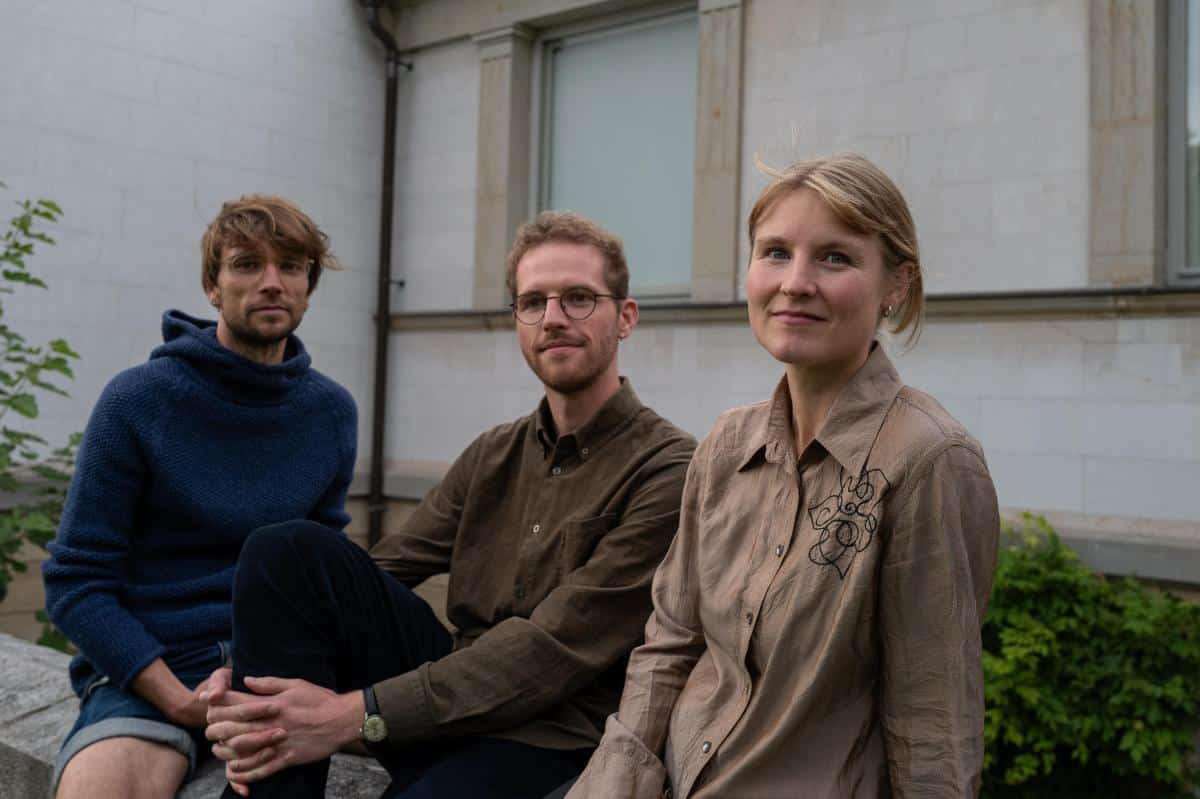
Members: Barbara Fiig (piano, composition), Johan Kjær Houver (double bass), Timon Matern (drums)
Nationality: Danish
Current release: Blåly's new album, Resonans, is out via April.
Hometown Recommendations: Personally I recommend wandering around Nørrebro and the inner city of Copenhagen. Not having any plans in a foreign city is the perfect condition for experiencing the authentic life and spirit of the place and its people. Make sure to opt for some sunshine!
Things I am passionate about but rarely get to talk about: The feelings of security and community are something very central to our band, and therefore we spend a lot of time and energy preserving it. We are very close to one another, and Blåly is a safe haven in a sometimes intimidating, unknown musical world - even though we have a long list of close and kind musical colleagues and partners.
As we answered in the interview questions, our close connection is a prerequisite for our composition process. But also, as an emerging artist, our everyday life consists of many different - and conflicting - obligations, jobs and interests. In this sometimes messy backdrop, it is important for us to keep close to each other and well updated; obviously for practical reasons, but also as supporting and loving friends and colleagues.
If you enjoyed this Blåly interview and would like to know more about the band and their music, visit the trio on Instagram, bandcamp, and Facebook.
When it comes to experiencing strong emotions as a listener, which albums, performances, and artists come to mind?
We are deeply inspired - musically and emotionally - by the group Svaneborg Kardyb. Their music, with its simplicity and clear, condensed emotional musicality, touches the three of us strongly.
We have experienced them live several times, and they are great musicians and people. Their musical and emotional communication is an important and inspiring example of the musical language in which we try to convey our compositions.
[Read our Svaneborg Kardyb interview]
[Resd our Svaneborg Kardyb interview about their creative process]
[Read our Svaneborg Kardyb's Jonas Kardyb interview about Drumming]
A different but similarly strong source of inspiration are British GoGo Penguin. The energy in their play is of unique character to us and is, especially when experienced live, extremely fascinating. As with Svaneborg Kardyb we are also very inspired by GoGo Penguin’s sublime interplay. This again becomes very clear during live performances.
[Read our GoGo Penguin interview]
[Read our ]
One more example of music which is very inspiring to us is the band Vega Trails. We would especially like to draw attention to one live performance in Copenhagen. The two members managed to create an atmosphere of a uniquely meditative character, and we felt like we were wrapped in their minimalistic musical expression in the warmest of ways.
We could go on with many more examples but we’ll leave it for now :)
[Read our Vega Trails interview]
I have had a hard time explaining that listening to death metal calms me down. When you listen to a song or composition, does it tend to fill you with the same emotions – or are there “paradoxical” effects?
There is a saying: “a song is only as sad as its listener”.
For us music can have different effects depending on the state of mind we are in when listening to it. This way the same song which was sentimental and thought provoking yesterday can be uplifting and worry free today.
Personally we have certain songs which always evoke the same emotions because the song is connected to a certain experience or phase in life. Thus it is not necessarily given beforehand which emotions a certain composition carries.
When it comes to composing / songwriting, are you finding that spontaneity and just a few takes tend to capture emotions best? Or does honing a piece bring you closer to that goal?
Our composition process is very collective and often takes place throughout several weeks and months together in our rehearsal space and apart from each other.
A central part of the process consists of conversations about the piece, its meaning and its emotions. In that way, we compose the songs in parallel with our discussions about them, gradually getting closer to their core and refining their musical language.
A good example is our song “Solnedgang i øst” (Sunset in the east), describing the discrete and underwhelmingly beautiful sky when looking in the eastern direction during a sunset. This emotion of subtle beauty set the tone and starting point of the composition.
How much of the emotions of your own music, would you say, are already part of the composition, how much is the result of the recording process?
Most of the music’s emotions exist within the music and the composition, also before it materializes itself in a recording. However, new emotions and memories are embedded in the music during the recording process as well as during touring.
In this way, our music can - for us - contain several sets of emotions that come across in different ways, at different times, and sometimes even differently for each of the three of us.
For your current reease, what kind of emotions were you looking to get across?
For our coming release, Resonans, the feelings of collectivity and connection were central.
After our debut record and three years of playing together, we had the feeling of finding each other and following the same musical path together. This common direction - alongside countless conversations about the music, each other, our dreams and dynamics - was the basis upon which we composed the album.
The songs are in most cases inspired by feelings invoked by great nature experiences in Denmark and on trips abroad; among others a feeling of deep connectivity to the world (“Midt i alting”, In the middle of everywhere), small glimpses of happiness in everyday situations (“Tid”, Time), an urgent longing for adventure (“Ud flugt", meaning excursion but underpinning its integral “flugt”, escape), and the liberating release after an emotional build-up (“Sommerregn”, Summer rain).
Also the calming and meditative effects (“Bølger”, Waves) as well as the energetic and powerful forces (“Cymru”, the country Wales) of being in nature are emotions we are looking to communicate on this release.
What role do factors like volume, effects like distortion, amplification, and production in general for in terms of creating the emotions, energies or impressions you want?
For this record, we took a few steps further away from an exclusively acoustic constellation of drums, piano and double bass. Production and effects are primarily used as a flavour for underpinning the message, emotion and content of the compositions.
For example, this goes for the strengthening piano effects in the dynamic build-up of “Cymru”, …
… as well as the distorted bowed bass melody in the climax of “Midt i alting”.
In the beginnings of both “Emigrantvisa” and “Det løser sig” (It’ll work out), it was important for us that the percussion instruments sound especially close. These are very subtle sounds which invite the listener right into the space of the music when being experienced so close by.
It has also been an important part of the mixing process for us to balance the instruments in such a way that they are aligned, avoiding any instruments to stand out in front of the others but instead all three to stand together as a collective unit.
In terms of emotions, what changes when you're performing live on stage, with an audience present, compared to the recording stage?
The major difference here is the power of the shared emotions and the collective sensations.
All our songs have a story and when playing live we always share a selection of these stories with the audience. Playing our music live enables us to experience the emotions of the music together with the people in the audience. This is not only a strongly enhancing factor but a very meaningful and satisfying sensation.
It is part of our mission with creating and playing music to move and touch people, and this is possible in real time and without filters when performing live.
How does the presence of the audience and your interaction with it change the emotional impact of the music and how would you describe the creative interaction with listeners during a gig?
The presence of the audience and our interaction with it are essential for the emotions that the music tries to convey.
At concerts, we often accompany the compositions with stories and feelings about them, and it is very valuable for us to talk with concertgoers about their experience with the music and its emotions, at concerts and at home.
Our interaction with the audience is probably epitomized when we play the song “Resonans”, the title track of our coming record.
Composed around the idea of resonance and a deep connectivity, we invite the audience to hum while we perform the song - for their own sake and with their own musicality - in order to experience a closer and embodied connection with the music.
What kind of feedback have you received from listeners or concert audiences in terms of the experience that your music and/or performances have had on them?
As stated above, we deeply appreciate hearing from listeners and concertgoers about their experience and feelings with the music. We have received touching words from listeners and have learned that our music takes part in important life events such as i.e. births.
We also enjoy talking with the audience after concerts and hearing about the imagery and thoughts invoked by the songs. Some concertgoers also acknowledge the meaning of the songs’ stories as an important part of their musical experience.
For example, this often goes for our older song “Daggry”, Dawn, about the morning in a family with small kids.