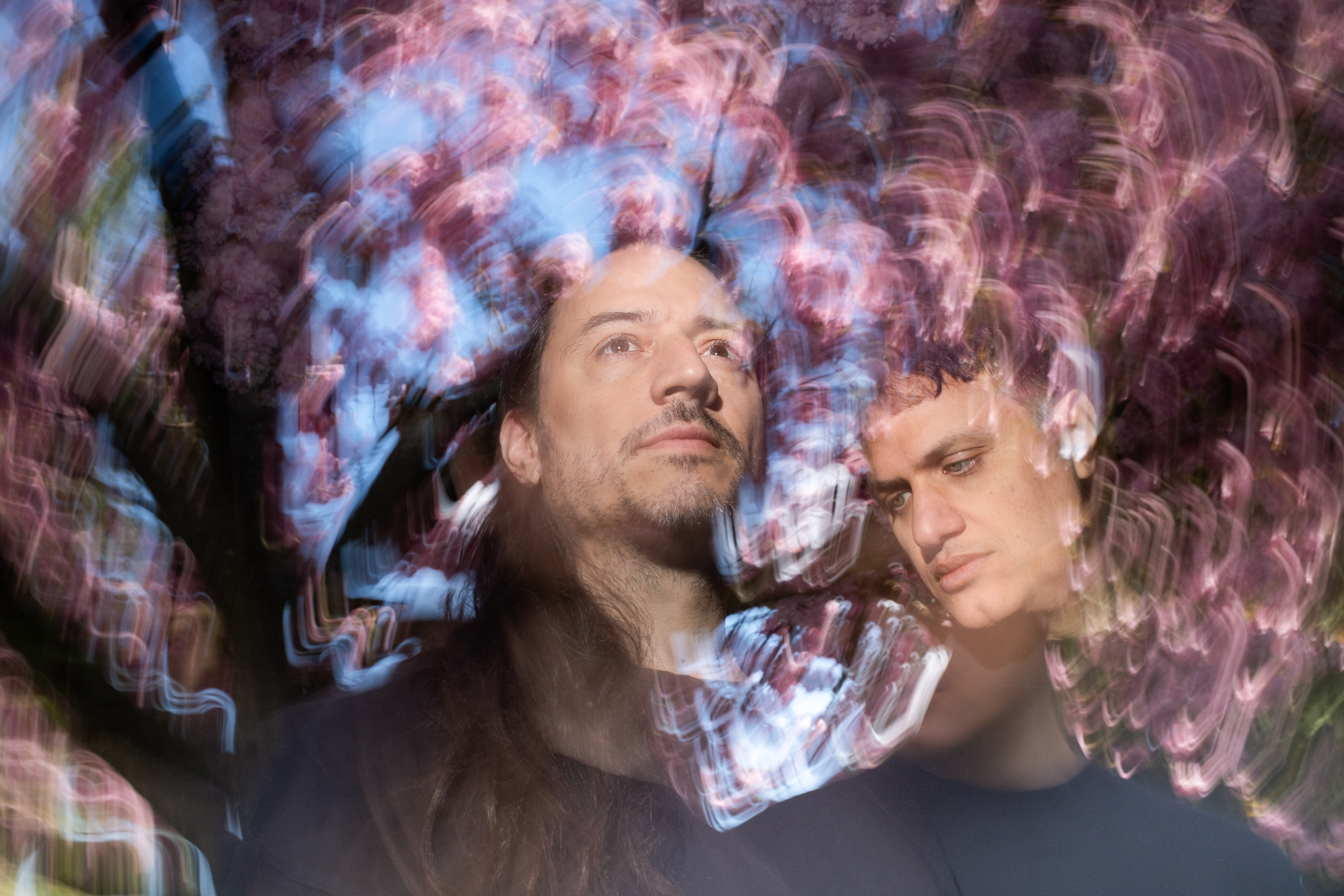
Published
Name: Egopusher
Members: Alessandro Giannelli (drummer, producer) Tobias Preisig (violinist, composer)
Nationality: Swiss
Recent release: Egopusher's new album Radiance is out January 22nd 2027 via Quiet Love.
Hometown Recommendation: Near our rehearsal space, in a very busy district of Zürich, is the Old Botanical Garden: a little oasis in the urban jungle. We often go there to take a break from rehearsing or recording. It’s a wonderful place and well worth a visit.
If you enjoyed this Egopusher interview and would like to find out more about the band and their music, visit their official homepage. The duo are also on Instagram, bandcamp, Soundcloud, and Facebook.
For a deeper dive, read our Tobias Preisig interview about the violin.
When it comes to experiencing the sensation of “energy” as a listener, which albums, performances, and artists come to mind?
Alessandro: The first time I saw Swiss experimental artist Noémi Büchi perform live, it completely blew me away. Her musical performance, the visuals and lights, carried an unbelievable energy that stayed in my body for a long time.
[Read our Noémi Büchi interview]
[Read our Noémi Büchi interview about sound]
[Read our Noémi Büchi interview about sound as matter and “late-futuristic symphonics”]
[Read our Noémi Büchi interview about Production, Technology, and Creativity]
There are a lot of albums I could mention, but recently I’ve been listening to Hélène Vogelsinger’s “Reminiscence” a lot. Her singing, paired with her modular synths, has a magical, joyful energy that carries me somewhere else every time I listen to it.
[Read our Hélène Vogelsinger interview]
Tobias: Nick Cave’s live concerts are always a tremendous source of energy. The band can move from an extremely soft passage to something loud and wild, with Nick Cave drawing the audience into a transcendent experience.
There can be many different kinds of energy in art – soft, harsh, healing, aggressive, uplifting and many more. Which do you tend to feel drawn to most?
Tobias: Before our concerts, we often play very soft ambient music by artists such as Kali Malone or Brian Eno.
It creates a welcoming cloud of sound for us and the audience, and gives everyone space to open up to a new musical experience that may be different from what they have heard at work or on the radio that day.
[Read our Kali Malone Interview Profile]
[Read our Brian Eno interview]
I have had a hard time explaining that listening to death metal calms me down. When you listen to a song with a particular energy, does it tend to fill you with the same energy – or are there “paradoxical” effects?
Alessandro: For me, it can be both, and it really depends on my mood.
For example, listening to a song by Meshuggah can calm me down and help me focus while I’m walking through a very busy street. I think it’s because the music is so dense and intense that it drowns out everything around me, and the complex, steady grooves give my mind something to lock into.
On the other hand, a cheerful song can make me really sad. But other times, the music just fills me with its own energy.
Tobias: There are definitely “paradoxical” effects. Calm music often gives me a strong, uplifting energy, not in the sense that it pushes you through the last kilometers of a marathon, but in the sense of feeling fulfilled.
In a different way, very sad music can also give me a shot of dopamine and leave me feeling more positive.
In as far as it plays a role for the music you like listening to or making, what role do words and the voice of a vocalist play for the transmission of energy?
Tobias: A simple lyric can make me connect with a song, especially when it makes me want to sing along. So yes, words can deepen that connection, including on an intellectual level. Instrumental music, on the other hand, can come from behind and overwhelm you emotionally without your head being involved.
Alessandro: A vocalist singing and telling a story can amplify the energy of the music and help the audience connect with it emotionally.
I think lyrics can do a lot to carry energy, but sometimes vocals without words can be even more powerful. Without lyrics, the voice becomes another instrument, and the listener is free to find their own meaning in it.
When it comes to experiencing the sensation of “energy” as a creator, how would you describe the physical sensation of experiencing this energy? [Where do you feel it, do you have a visual sensation/representation, is there a sense of release or a build-up of tension etc …]
Tobias: For me, the impulse often comes when I feel restless or unsettled inside. Then I need to go to the studio and create. Making music calms me down and gives me a sense of satisfaction and comfort.
Alessandro: When I’m sitting at the drums on stage, performing our songs, I can feel the energy flowing through my body. It feels like a release of tension. Producing or composing in the studio brings a completely different kind of energy: my body feels calm and peaceful.
When it comes to composing / songwriting, are you finding that spontaneity and just a few takes tend to capture energy best? Or does honing a piece bring you closer to that goal?
Tobias: We often start with first takes, because they capture the current energy best. Then we move into a second phase and work hard on the music for a long time. At that point, the focus is less on the initial energy and more on arranging the song and building a complete journey.
Alessandro: It is a bit like making a film: you shoot a scene to catch the vibe, then you spend much more time in the editing room shaping the flow and storytelling.
How much of the energy of your own music, would you say, is already part of the composition, how much of it is the result of the recording process?
Tobias: The two feed into each other. Making music gives us energy and connects us as two people living individual lives. Together, we create something new that resonates with us and with the world around us.
Alessandro: There is a wonderful feeling of arriving at where we are, with the people we are sharing that moment with. It just makes sense.
For Radiance, what kind of energy were you looking for?
Tobias: We were looking for a positive energy that makes you move while still feeling laid-back.
We didn’t want it to feel pushy. It should be calming and fulfilling, with a sense of satisfaction and arrival rather than desperate hustle.
How do you capture the energy you want in the studio?
Alessandro: The good thing is that we don’t actively try to create a particular energy while recording.
We record a lot and, rather than follow a script, we capture the moment. Then we choose the moods we feel drawn to and shape them into an album. Intuition leads us more than a concept.
What role do factors like volume, effects like distortion, amplification, and production in general for in terms of creating the energy you want?
Tobias: These things can only amplify what is already there.
As we said, the mood and energy begin with the musical exchange between the two of us. We can then use these tools to shape the song and its journey, and to strengthen its message and mood.
In terms of energy, what changes when you're performing live on stage, with an audience present, compared to the recording stage?
Tobias: A lot changes. We love the direct exchange and the physical feedback from the audience. Some songs work much better live than they do on a recording because they thrive on live exchange.
Alessandro: The audience’s response makes us react, which can amplify the energy of the moment. It’s such a wonderful feeling when everything locks in together.
How does the presence of the audience and your interaction with it change the energy of the music and how would you describe the creative interaction with listeners during a gig?
Tobias: The audience becomes part of the exchange. We can feel the response in the room and react to it as we play. This feedback can change the energy and shape where the music goes.
Alessandro: People experience it in their own way, but when that connection happens, the audience and the music are carrying each other.
What kind of feedback have you received from listeners or concert audiences in terms of the experience that your music and/or performances have had on them?
Tobias: We often hear that people like to close their eyes and drift away with our music. Other people dance and move, while others stand still and receive.
Alessandro: We call our music “Cinematic Dance Music,” because everyone is invited to imagine their own film while immersing themselves in its soundtrack.
Would you say that you prefer to stay in control to be able to shape the energy or do you surrender to it and allow the music to take over? Who, ultimately has control during a live performance?
Alessandro: We always let the music take over.
If we try to lead too hard, it can sound thin and full of compromise. When we let the music do its thing, it starts to bounce, live and blossom.
Tobias: We love surrendering to the energy in the room. It takes openness and a willingness to listen. If the energy isn’t flowing and there’s no exchange for whatever reason, we have ways to try to reach people and get a response.
So far, we’ve been lucky, our concerts have always become a symbiotic experience with the audience.
The energy that music is able to generate can be extremely powerful. How, do you think, can artists make use of this energy to bring about change in the world?
Tobias: To experience music, we first have to listen. Being able to listen before reacting is already an important part of resolving conflicts.
Alessandro: We believe in staying open, listening to one another and finding ways to come together.