

Name: Samora Pinderhughes
Nationality: American
Occupation: Composer, vocalist, pianist, improviser
Current release: Samora Pinderhughes's latest album Venus Smiles not in the House of Tears is out via Machel.
Current event: Samora Pinderhughes is one of the artists appearing at this year's EFG London Jazz Festival. The event will take place 15-24 November 2024 and feature artists such as Anohni, Imelda May, the Crosscurrents Trio, Charles Tolliver, Veronica Swift, Brandee Younger, Ill Considered, Tashi Wada, Yazz Ahmed, Spencer Zahn, Melike Şahin, Fabiano Do Nascimento, Belle Chen, the Neil Cowley Trio, Matters Unknown, Mark Kavuma, Avishai Cohen, Tigran Hamasyan, and Fran & Flora.
For tickets, head over to the festival's official website.
[Read our Ill Considered interview]
[Read our Tashi Wada interview]
[Read our Yazz Ahmed interview]
[Read our Melike Şahin interview]
[Read our Fabiano Do Nascimento interview]
[Read our Belle Chen interview]
[Read our Neil Cowley interview]
[Read our Matters Unknown interview]
[Read our Mark Kavuma interview]
[Read our Tigran Hamasyan interview]
[Read our Fran & Flora interview]
[Read our Anouar Brahem interview]
[Read our Dawn Richard interview]
[Read our Tami Weis interview]
[Read our Helena Kay interview]
[Read our Avishai Cohen interview]
[Read our Rosie Frater-Taylor interview]
If you enjoyed this Samora Pinderhughes interview and would like to know more about his music, visit his official homepage. He is also on Instagram, and Facebook.
The London Jazz Festival is just around the corner. Tell me just a little bit about your performance at the festival, please.
This performance is going to be very special because I’m really excited to perform this music in the church setting. A lot of my music is spiritual in nature, and also heavy on the vocal sound, and so I think it’s going to be really special and beautiful in that environment too.
I’m bringing an incredible band, featuring Chris Pattishall, Elliott Skinner, Dani Murcia, Joshua Crumbly, and Jonathan Pinson, with a combination of amazing instrumental and beautiful vocal harmonies.
We’ll be playing mostly music from my new album, Venus Smiles not in the House of Tears and a few pieces from my previous album GRIEF as well as some fun covers of songs that are important to me.
This music is very vulnerable, honest, genre – bending music, and is definitely meant for people to experience and feel it emotionally. I think it’s going to be a very special evening of performance!!
How, would you say are your live performances and your recording projects connected at the moment? How do they mutually influence and feed off each other?
For me, the purpose of live performance is to really create a communal energy through sound.
It’s about how the sounds that me and my collaborators create are reverberating throughout the space, and how the language of the lyrics, when combined with harmony, create a conversation within the room. There’s also an unpredictability in that a performance of a song in the live way can change and go any direction at any time, especially with the way that I approach improvisation.
When I approach studio recording, it’s almost the opposite in that I’m really thinking about one individual listener's experience and connection to the song. I want the person who listens to a recording to feel like they are inside of the music, living it directly. And every detail about sonically and lyrically is extremely meticulously crafted.
So the same song is totally different in the recorded and live performance context. This is one of my favourite things about music!
In as far as you have any experience or insights, what's your view of the London jazz scene?
I’m a huge fan of the London music scene! I’ve been really inspired by groups like Sault & Ezra Collective, and artists like Sampha & Yussef Dayes.
I feel like there is a lot of beautiful experimentation happening, a lot of genre bending work, the creation of musical material which is really made to be felt by both the mind and the body, and a deep honesty in the music.
I definitely would love to spend more time in London and collaborate with London artists!
[Read our Ezra Collective interview]
[Read our Yussef Dayes interview]
Music has become a lot more global and incorporating elements from other parts of the world or the musical spectrum is commonplace. Do you still think there are city scenes with a distinct, unique sound? What holds these communities together?
I definitely do think there are still scenes that come out of particular neighbourhoods or cities or communities, and usually I feel like you can really hear the pure sound of those musical scenes if you’re lucky enough to catch them before they get found out by the larger world.
I think it’s best, what holds communities together is simply just the people themselves, connecting with each other in the deepest way, which can only happen through art, and also trusting each other enough to experiment and find new ways of creating.
Sometimes it happens through happy accidents, which I feel are also divine in nature, and sometimes it comes through a lot of collective work in finding those sounds. But either way it’s all about the community practice and lifting each other up and inspiring each other.
What does the term jazz mean today, would you say?
I don’t necessarily love the term jazz because I know the origins of it, which is that it was made as a white supremacist joke during the early 1900s. As a person of African-American descent, I prefer to engage with other terms that don’t have the oppression of my people baked into them; so I prefer terms like creative improvised music.
But in terms of what that music is today, I think, as always, it’s about honouring the spirit of risk, standing inside of an improvisatory tradition with roots in the Black radical tradition, speaking to the realities of the world from both an internal and external perspective, and engaging in practices that allow for true collective performance. That’s what it is to me.
Derek Bailey defined improvising as the search for material which is endlessly transformable. As of 2024, what kind of materials are particularly transformable and stimulating for you?
Anything can be the subject of transformation. There is so much that we need to transform, and so much that we can be called into transforming.
There’s a lot of subject matter; to me, the abolition of prisons and policing systems represent the deepest possible transformation that there is. Imagining a new world not based on violence, but instead on healing and care, is the biggest possible transformation - and certainly will require an endless amount of capacity for improvisation.
From a sonic perspective, I think the possibilities around the voice are what I’m most fascinated about in regards to improvisation and transformation at the moment. I also love engaging with those topics around harmony.
Thanks to technological advances, collaboration has become a lot easier. What's your view on collaboration and its ongoing role for the music you make?
Collaboration is everything to me. I don’t think anything would ever be made without the input and love and creativity of many people.
I do have my suspicions about technology, and whether that will actually enhance or reduce the creative process; I certainly do love that It creates more ways for people to connect and create globally, but I also think it does a lot to separate and alienate us.
I’m a huge believer in the importance of physical space as a gathering mechanism for community.
In terms of the results, the process, and the satisfaction, how do making music in the same room together versus filesharing compare to you, real concerts vs live streams?
I guess this connects easily to the previous answer I gave; I will be the first person to say that part of my hesitations around technology is due to the fact that I really don’t understand much of it, but I really do believe very strongly that being in the same room together creates an energy transference and a way of living and engaging with the world in community, which just cannot be replicated digitally.
I understand that there are things that we gain digitally, but we also need to make sure we understand that we lose things as well. The times when I felt the deepest about music have always been when I’m in the same room with other people. That’s what I love about going on tour and doing live performances.
It is often said, that the energy in the room on any given night will influence the performance. I have often wondered how this energy manifests itself. What is this like for you and how does it have an effect on what's happening on stage?
It is an indescribable and amazing experience that I wish everyone could feel at least once in their lifetime.
There are so many different types of energy that can affect the performance, from the energy of the physical space and the room that we’re in, the sound of that room, the histories of that room and dress has performed in it and live life in it; to the people who show up to listen, how the energy of the audience is and whether they are mostly there to just listen and receive more participatory and wanting to make noise and shout; to the attention and the listening and the energy of the audience.
Whether people are vulnerable enough in particular to really receive the language that’s inside the music - that is the most important for the kind of music that I make. When these things are hitting at a certain level, it’s amazing and such a special feeling, and it definitely makes the music better.
Ímprovisation is obviously an essential element of jazz, but I would assume that just like composition, it is transforming. How do you feel has the role of improvisation changed in jazz?
I don’t know if I could define how it’s changed, but I just think the most wonderful part about improvisation is that it’s so personal. If you’re not just trying to copy what has been been done before, then improvisation is basically the most vulnerable, personal thing that you could engage in.
So it can’t help but transform because it’s different for everybody as they make it. It’s like living life; things can’t help but change.
What, would you say, are the key ideas behind your approach to improvisation?
My key ideas are:
1. Be honest
2. Follow your hands, your heart, and your instrument
3. Don’t play anything unless you feel compelled to play it
4. Find where the spirit is
5. Practice & learn from those that came before you
6. Everything is language
7. Listen as deeply & humbly as you can
8. Don’t be afraid to have fun
How would you describe your own relationship with your instrument – is it an extension of your self/body, a partner and companion, a creative catalyst, a challenge to be overcome, something else entirely?
I have different relationships with the voice and the piano.
For me, piano is a companion, especially because I have to play different instruments in different places and they all feel and sound differently. Going on tour is almost like meeting different people that you’re making music with every night, as you play on different pianos. I always ask each piano for permission to play it, and when I first warm up, it’s also like meeting the instrument for the first time.
With the voice, I do feel that as an extension of me in my body, and so it’s a lot more mysterious to me as a relationship.
The term identity is an important aspect of many communities. Are you acting out parts of your identity in your improvisations which you couldn't or wouldn't through other musical approaches? If so, which are these?
James Baldwin said something like: “Your identity allows you to locate yourself, but it also traps you”. I agree with that.
I have always been fascinated by the many facets of improvisation but sometimes found it hard to follow them as a listener. Do you have some recommendations for “how to listen” in this regard?
I feel the same way sometimes!!
I think some pieces require a lot of time and concentration, and also sometimes you just don’t connect to them. I would listen first for what moves you, without judgment, and then I would locate what moves you and listen to that over and over and just get inside of it as much as possible!
I also highly recommend listening with other people.
In a way, improvisations remind us of the transitory nature of life. When an improvisation ends, is it really gone, just like a cup of coffee? Or does it live on in some form?
I think you’re right!! There is beauty in things being ephemeral. We’re time-based beings - we can’t get away from the fact that we’ll all die one day, but we’re so scared of it that we never want to talk about death, or time, or engage with things that don’t last. I think that’s where a lot of bad human things happen, when people try to dominate and control the natural world and the reality that everything has its time.
Recordings are wonderful, and capturing things in time can be beautiful. But feelings move!!! So in that way, I do think that performances and improvisations should end, and serve as a transmutation and representation of what we were all feeling at that moment.

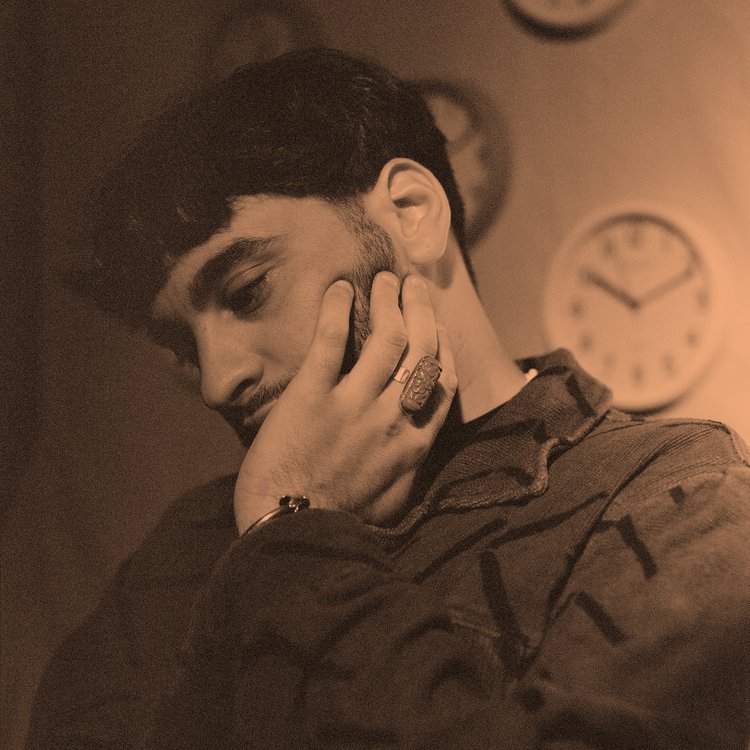 Samora Pinderhughes Interview Image by Ray Neutron
“Jazz is about about honouring the spirit of risk.“
Video
